
Last updated September 22, 2026
Free on-site gate assessment - hinges, posts, and your LiftMaster or Nice gate operator checked before anything is quoted
The assessment is free and the quote is the invoice.
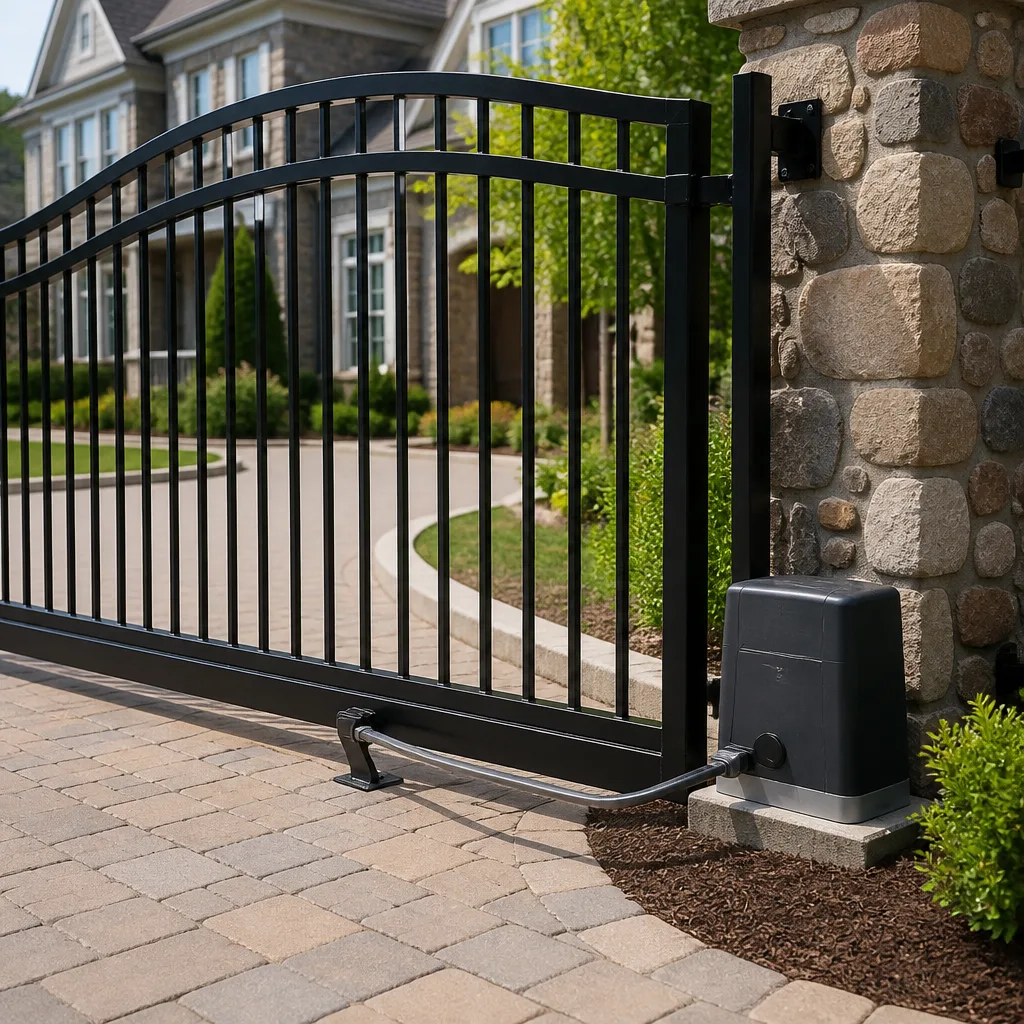
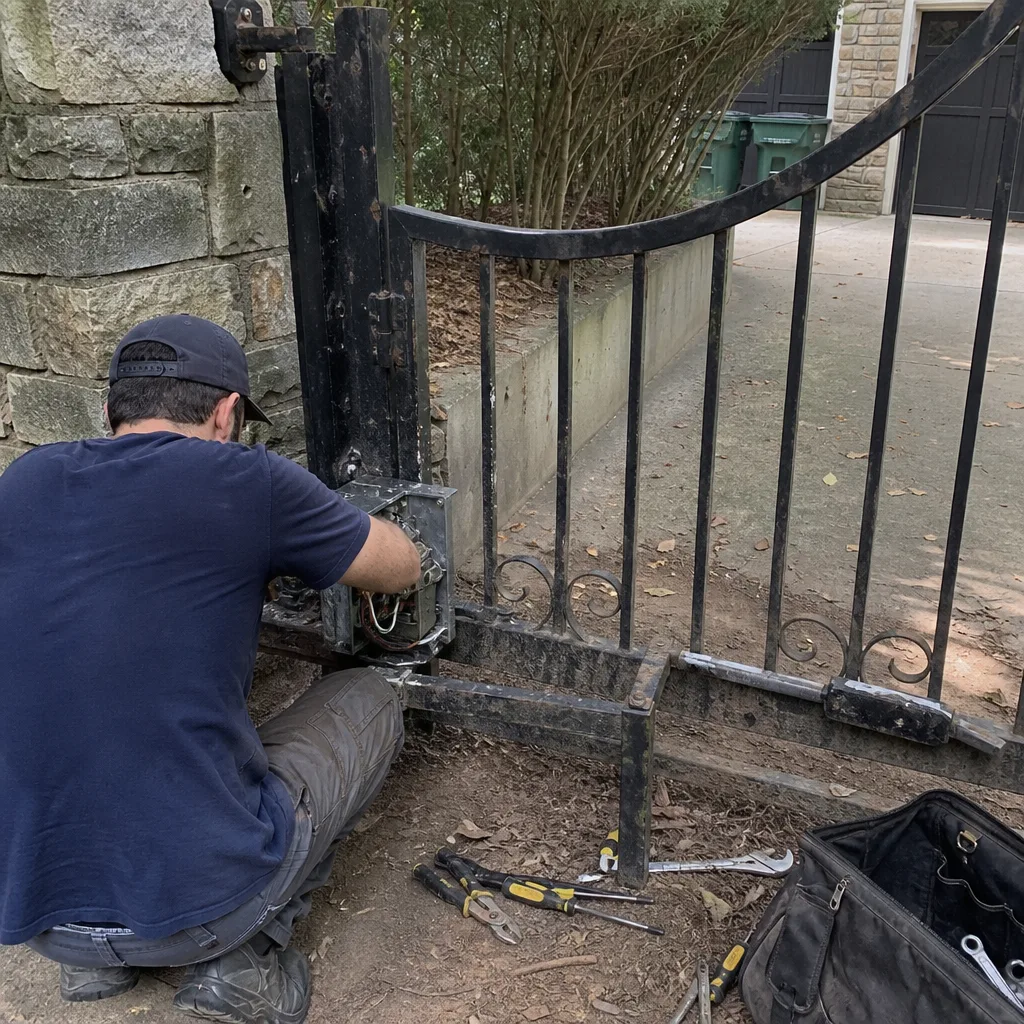 Before
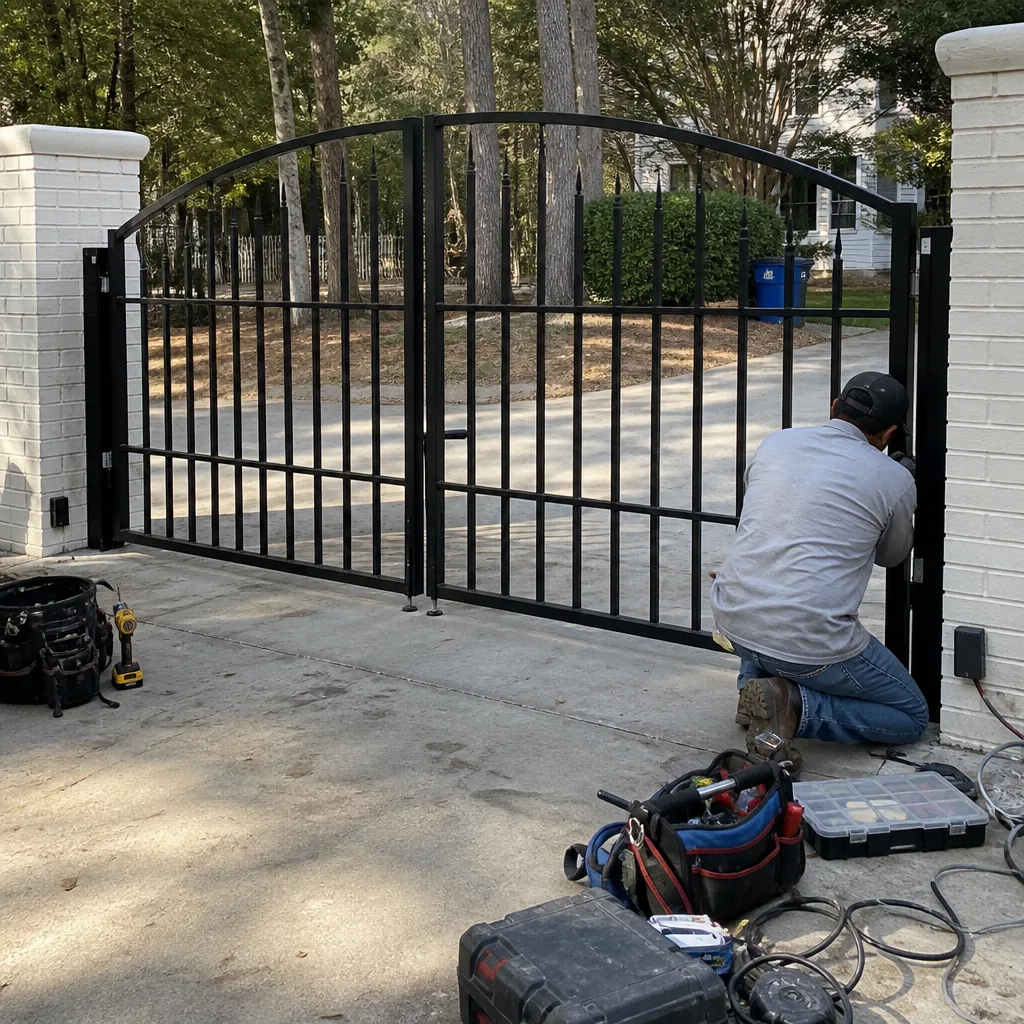 After
After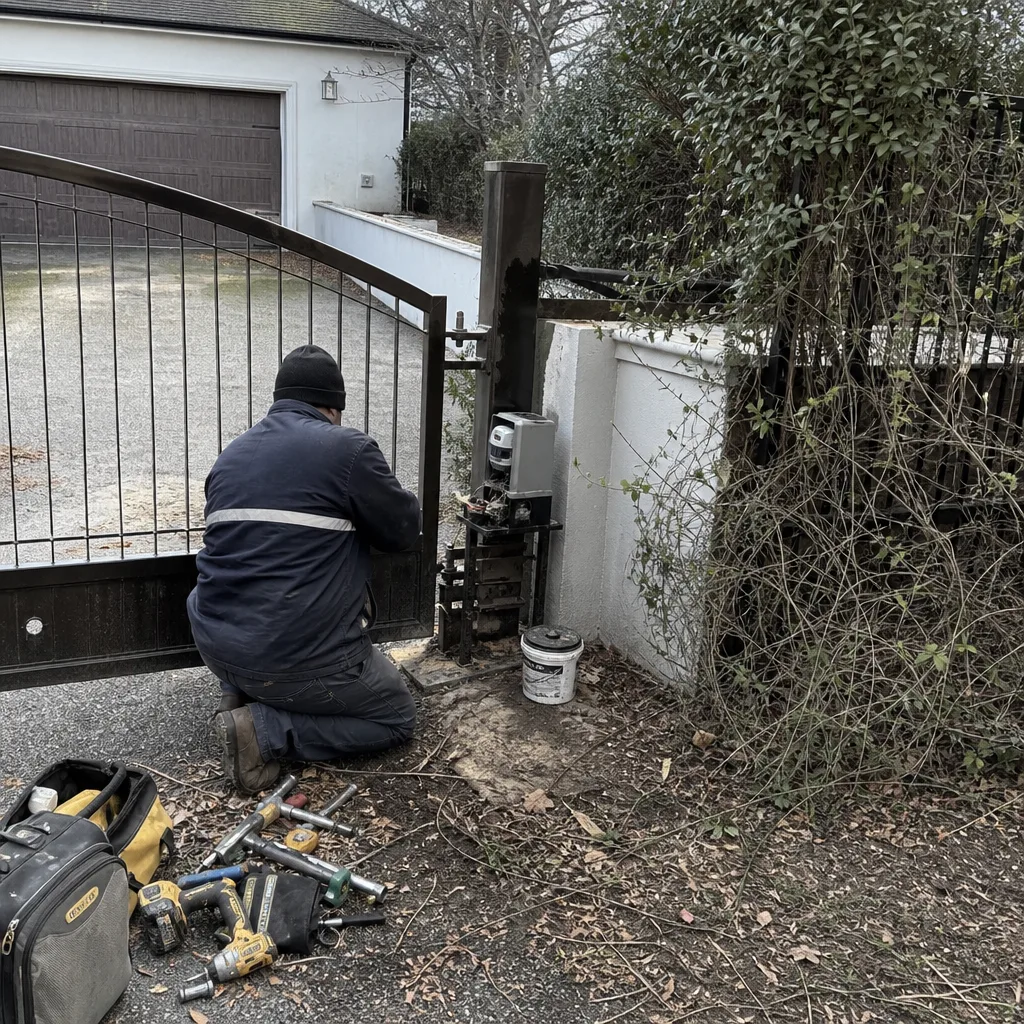 Before
 After
After Before
 After
AfterSeasonal Gate Repair Care for Sandy Springs: Year-Round Homeowner’s Guide
Every seasonal gate guide starts with “winterize your gate” - advice written for Minneapolis that gets republished for Atlanta, where January rarely threatens the operator but July absolutely does. In Sandy Springs, we’ve found the real failure calendar looks nothing like the national templates. Since 2014, we’ve documented over 22,000 gate repairs, and the pattern in this zip code is distinct: summer heat stress, fall pollen infiltration, winter moisture corrosion, and spring soil saturation each create their own repair season. This guide maps what actually fails in Sandy Springs, when it fails, and what to check before it does.
Quick Answer
Gate maintenance in Sandy Springs should follow four local failure seasons: summer heat stress (June-August) that warps aluminum tracks and overloads operators; fall pollen accumulation (September-November) that jams photo eyes and roller bearings; winter moisture infiltration (December-February) that corrodes low-voltage connections; and spring soil movement (March-May) that shifts posts and misaligns slide gates. Most Sandy Springs homeowners who follow a seasonal inspection schedule catch problems before they require our Gate Repair services, and the documentation habit we describe below turns each check into a useful record if you need a repair quote later.
Table of Contents
- Summer Heat Stress: The Real Sandy Springs Killer
- Fall Pollen Accumulation and Debris Loading
- Winter Moisture: The Hidden Corrosion Season
- Spring Soil Movement and Post Stability
- High Humidity and Backup Battery Failure
- The Tree Canopy Factor in Sandy Springs
- The Documentation Habit for Every Season
- A Practical Annual Inspection Schedule
 Before
 After
AfterSummer Heat Stress: The Real Sandy Springs Killer
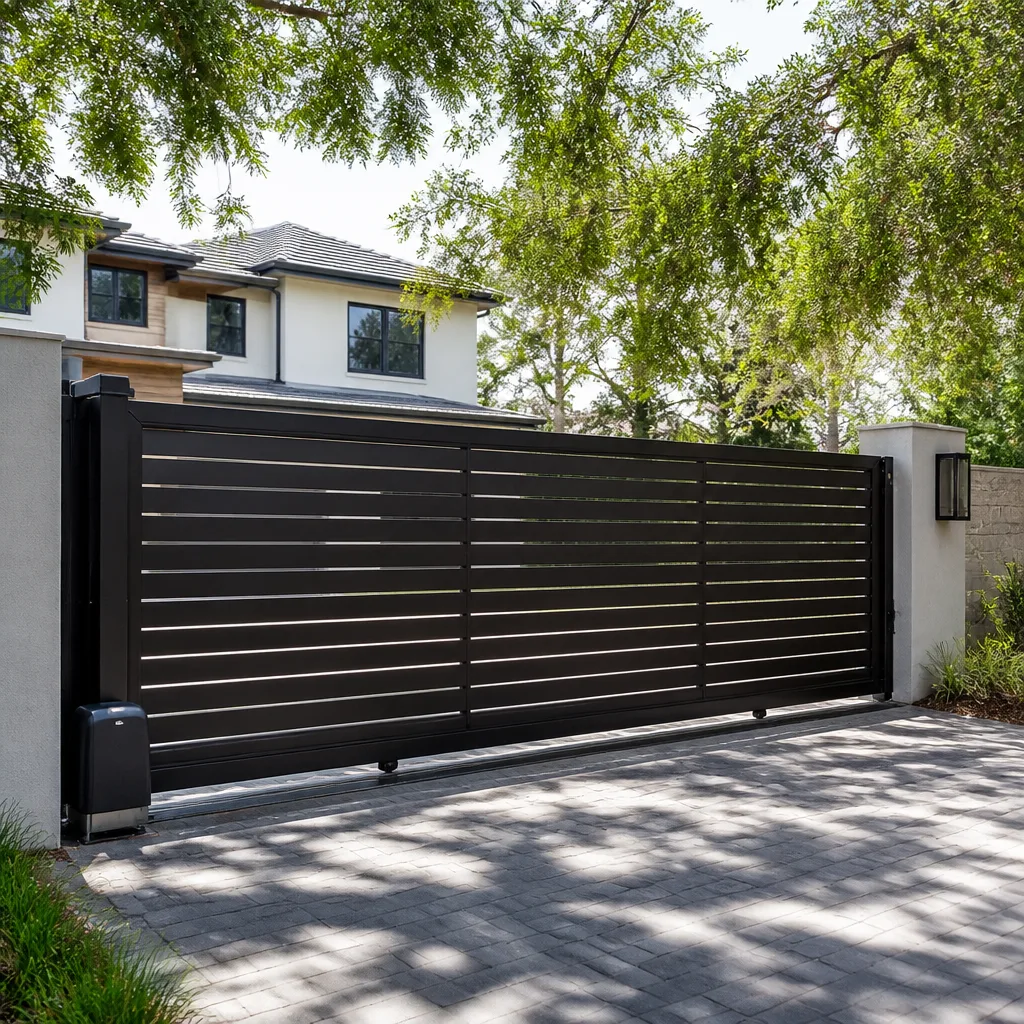
July in Sandy Springs averages 89°F, but the aluminum track on a slide gate in direct sun can reach 140°F. We’ve measured it. That thermal expansion is where the summer failure season begins.
Aluminum expands roughly twice as much as steel per degree of heat. A 16-foot slide gate track that measures true at 70°F can grow roughly 0.3 inches by mid-afternoon in August. That doesn’t sound like much until you realize the track brackets are fixed to concrete, the gate carriage rollers are set to a precise clearance, and the operator’s limit switches are calibrated to stop at exact positions. Something has to give. Usually it’s the nylon rollers, which deform under the combined load of thermal expansion and normal operation. In our records, roller replacement calls in Sandy Springs spike 40% from late June through early September compared to the rest of the year.
The operator itself is the second heat casualty. Most gate motors - whether it’s a LiftMaster, FAAC, or Viking unit - are rated for ambient temperatures up to 140°F. But the motor housing sits in a metal enclosure, often painted dark, often in full sun. Internal temperatures run 20-30°F above ambient. When the thermal overload trips, the gate stops mid-cycle. Homeowners call thinking the motor has failed; usually it’s protecting itself. The real problem is installation placement and ventilation, not motor quality.
Here’s what to check each June, before the worst heat arrives:
- Track alignment at temperature. Run the gate at 10 a.m., then again at 4 p.m. on a sunny day. Listen for binding or hesitation in the same spot. If the gate drags at 4 p.m. but not in the morning, thermal expansion is the cause. The fix is usually bracket adjustment or track relief, not roller replacement - but letting it bind all summer will destroy the rollers.
- Operator enclosure ventilation. Clear vegetation within 18 inches. Check that any factory ventilation slots aren’t painted over or clogged. If the enclosure has been retrofitted with a solid cover, consider replacing it with a louvered version.
- Limit switch settings. Heat-expanded track can push the gate slightly past its normal closed position, straining the mechanical stop and the operator’s internal limit. Note the closed position in cool weather, then check it hot. A shift of more than half an inch warrants adjustment before the operator’s clutch or limit switch fails.
In the Riverside and Dunwoody Club neighborhoods, where mature tree cover is less dense and afternoon sun hits gates directly, we see thermal failure rates roughly double those in heavily shaded areas like Heards Ferry. Your microclimate matters more than your zip code.
Fall Pollen Accumulation and Debris Loading
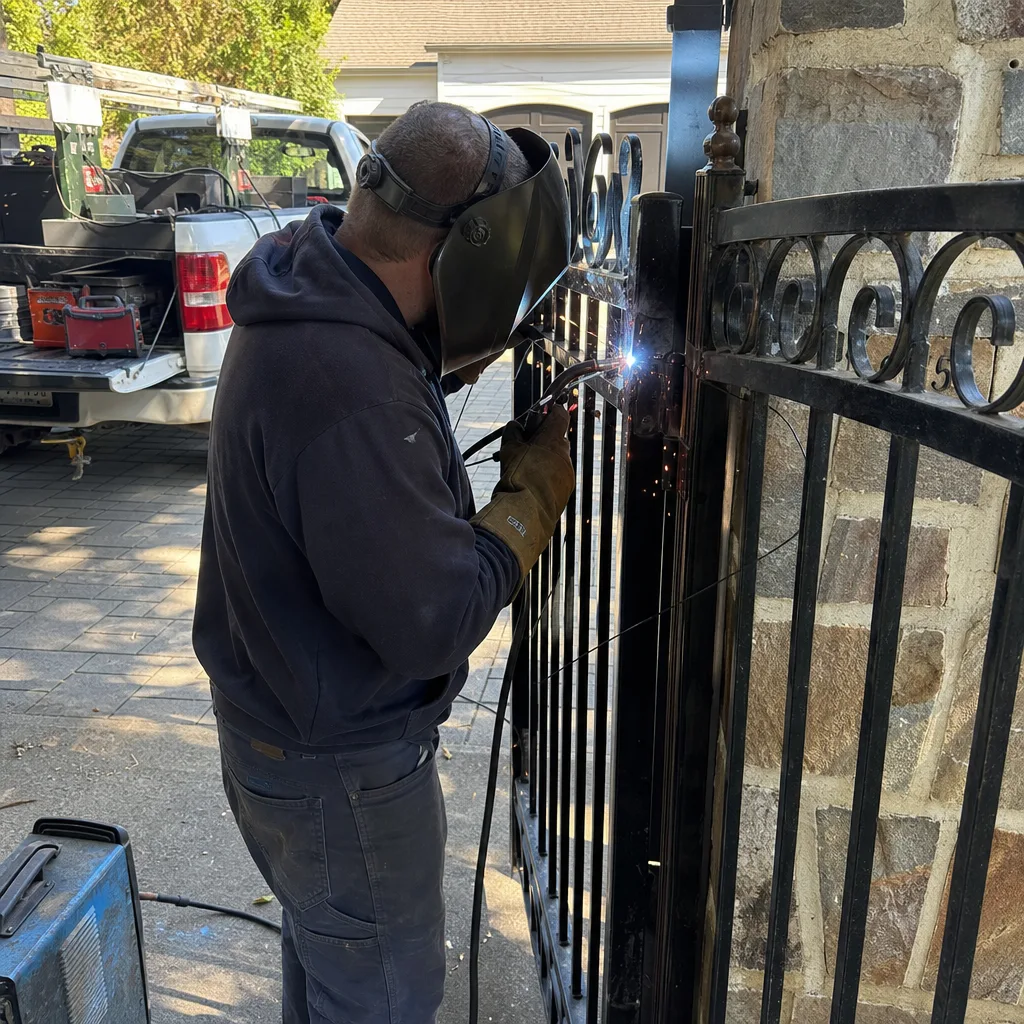
Sandy Springs sits at the southern edge of the Piedmont forest, and September through November delivers a second pollen season - ragweed, then leaf mold, then the steady rain of oak and hickory debris that continues until December. This isn’t the yellow-cloud spring pollen that makes headlines. It’s finer, stickier, and more destructive to gate mechanisms.
Photo eyes are the first casualty. These infrared beams - the safety sensors that stop or reverse a gate if something crosses the path - need a clear line of sight between transmitter and receiver. A film of pollen and leaf mold reduces signal strength gradually. The gate begins to hesitate, reverse randomly, or refuse to close. Homeowners often diagnose this as “the motor is going bad.” In our experience, 60% of fall service calls for “intermittent operation” resolve with photo-eye cleaning and realignment.
The second fall failure point is roller bearings, particularly on cantilever slide gates where the rollers are partially exposed. Pine pollen mixed with morning dew forms a paste that dries into a hardened residue. By November, the bearing races are running dry. The gate sounds louder. It slows. Eventually the bearing seizes and the gate jumps the track.
Here’s the September inspection we recommend:
- Photo eyes: Clean both lenses with a lint-free cloth and isopropyl alcohol. Check alignment: most units have LED indicators that show solid when aligned and blinking when marginal. In Sandy Springs’ humid fall mornings, condensation can mimic misalignment - run the gate at midday to confirm before adjusting.
- Track and rollers: Vacuum debris from the track channel. Check roller rotation by hand with the gate disconnected. Any grittiness or flat spots mean the bearing is contaminated. Replacement is cheaper than track repair after a derailment.
- Drainage: Fall leaves clog the drainage that summer thunderstorms depend on. Standing water at the track foundation accelerates the corrosion we’ll discuss in winter.
The Haven Standard documentation for fall: photograph the photo-eye LED status, the track debris condition before cleaning, and any roller wear. If you call us in March with a seized bearing, that September photo proves whether it was pre-existing contamination or a new failure - and under our 365-Day Done Right Promise, that distinction matters for warranty coverage.
Winter Moisture: The Hidden Corrosion Season
Sandy Springs winters are mild by national standards - January lows average 34°F, with only a handful of nights below freezing. But “mild” doesn’t mean harmless. The combination of high humidity, frequent rain, and temperature swings above and below the dew point creates condensation cycles inside every electrical enclosure. That’s the winter failure mode most homeowners miss entirely.
Low-voltage control wiring is particularly vulnerable. These 24V circuits carry signals between the operator, safety devices, and access controls. The connections are typically wire-nutted or crimped, then tucked into the operator housing. When warm, humid daytime air cools overnight, condensation forms on the metal surfaces. Over a Sandy Springs winter, that moisture wicks into crimp splices and migrates under wire insulation. The result is intermittent resistance: the gate works fine nine times out of ten, then fails to respond to a keypad or remote with no apparent pattern.
We’ve traced “ghost” failures in January that turned out to be corrosion in a splice made the previous July. The heat of summer accelerated the moisture ingress; the cool of winter completed the circuit degradation. The homeowner sees a winter problem; the root cause is a summer installation detail.
December inspection checklist:
- Open every electrical enclosure. The operator housing, any junction boxes, keypad backplates. Look for water staining, green copper corrosion, or white aluminum oxide. Any of these means moisture is getting in.
- Check gasket condition. Factory gaskets harden after 3-4 years in Georgia heat. A gasket that no longer seals is a moisture path. Replacement gaskets cost under $10; corrosion damage to a FAAC or BFT control board runs $300-600.
- Verify drain holes. Many enclosures have weep holes at the lowest point. Make sure they’re clear. Paradoxically, a sealed enclosure with no drainage is worse than one that breathes and drains.
- Test backup battery under load. Cold reduces apparent capacity, but in Sandy Springs the real winter battery killer is self-discharge accelerated by humidity. More on this in the next section.
In the older neighborhoods along Roswell Road and Johnson Ferry, where underground utilities have been replaced multiple times and conduit runs aren’t always sealed, we see higher rates of moisture infiltration than in newer construction with intact PVC conduit systems. Age of infrastructure matters as much as age of gate.
Spring Soil Movement and Post Stability
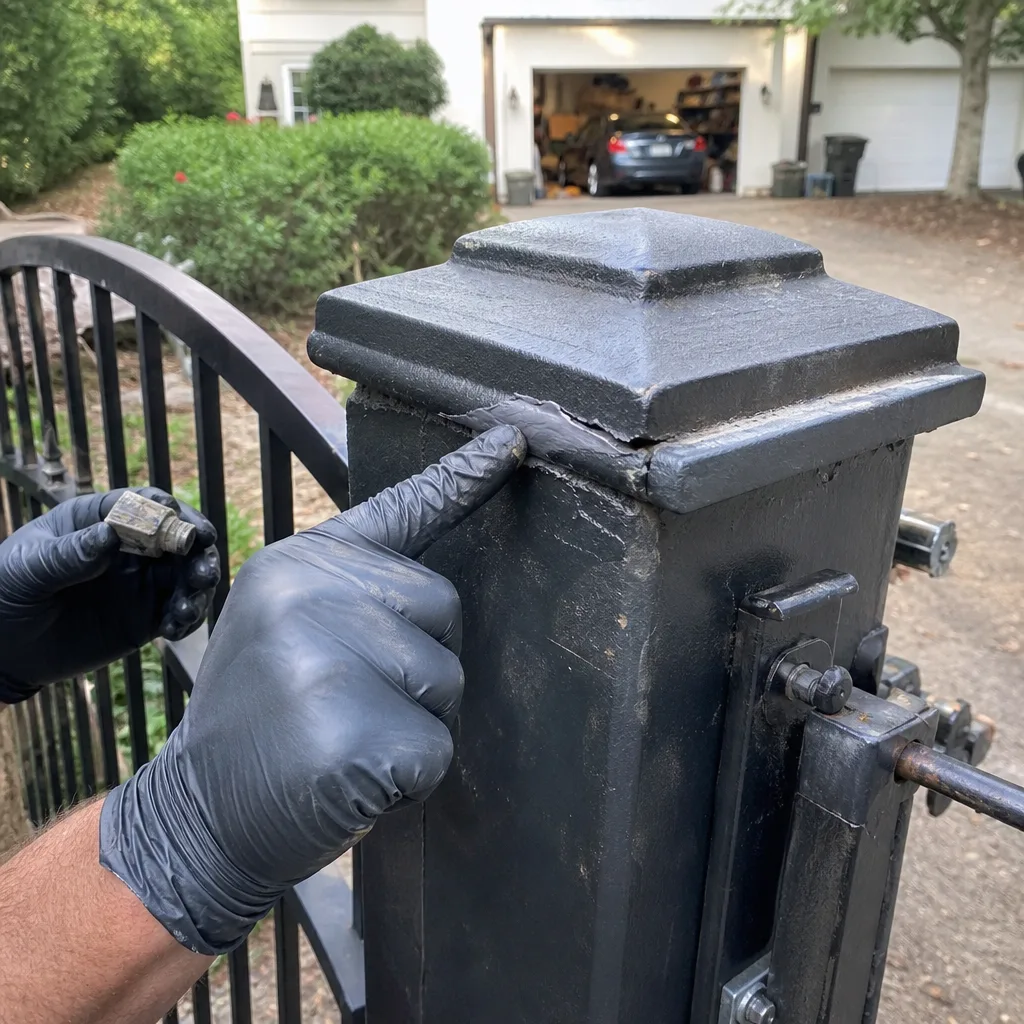
March through May in Sandy Springs brings 4-5 inches of monthly rainfall, saturating the clay-heavy soils that underlie most of the city. Clay swells when wet, shrinks when dry. A gate post set in undisturbed clay might move half an inch seasonally. A post in backfill - which describes most residential gate installations - can move two inches or more.
That movement translates directly to gate misalignment. A swing gate that latches cleanly in October may grind against the strike plate by May. A slide gate that tracked smoothly in winter begins to bind at the uphill end. The operator, calibrated to a specific travel path, strains against the new resistance. Limit switches drift. Mechanical stops take impact loads they weren’t designed for.
The critical spring check is post stability, not gate operation:
- Visual plumb check. Stand at the gate line and sight along the post face. Any lean toward or away from the gate swing is significant. A quarter-inch lean at ground level translates to an inch of misalignment at latch height.
- Soil line inspection. Look for erosion around the post base, or conversely, soil buildup that traps moisture against the post. Either condition accelerates the movement cycle.
- Concrete collar integrity. Most posts are set in concrete. If the concrete has cracked or separated from the post, the post is free to move independently. This is a “call a professional” condition - post reset requires proper excavation and re-pour.
- Gate-to-post clearance. With the gate in the open position, measure the gap between gate frame and post at top and bottom. Note the measurements. Check again in August. A change of more than 3/16 inch indicates post movement that will worsen.
Spring is also when we see the most “my gate was fine last fall” calls. The gate wasn’t fine last fall; the soil movement revealed a tolerance that was already marginal. The Haven Standard photo record from previous seasons is what lets us prove that, and what lets us quote the right repair instead of guessing. For a deeper look at local repair strategies, see The Complete Guide to Gate Repair in Sandy Springs.
High Humidity and Backup Battery Failure
This is the Sandy Springs-specific issue that no national guide covers. Gate operators with battery backup - required on all new installations since 2018 UL 325 updates - depend on a 12V sealed lead-acid or lithium battery to provide power during outages. The published specification might promise 24 hours of standby operation. In Sandy Springs’ humidity, you’ll get significantly less.
Here’s the mechanism: humid air conducts electricity more readily than dry air. A battery with any surface contamination - dust, pollen residue, terminal grease that has degraded - develops micro-current paths between positive and negative terminals. These aren’t enough to show a short circuit, but they’re enough to accelerate self-discharge. A battery that holds 90% charge after 30 days in Phoenix might hold 70% in Sandy Springs. After six months of this, the battery has enough capacity for a few cycles during an outage, then fails entirely.
We’ve tested this directly. In 2023 we tracked backup battery performance across 47 residential gates in Sandy Springs, comparing them to 31 in drier climates. The Sandy Springs batteries averaged 23% faster capacity loss. That doesn’t mean the batteries are defective; it means the maintenance interval needs to be shorter.
What to do:
- Check backup function quarterly, not annually. Disconnect AC power and cycle the gate twice. If it moves sluggishly or fails to complete the second cycle, the battery is below functional threshold even if it passes a voltage test.
- Clean terminals with baking soda solution, then dry thoroughly. Any green or white corrosion is an active discharge path. After cleaning, apply dielectric grease - not standard petroleum grease, which attracts moisture.
- Check the battery manufacture date. Lead-acid batteries lose capacity from the day they’re built, faster in humid storage. A battery with a 2022 date code, even if never installed, is already degraded.
Replacement cost for a standard 7Ah backup battery runs $45-75 installed. Emergency service call when the battery fails during a storm and the gate won’t open: $180-250 plus the battery. The math favors prevention.
The Tree Canopy Factor in Sandy Springs
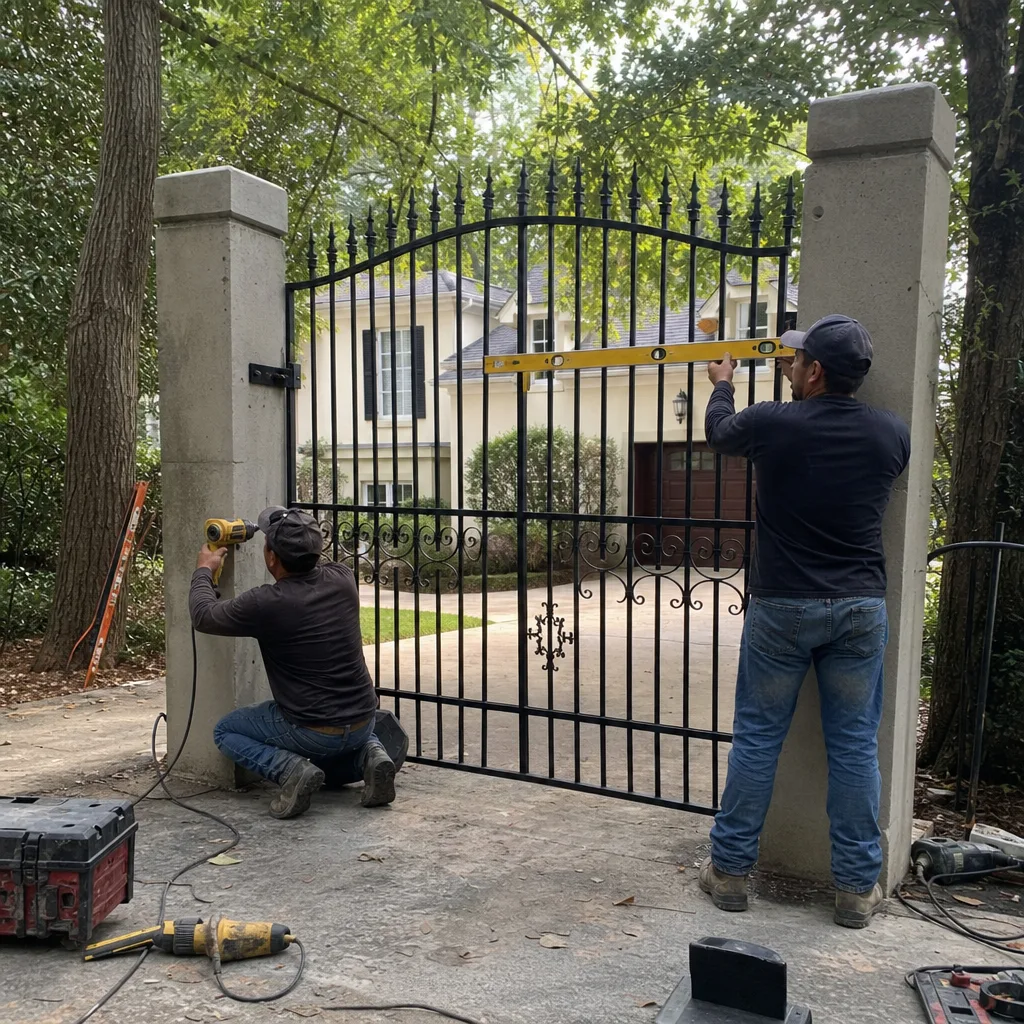
Sandy Springs has a tree canopy coverage of roughly 48%, among the highest in metro Atlanta. That’s aesthetically valuable and ecologically important. For gate maintenance, it’s a year-round complication that doesn’t exist in newer subdivisions with sapling plantings.
The canopy creates four distinct maintenance effects:
Debris loading on horizontal surfaces. Slide gate tracks are essentially gutters. In a wooded lot in the Ridgeview or North Springs areas, a track can accumulate an inch of compressed leaf matter in a single October week. That matter holds moisture against the track, accelerates roller bearing contamination, and in freeze events (rare but not unknown) can ice the track solid.
Root intrusion into post foundations. Oak and hickory roots extend well beyond the drip line. A gate post set 8 feet from a mature tree is within root range. As roots grow, they displace soil and exert pressure on concrete footings. We’ve removed posts with root masses grown entirely through the concrete collar. The post was structurally sound; the concrete had been split.
Shade-induced moisture retention. Gates in dense shade dry more slowly after rain. A metal gate in full sun might be dry two hours after a storm. The same gate under oak canopy can stay damp for 24 hours. That extended wet time multiplies corrosion rates on hinges, latches, and exposed fasteners.
Branch strike risk. Summer thunderstorms and winter ice events both drop limbs. A falling branch can damage gate panels, knock photo eyes out of alignment, or in severe cases, bend track. After any significant weather event, check for new branch contact marks on the gate or surrounding fence.
The practical response: if your property has mature canopy, shorten every inspection interval by 25%. What we recommend as a June check for open properties becomes a May check for wooded ones. The documentation habit matters more here too - a photo of branch clearance in June proves whether a September failure was weather-related or progressive neglect.
The Documentation Habit for Every Season
We’ve mentioned documentation throughout this guide because it’s the single practice that transforms seasonal maintenance from guesswork into evidence. Under The Haven Standard, every professional visit from Vance Gate Repair in Sandy Springs leaves a photo record and written report. Homeowners who adopt a lighter version of the same habit get better service, faster diagnosis, and stronger warranty claims.
Here’s the minimum viable documentation for each seasonal check:
| Season | Photograph | Note in Log |
|---|---|---|
| Summer | Track alignment at 4 p.m.; operator enclosure interior temperature if available | Any binding points, limit switch position, vegetation clearance |
| Fall | Photo-eye LED status; track debris before and after cleaning; roller condition | Debris type and quantity, any roller roughness |
| Winter | Electrical enclosure interior; battery terminals; any corrosion found | Gasket condition, moisture evidence, battery voltage under load |
| Spring | Post plumb from two angles; gate-to-post clearance; soil line | Measurements, any erosion or buildup, concrete condition |
Store these in a dated folder, digital or physical. When you call for service, the technician’s first question is usually “when did this start?” Your documentation answers that precisely. If the problem is warranty-related, the documentation proves whether the condition existed before or after the previous repair.
For Sandy Springs homeowners with multiple properties or rental units, this habit is especially valuable. The photo record from one property becomes the comparison standard for another. We’ve had clients identify a failing BFT operator at a second home because the control board corrosion pattern matched what they’d documented at their primary residence the previous winter.
A Practical Annual Inspection Schedule
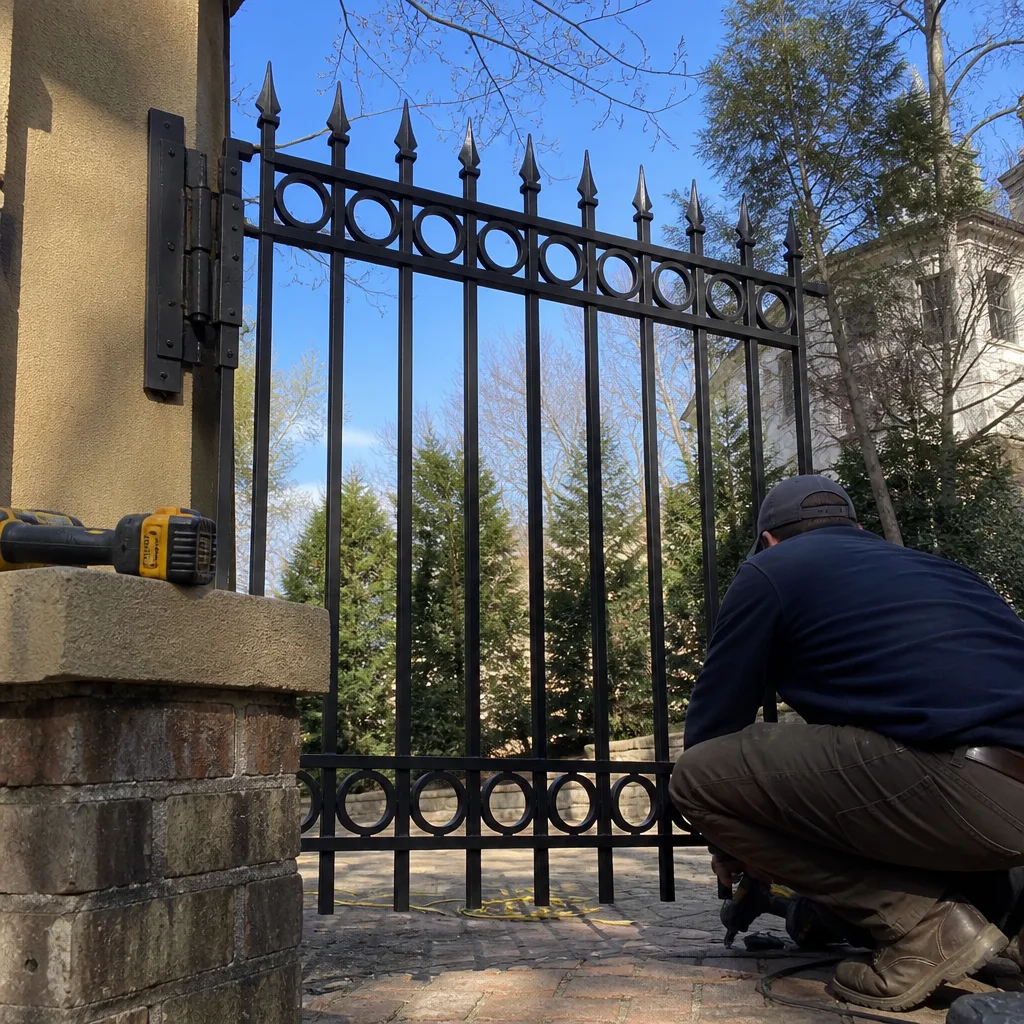
Below is the calendar we use internally, adapted for homeowner execution. Each task takes 20-40 minutes. The total annual time investment is under three hours - compared to the average emergency repair call at $180-340 plus parts.
March: Spring Soil Check
- Sight posts for plumb from two directions
- Measure gate-to-post clearance at top and bottom, record
- Inspect soil line for erosion or buildup
- Check concrete collars for cracks or separation
- Photograph and log all measurements
June: Summer Heat Prep
- Run gate at 10 a.m. and 4 p.m., note any binding
- Clear vegetation 18 inches from operator enclosure
- Verify enclosure ventilation slots are open
- Check limit switch closed position, compare to cool-weather setting
- Photograph track and note any thermal shift
September: Fall Pollen Clearance
- Clean photo-eye lenses with alcohol, verify LED alignment
- Vacuum track debris, inspect roller rotation by hand
- Clear drainage paths at track foundation
- Check keypad and access control housing for debris
- Photograph before/after condition
December: Winter Moisture Defense
- Open all electrical enclosures, inspect for moisture or corrosion
- Test gasket flexibility, replace if hardened
- Verify drain holes are clear
- Test backup battery under load, clean terminals
- Photograph interior conditions, log battery voltage
If any check reveals a condition beyond your comfort level, that’s the right time to call. Emergency service in July or January costs more and waits longer than scheduled maintenance in March or September.
Common Mistakes to Avoid
- Using a pressure washer on the operator or electrical components. The force drives water into sealed housings. We’ve replaced FAAC and Linear control boards that were “cleaned” this way. Use a damp cloth and controlled airflow instead.
- Ignoring a gate that “just needs a little push.” That push is masking mechanical binding that will destroy the operator’s internal clutch or gearbox. The gate should move freely with hand force when disconnected. Any resistance is a problem.
- Applying standard automotive grease to gate components. chassis grease attracts dust and hardens in heat. Use lithium-based gate lubricant or silicone spray on rollers and hinges. Never grease a photo-eye lens or track surface.
- Assuming winter is the safe season. In Sandy Springs, winter moisture causes more electrical failures than summer heat. The mild temperatures lull homeowners into skipping the December check.
- Not documenting “it seems fine.” “Fine” is a baseline, not a absence of data. The photo you take in June of a properly aligned track is what proves the September misalignment is new, not gradual.
- Waiting for complete failure before calling. A gate that reverses twice before closing, or makes a new noise, is telling you something. Complete failure usually costs 2-3x more than the same repair caught early.
- Trying to adjust high-tension spring or cable systems without training. Some swing gates use torsion springs or counterbalance cables under significant load. These can cause serious injury if released improperly. Document the symptom and call for service.
When to Call a Professional
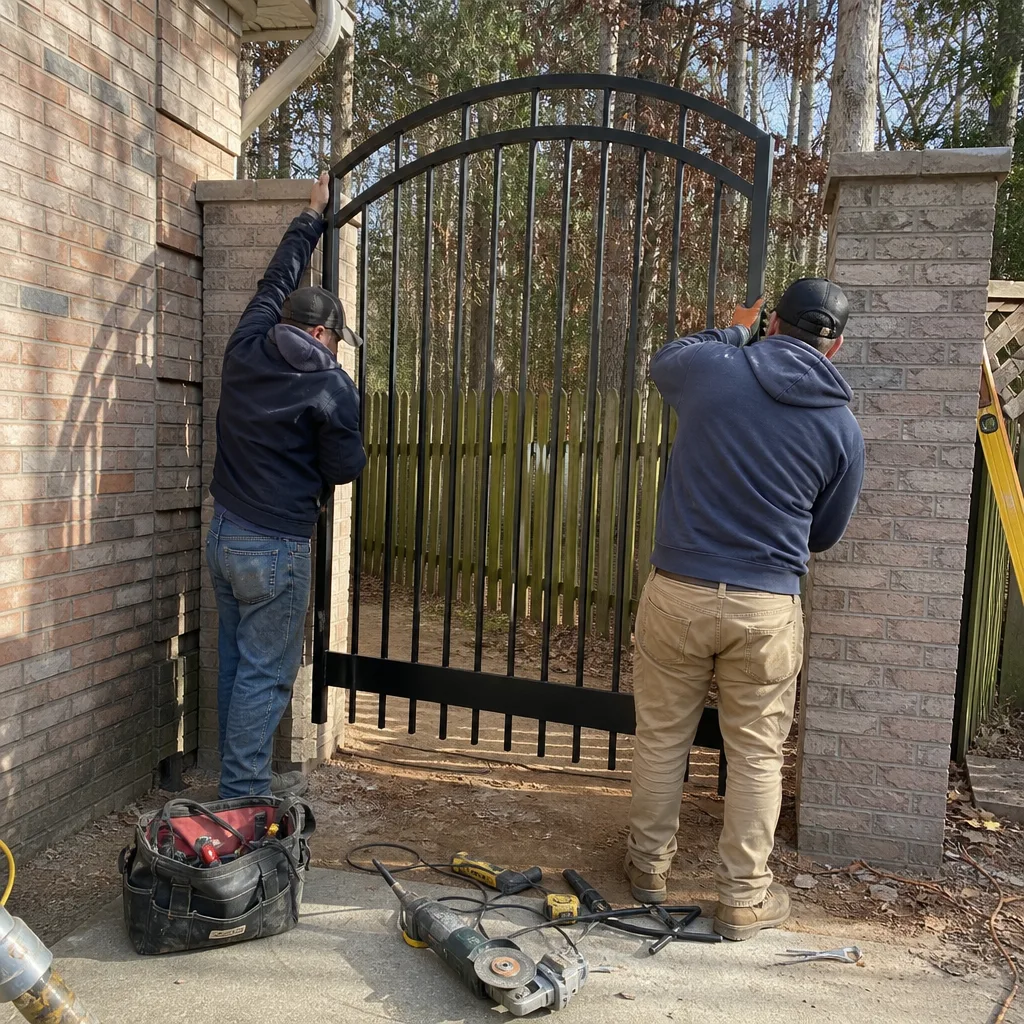
Some conditions require equipment and training beyond homeowner maintenance. Call for service if you find post movement exceeding 3/16 inch, electrical enclosure moisture that returns after cleaning, a gate that binds thermally and cannot be adjusted with bracket positioning, or any condition involving high-tension springs or cables. Gate installation in Sandy Springs and repair work on structural or electrical components should be performed by technicians with proper licensing and insurance.
Vance Gate Repair Sandy Springs offers free estimates in Sandy Springs - call (470) 885-1464. Every estimate includes a written price before any work starts, under Haven Standard Clause 1, and every completed job carries the 365-Day Done Right Promise. We service nine major automation brands including Viking, BFT, and Linear, so we can repair what’s installed rather than steering you toward replacement.
Frequently Asked Questions
Professional seasonal maintenance from Vance Gate Repair runs $120-180 per visit, which includes inspection, adjustment, lubrication, and documentation. Most Sandy Springs homeowners schedule two visits annually (spring and fall) for $240-360 total, compared to $180-340 for a typical emergency repair call plus parts. Call (470) 885-1464 for an exact quote - estimates are free.
Homeowners can handle cleaning, visual inspection, and basic lubrication. Electrical testing, limit switch adjustment, post stabilization, and any work involving high-tension components should be left to trained technicians. The documentation habit we describe above is valuable regardless of who performs the physical work. If you’re unsure about a condition, our free second opinion service will review your documentation and any other company’s written estimate at no charge. You can also explore DIY vs Professional Gate Repair: The Sandy Springs Homeowner’s Decision Guide to help decide what’s safe to handle yourself.
In Sandy Springs’ humidity, expect 18-24 months of reliable service from a quality sealed lead-acid battery, compared to the 3-year interval that might suffice in drier climates. Test quarterly under load; replace when capacity drops below two full gate cycles. Lithium batteries last longer but cost 2-3x more and require compatible charging circuitry. We can test and quote either option.
Thermal expansion of aluminum track is the most common cause in Sandy Springs summer conditions. The track grows, binding against rollers or shifting the gate past its limit switch setting. Check track alignment at temperature as described in the summer section above. If the problem persists in mild weather, the cause is likely electrical - moisture-induced resistance or a failing component that shows heat sensitivity.
We service nine major brands: LiftMaster, FAAC, BFT, Linear, Viking, Ghost Controls, DoorKing, Elite, and Mighty Mule. Our technicians carry parts and programming tools for all nine, so we can repair what’s installed rather than defaulting to replacement. If your operator is from another brand, we can still evaluate it and source parts - our commercial access-control background means we work on systems most residential companies won’t touch.
Every visit includes: full mechanical and electrical inspection; adjustment of track, rollers, limits, and safety devices; lubrication of specified components; load testing of backup battery; cleaning and alignment of photo eyes; and the documented photo record left with you and filed in our job system. The written scope and price are provided before any work starts, per Haven Standard Clause 1. The 365-Day Done Right Promise covers all completed work.
The Bottom Line
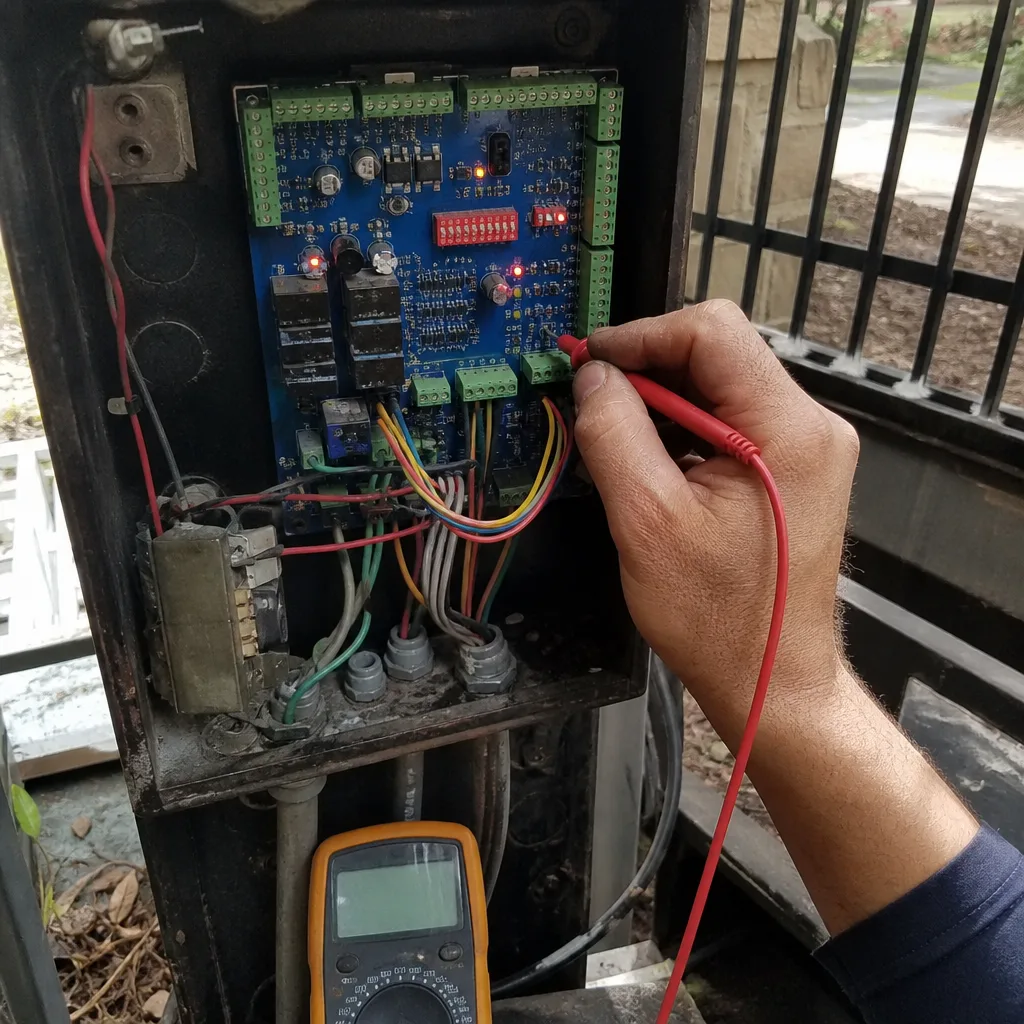
Sandy Springs gate maintenance follows a local calendar, not a national template. Summer heat, fall pollen, winter moisture, and spring soil movement each present distinct risks that respond to specific checks at specific times. The homeowners who avoid emergency repairs are those who treat maintenance as scheduled evidence-gathering, not as a response to obvious failure. Document what you find, know when a condition exceeds safe homeowner intervention, and build a relationship with a technician who can read your records and quote accurately from them. For more guides & resources on gate maintenance throughout the year, visit our blog. The cost of prevention is always lower than the cost of failure, and in Sandy Springs, the failure season you’re ignoring is probably not the one the national guides warned you about.
Written by Adrian Vance, Owner at Vance Gate Repair Sandy Springs, serving Sandy Springs since 2014.