
Last updated September 22, 2026
Free on-site gate assessment - hinges, posts, and your LiftMaster or Nice gate operator checked before anything is quoted
The assessment is free and the quote is the invoice.

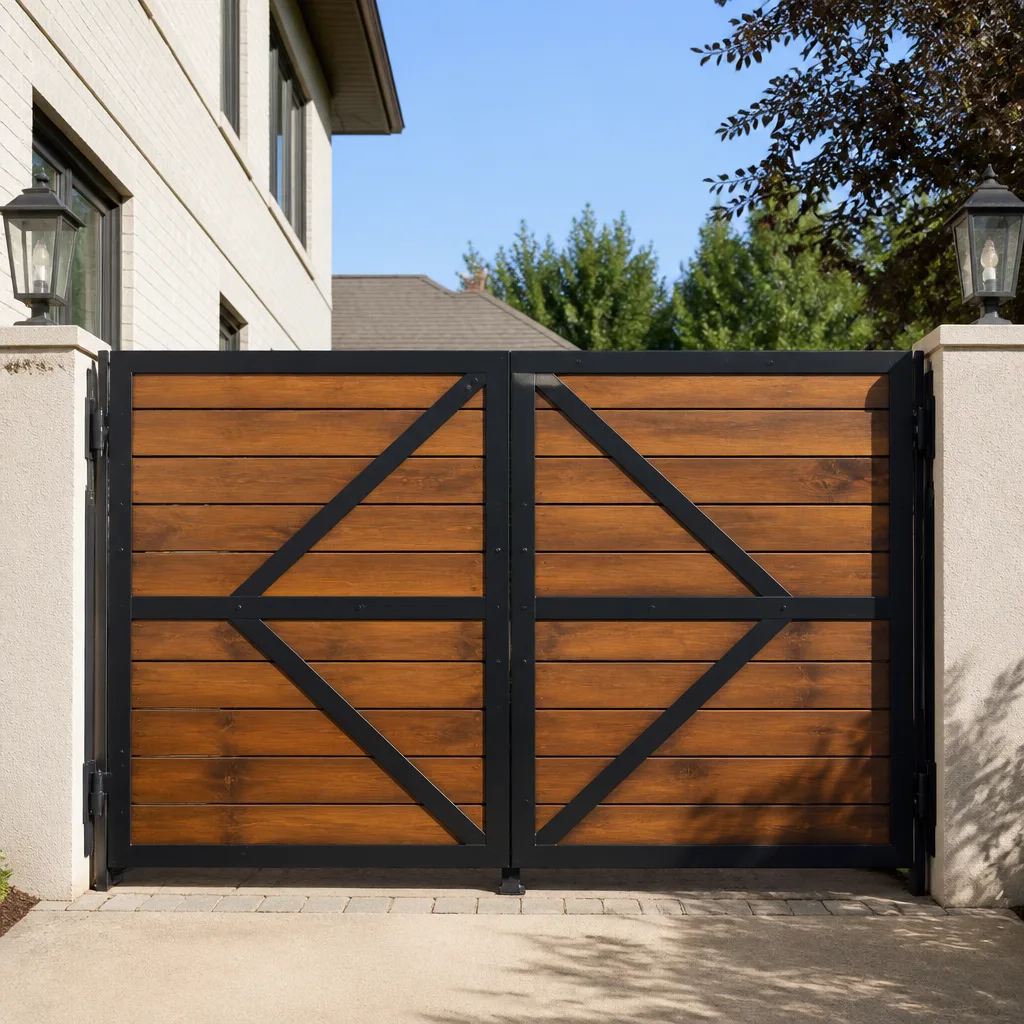
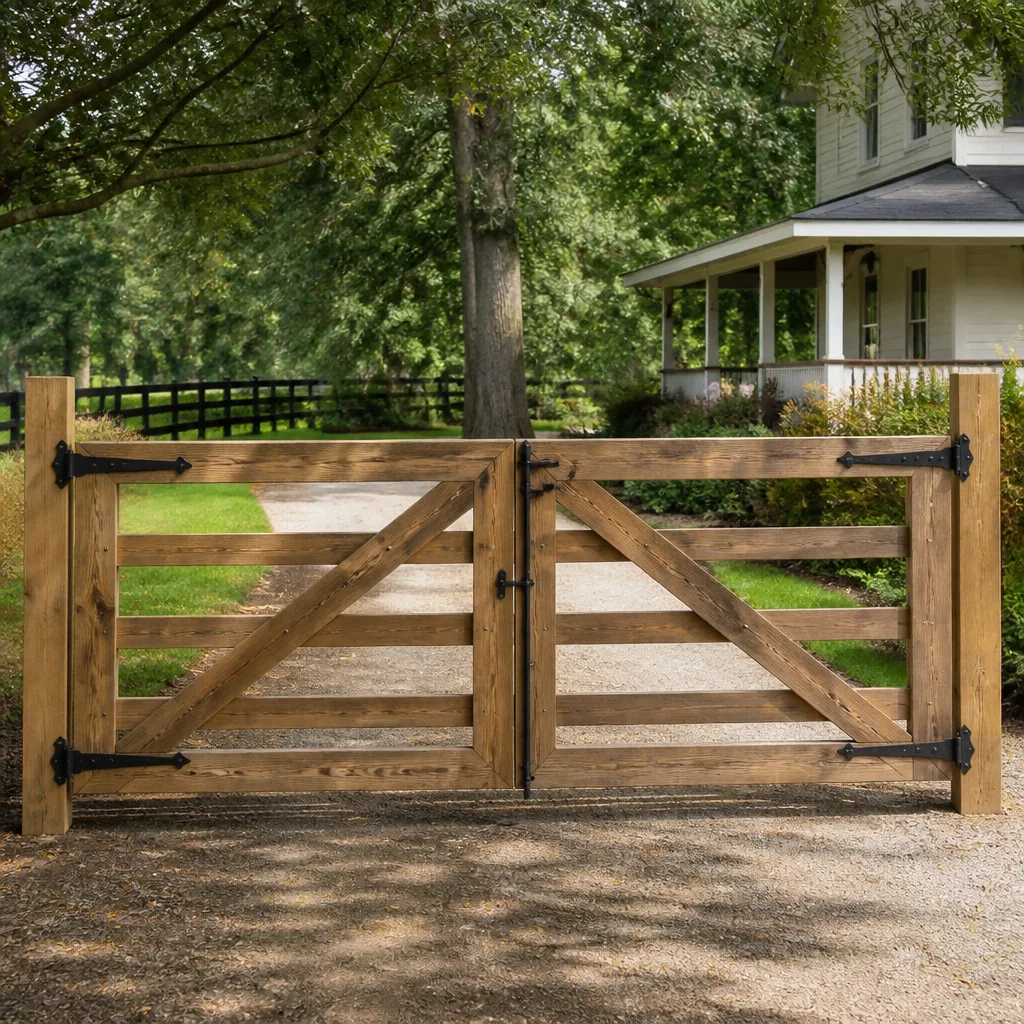
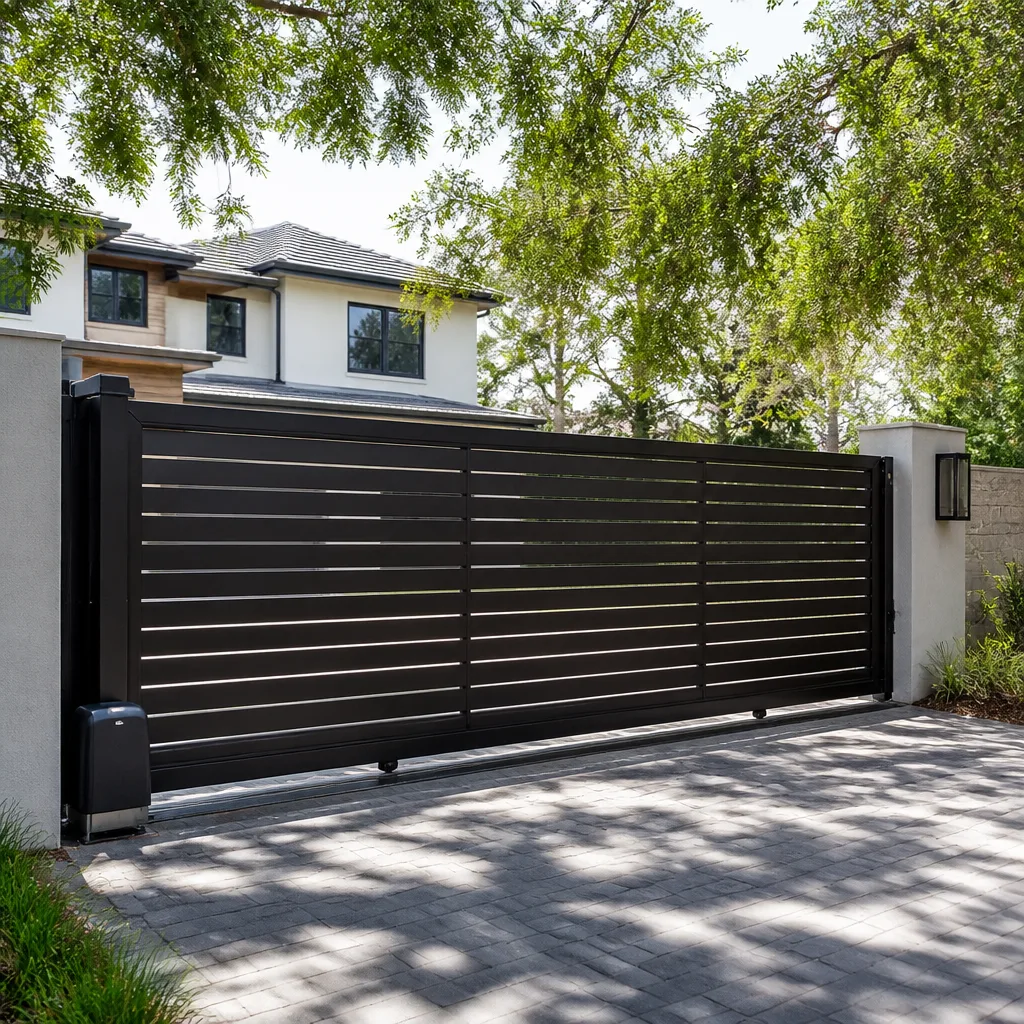
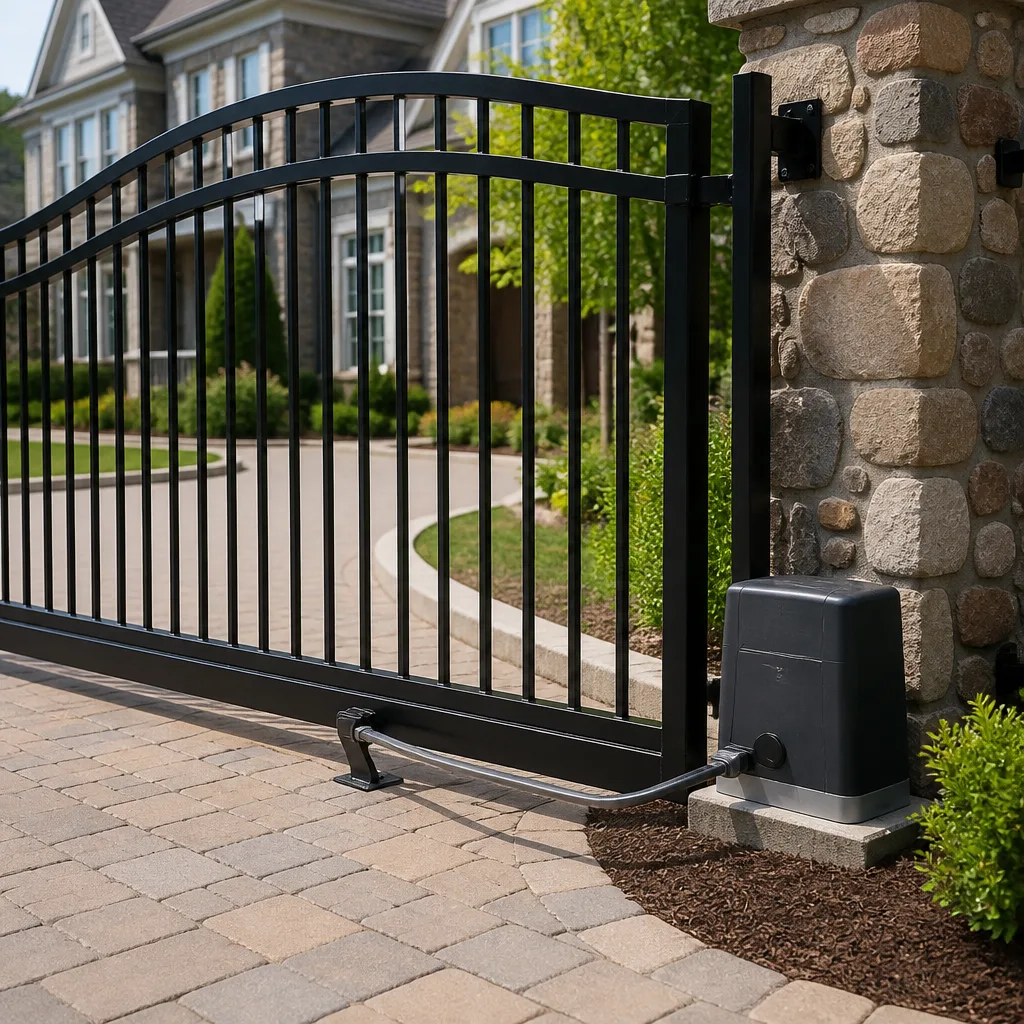
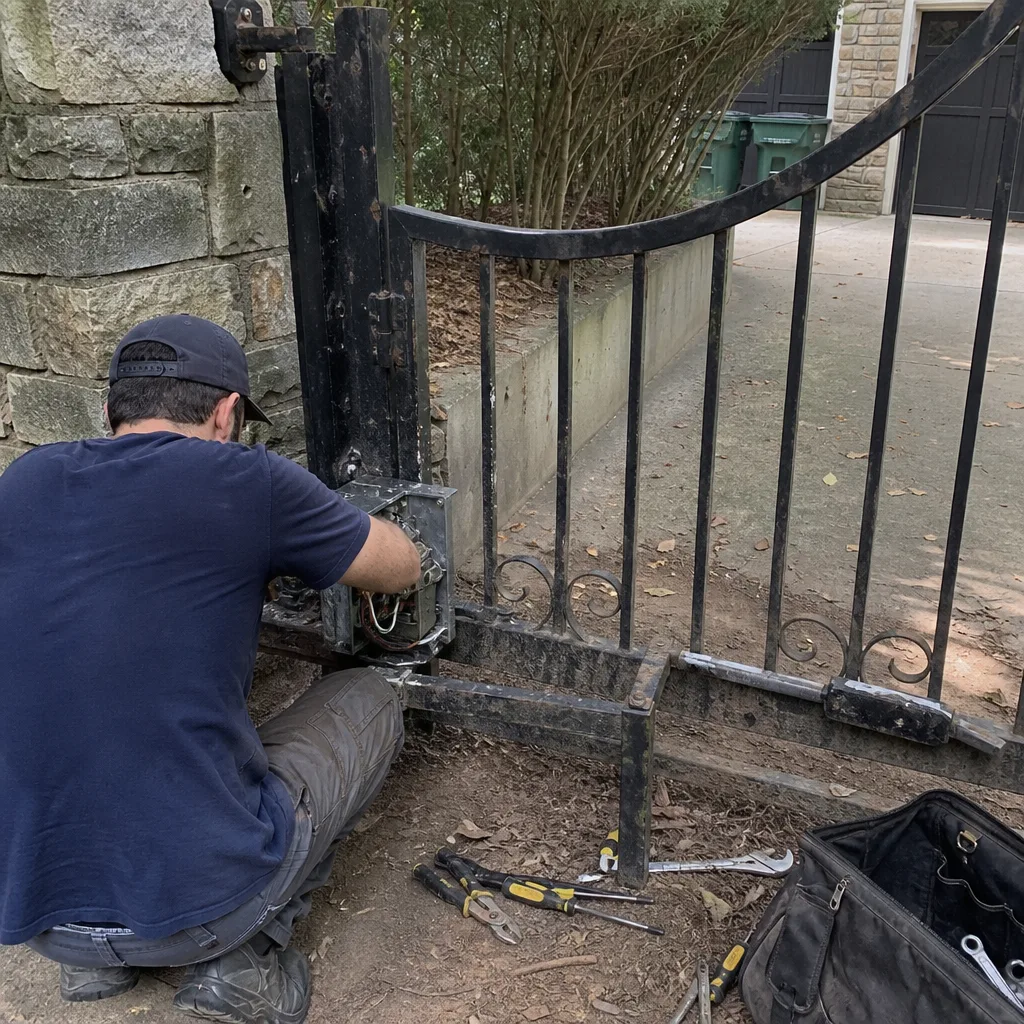 Before
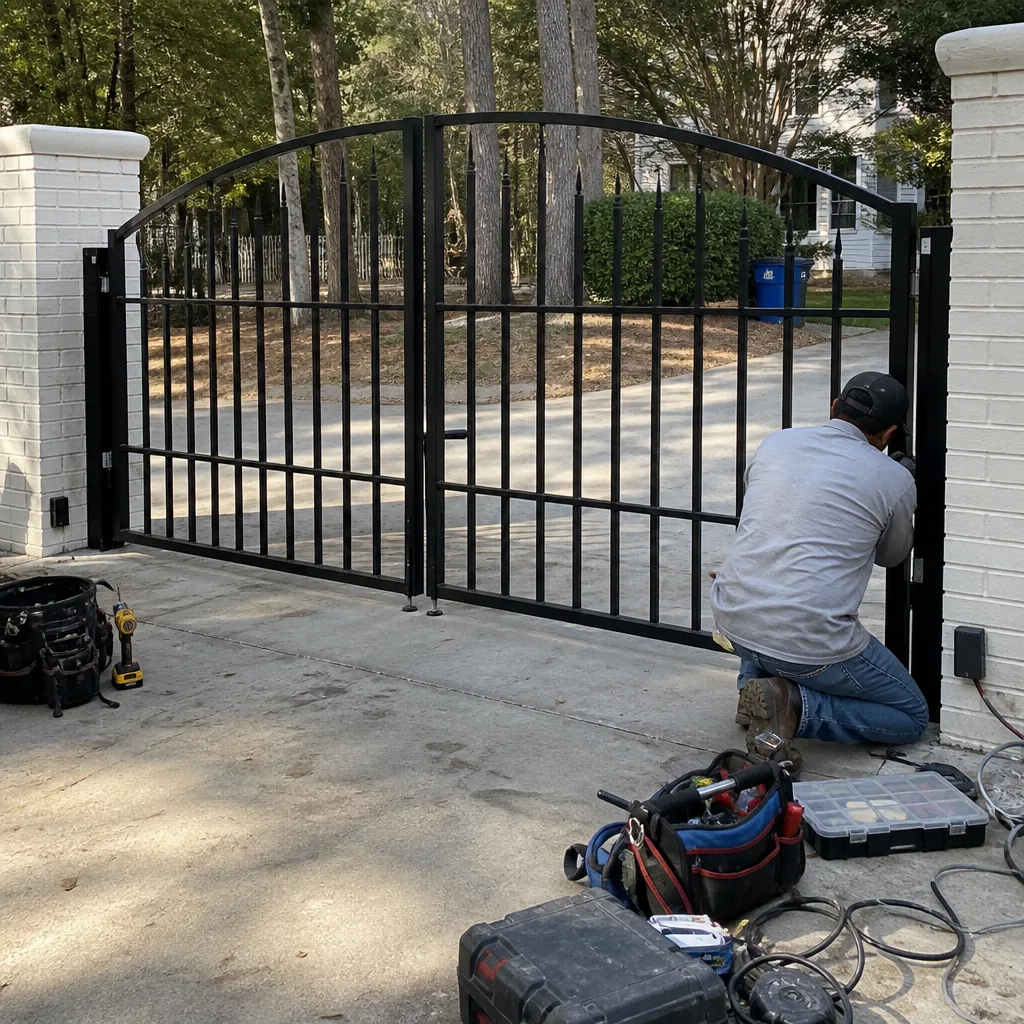 After
After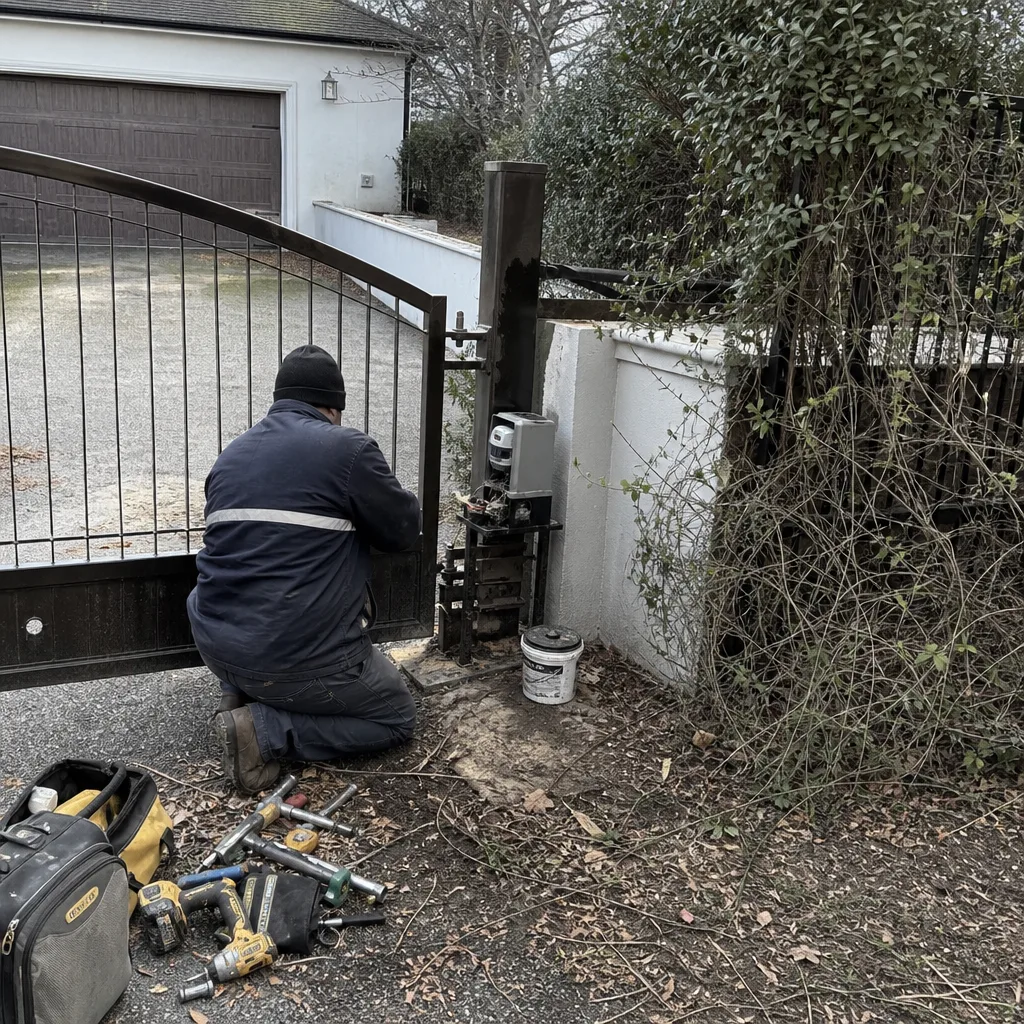 Before
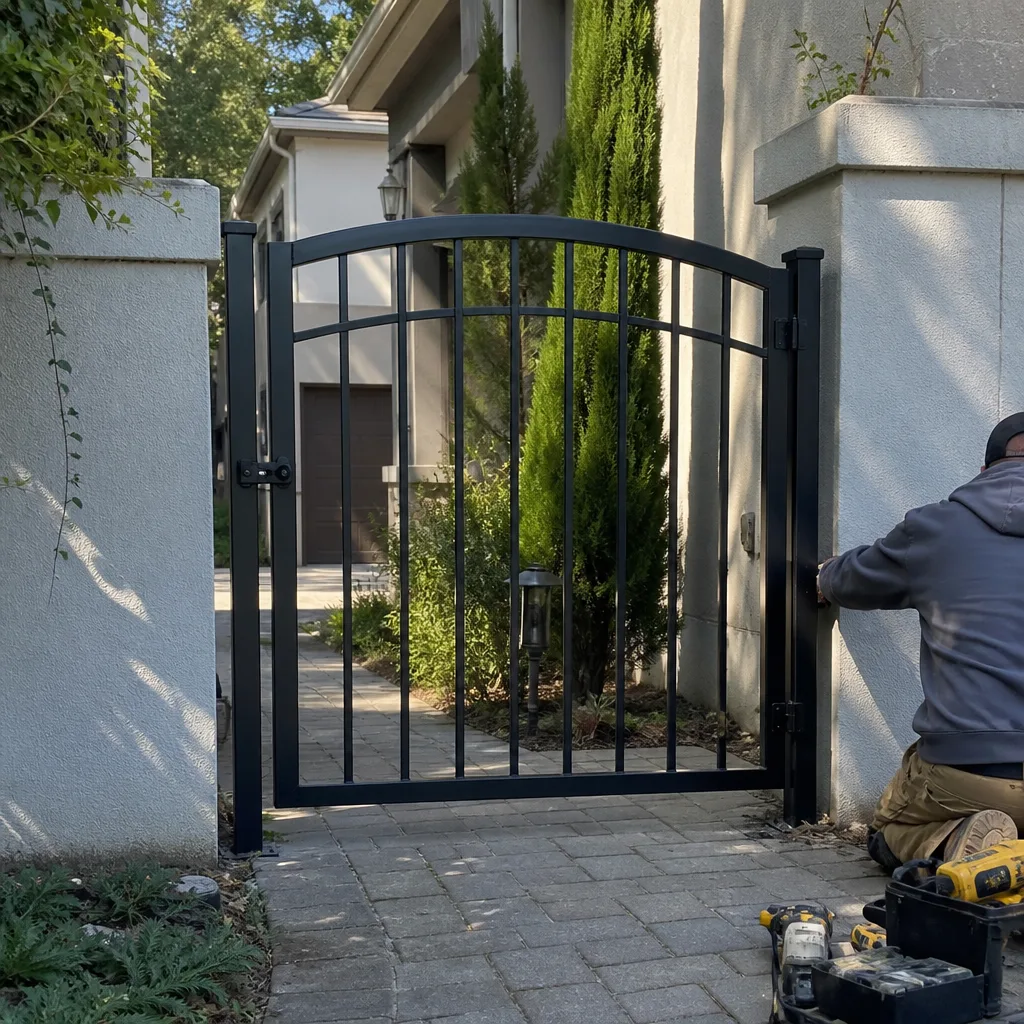 After
After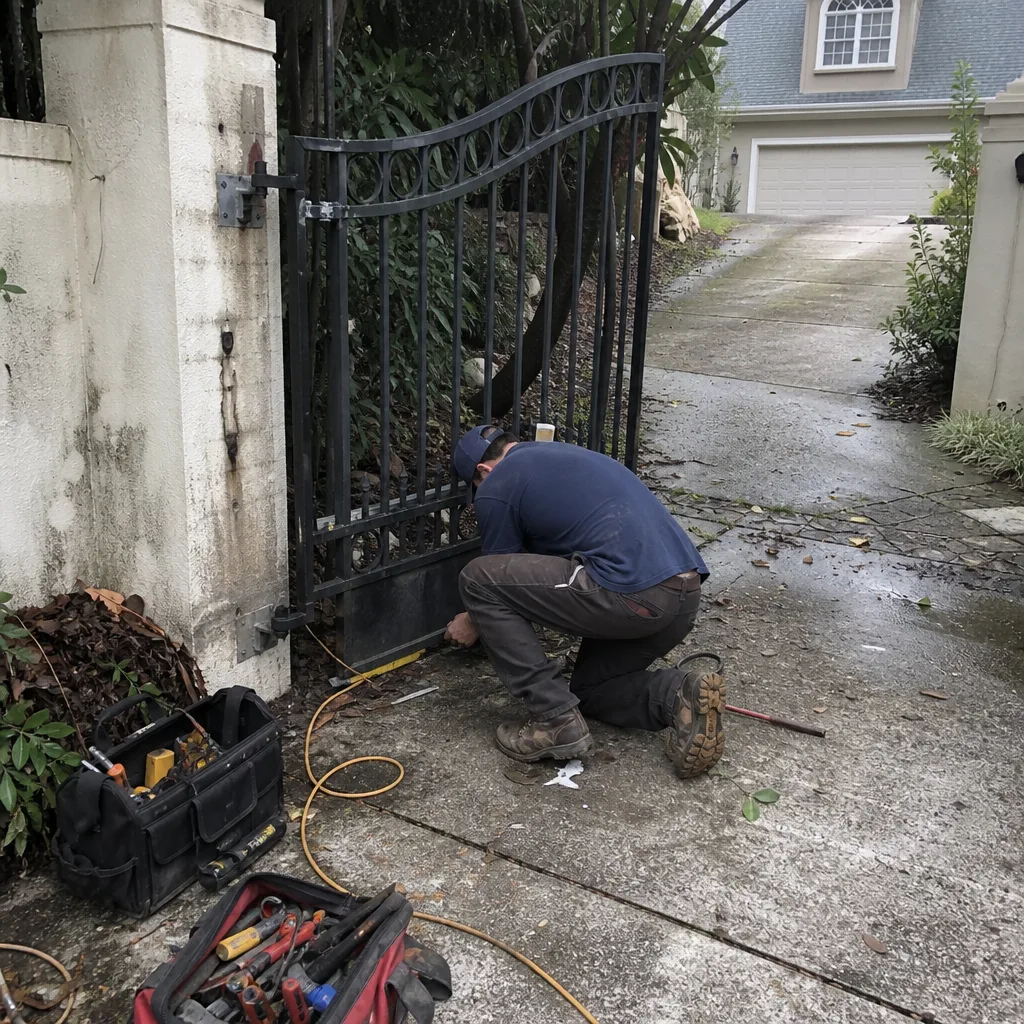 Before
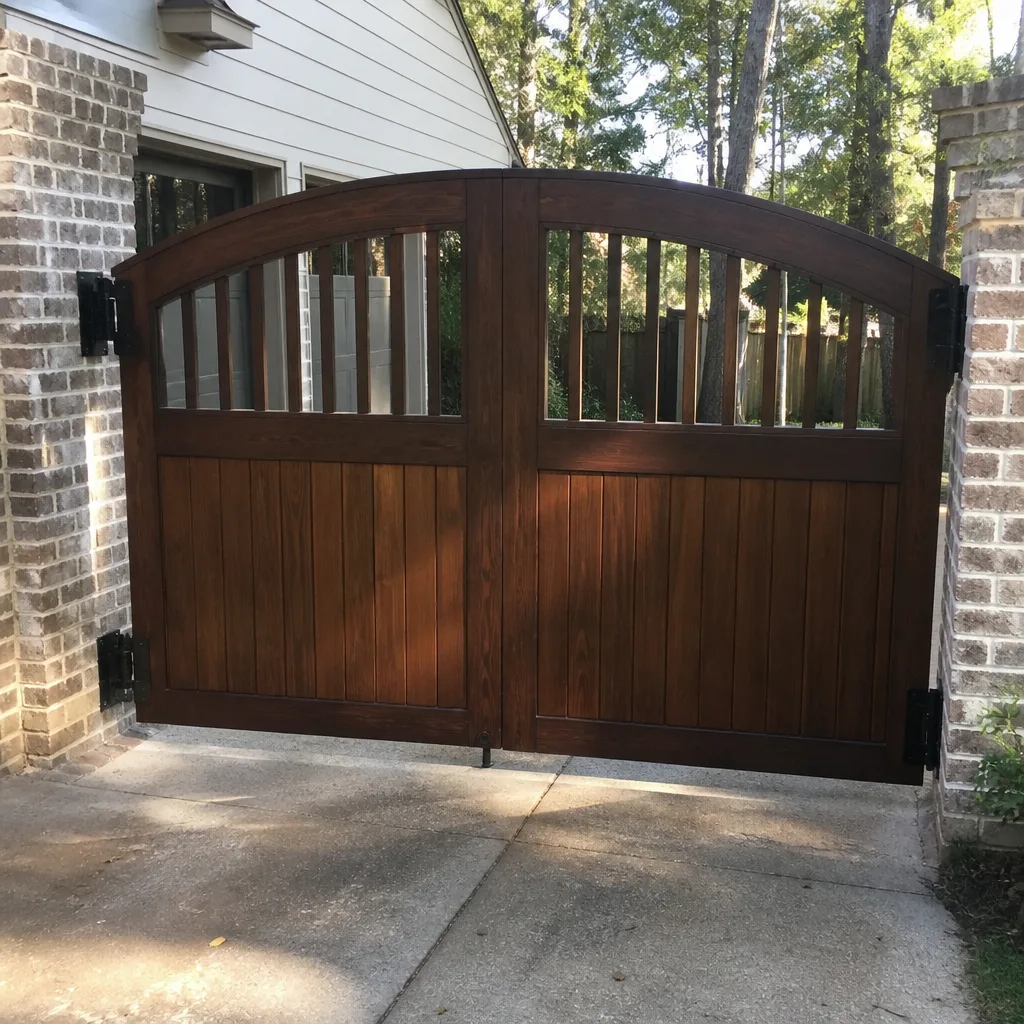 After
AfterThe Complete Guide to Gate Repair in Sandy Springs
A gate that opens slowly today and a gate that won’t open tomorrow are usually the same gate, separated by about six weeks and one ignored symptom. In Sandy Springs, where clay-heavy soil shifts with every rain cycle and summer humidity pushes electrical components past their rated tolerance, most repair calls we handle are repeat visits on problems that left visible evidence the first time. This guide maps every common failure mode to its evidence trail so you can describe the problem precisely, not just “it stopped working,” and so you know what documentation to demand before anyone picks up a tool. For DIY vs Professional Gate Repair: The Sandy Springs Homeowner’s Decision Guide, see our companion post.
Quick Answer
Gate repair in Sandy Springs typically costs between $180 and $850 depending on whether the issue is mechanical wear, electrical fault, operator failure, or structural shift from foundation drift-see our Gate Repair Cost Breakdown: The Sandy Springs Homeowner’s Reference for 2026 for detailed pricing factors. Most single-component repairs on swing or slide gates are completed in one visit when the homeowner can describe the symptom chain accurately. The key is distinguishing root cause from symptom, which starts with reading the evidence the gate has already left behind.
Table of Contents
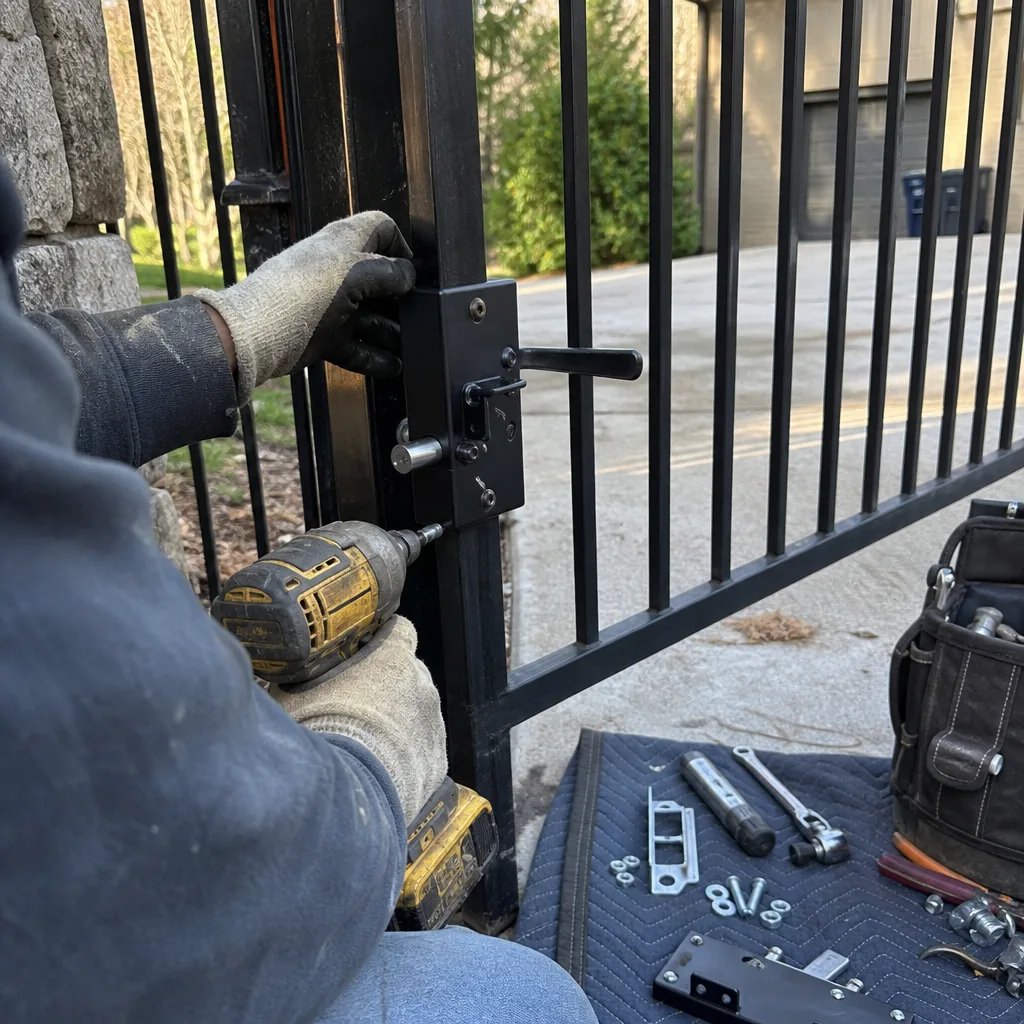
- The Four Root Causes of Gate Failure in Sandy Springs
- How Sandy Springs Clay Soil Mimics Electrical Problems
- Repairing the Symptom vs. Repairing the Cause
- What a Proper Repair Record Should Contain
- Questions to Ask Before Work Starts
- What Gate Repair Costs in Sandy Springs
- Working With Your Existing Operator Brand
- Common Mistakes to Avoid
- When to Call a Professional
- Frequently Asked Questions
 Before
 After
AfterThe Four Root Causes of Gate Failure in Sandy Springs
Every gate failure we’ve documented since 2014 falls into one of four categories. Knowing which category you’re dealing with changes what you pay, how long the fix takes, and whether you’ll be calling again in six months.
1. Mechanical Wear
This is the most straightforward category and the one most homeowners recognize. Hinges seize, rollers flatten, chain stretches, and sprockets develop tooth wear that shows up as intermittent catching or a rhythmic clunk.
Field evidence to look for:
- Swing gates: grease streaking on the inside of the post where the hinge pin has migrated; a gap that widens and narrows as the gate cycles
- Slide gates: chain sag beyond 2 inches at mid-span; roller wheels with flat spots or visible bearing rust
- Dual-swing gates: one leaf lagging behind the other by a consistent interval, usually 2-4 seconds
In Sandy Springs, mechanical wear accelerates on properties near the Chattahoochee River corridor where humidity stays above 70% for months. We’ve replaced hinge pins in Riverwood neighborhoods that showed corrosion patterns typically seen in coastal environments. The fix is usually direct: replace the worn component, set proper torque, and photograph the assembly before leaving.
2. Electrical Fault
Electrical problems masquerade as mechanical ones more often than the reverse. A gate that “just stopped” mid-cycle often has a loose terminal at the control board, not a failed motor.
Diagnostic sequence we use:
- Check for voltage at the operator input terminals under load (not just at rest)
- Inspect low-voltage control wiring for rodent damage, especially in perimeter-mounted conduit
- Test photo-eye alignment and response time, not just beam continuity
- Verify ground fault integrity, particularly on installations older than 2017 when Sandy Springs began stricter enforcement of GFCI protection on exterior outlets
One pattern we see repeatedly in Sandy Springs: photo-eye misalignment caused by post settlement. The beam reads continuous until thermal expansion shifts the bracket 1/8 inch, then the gate reverses randomly. The symptom looks like operator confusion. The cause is structural micro-movement.
3. Operator Failure
Gate operators, the motor and control assembly, fail in predictable ways. Capacitors swell and lose capacitance. Control boards develop cold solder joints. Gearboxes leak lubricant until the worm drive strips.
Operator failure evidence:
- Capacitor failure: motor hums but doesn’t turn, especially on first cycle of the day when inrush current is highest
- Control board: intermittent operation that correlates with temperature, works at 8 AM, fails at 3 PM
- Gearbox: grinding noise under load, smooth operation when gate is disconnected and moved by hand
We service nine automation brands, including Linear, Viking, and Ghost Controls, and the failure patterns are brand-specific. Linear operators tend to show capacitor issues around year 7 in Sandy Springs’ heat. Viking rack-and-pinion units hold up well but develop limit-switch drift. Ghost Controls systems, popular on residential swing gates, need more frequent battery maintenance if the solar panel is partially shaded by mature oak canopy, common in neighborhoods like Hammond Hills.
4. Structural Shift
This is the category most often misdiagnosed as electrical or operator failure, and it’s where Sandy Springs homeowners lose the most money to unnecessary component replacement.
Clay-heavy soil expands when wet and contracts when dry. A gate post that was plumb in March can lean 2 degrees by August. The gate still opens, but the operator strains, the latch misses, and the photo-eye alignment drifts. Replace the operator and the new one fails the same way. Adjust the photo-eye and it misaligns again in two weeks.
Structural shift evidence:
- Gate drags at one point in its arc, consistently, regardless of weather
- Latch and strike no longer meet without lifting or pushing the gate
- Operator mounting bolts show fresh wrench marks from repeated adjustment
- Concrete footing has visible crack or soil gap at base
How Sandy Springs Clay Soil Mimics Electrical Problems
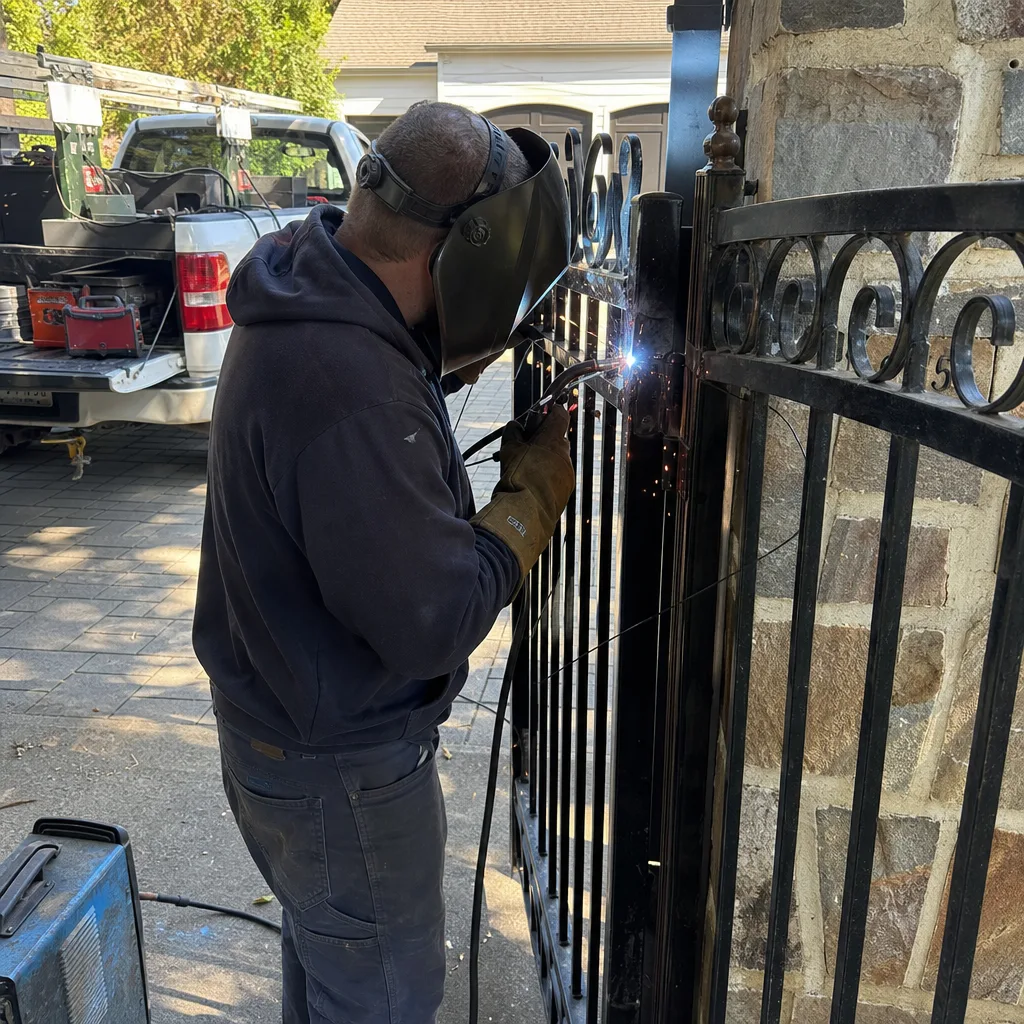
The Georgia Piedmont clay that underlies most of Sandy Springs is expansive soil, it changes volume with moisture content. This isn’t abstract geology. It directly affects what you pay for gate repair and whether the fix lasts.
Here’s how the mimicry works. Water saturates the clay after heavy rain. The footing heaves upward or tilts. The gate post moves with it. The photo-eye beam, mounted on that post, shifts out of alignment. The gate reverses intermittently. A technician who doesn’t check post plumb assumes the photo-eye is the problem, adjusts it, and leaves. Two weeks later, dry weather contracts the clay, the post settles back, and the photo-eye is misaligned in the opposite direction.
We’ve documented this exact sequence on properties near Morgan Falls and in the Dunwoody Club Forest area. The homeowner paid for two photo-eye adjustments and a control-board replacement before someone checked the post with a level.
How to tell the difference before spending money:
- Check the gate post for plumb when the soil is at average moisture, not right after rain or during drought
- Look for soil cracks radiating from the footing base, they indicate cyclic movement
- Note whether the problem correlates with weather patterns, electrical faults usually don’t
- Ask the technician to photograph the post angle and include it in the repair record
Under Vance Gate Repair Sandy Springs home and our Haven Standard, we document post angle on every visit where structural movement is suspected. If the post is out of plumb, we say so in writing before quoting any electrical work. Clause 1 (written price) applies, but so does Clause 4 (evidence on every job). You get the photo.
Repairing the Symptom vs. Repairing the Cause
The most expensive repair is the one that has to be done twice. This happens when a technician addresses what the gate is doing, not why it’s doing it.
Symptom-only repair examples from our files:
- Single-swing gate in Sandy Springs’ North Springs area: Gate reversed before closing. Previous company adjusted the force sensitivity three times. We found a cracked hinge pin allowing the gate to sag 1.5 inches at the latch end. The operator correctly detected excess load and reversed. Replacing the hinge pin solved it permanently.
- Dual-swing gate near Pill Hill: One leaf stopped mid-travel. Previous company replaced the operator. We found the underground loop wire had been nicked during landscaping, creating an intermittent short that pulsed the safety circuit. The original operator was fine.
- Slide gate in a commercial lot off Roswell Road: Chain jumped the sprocket repeatedly. Previous company tensioned the chain tighter each visit. We found the guide rollers had worn to the point that the gate frame twisted under load, throwing the chain. New rollers, proper chain tension, problem solved.
The pattern in each case: the symptom was real, but the repair targeted the wrong system. A gate that reverses is not always a force-setting problem. A gate that stops is not always an operator problem. A chain that jumps is not always a tension problem.
Our diagnostic protocol, developed from 22,000+ documented jobs since 2014, requires checking three systems before quoting any single-system repair:
- Mechanical: hinges, rollers, track, chain, physical obstruction
- Electrical: power supply, control wiring, safety devices, grounding
- Structural: post plumb, footing integrity, gate frame squareness
Only after all three check clear do we quote component replacement. This adds 15-20 minutes to the initial visit. It saves hundreds of dollars in callbacks.
What a Proper Repair Record Should Contain
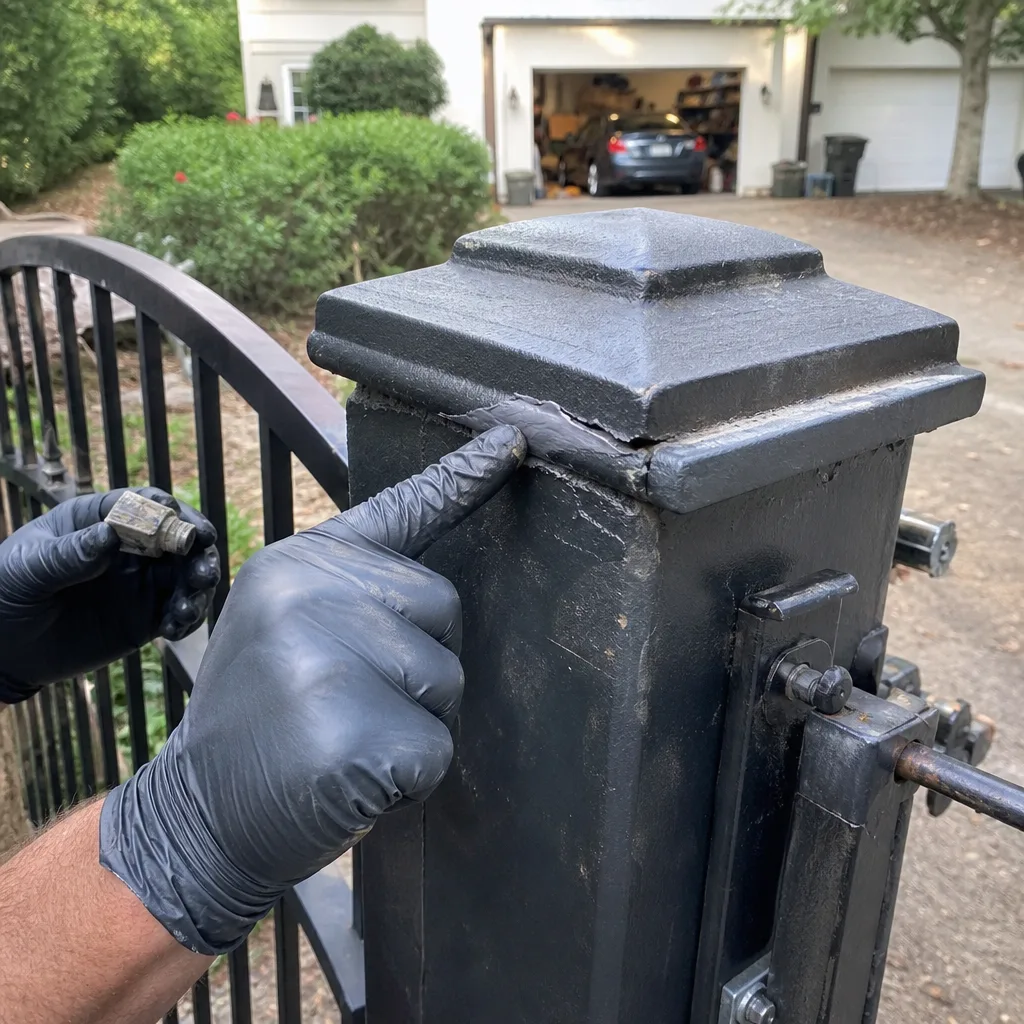
Verbal-only service creates future costs. If your gate fails again in eight months and a different technician arrives, they start from zero. They re-diagnose what was already diagnosed. You pay twice for the same discovery.
Under our Haven Standard, every visit leaves a documented record. Here’s what that contains and why each element matters:
Wiring Diagram
Not a generic schematic, the actual as-found configuration. Which terminals have which wires. Whether the loop detector is wired in series or parallel. Where the transformer taps are set. This matters because previous modifications, often unlabeled, change how the system behaves. A technician who can’t see what was changed guesses.
Limit-Switch Readings
For operators with electronic limits, we record the open and close position values. For mechanical limits, we photograph the cam position relative to the microswitch arm. If the gate starts overshooting in six months, we know whether the limit drifted or something else changed.
Torque Arm and Bracket Photos
The mechanical connection between operator and gate is where hidden wear accumulates. We photograph the arm angle, the clevis pin condition, and any weld cracks at the bracket. On a BFT subterranean operator we serviced last year in Sandy Springs, this photo revealed a bracket weld that was 80% cracked through, invisible without close inspection.
Part Numbers and Serial Numbers
What was installed, when, with what warranty period. If a Linear actuator fails under warranty, we don’t need to disassemble it to identify the model. The record has it.
Soil and Structural Notes
Post angle. Footing condition. Drainage observations. These become baseline data for future visits, especially critical in Sandy Springs’ expansive clay.
Before we leave any job, you get a copy of this record from our Gate Repair services visit. The original is filed in our system by address and date. If you call us in two years, we pull the file and know what we found last time. If you call someone else, you hand them documentation that saves diagnostic time and your money.
This documentation habit carried over from Adrian Vance’s commercial access-control work starting in 2014. Commercial sites require as-built drawings and maintenance logs for liability and code compliance. Residential gates deserve the same standard.
Questions to Ask Before Work Starts
The right questions reveal whether a technician is diagnosing or guessing. Frame them around documentation, not trust.
“Will I get the price in writing before you start?”
This is Haven Standard Clause 1. If the answer is “I’ll tell you after I see it,” you have no baseline for comparison and no protection against invoice inflation. We deliver a written scope and flat price before any tool is picked up.
“What evidence will I have of what you found and what you changed?”
Clause 4 again. Photos, readings, diagrams. If the technician can’t describe their documentation practice, they probably don’t have one.
“Are you checking structural, electrical, and mechanical, or just the thing that’s broken?”
Three-system verification prevents repeat visits. A technician who jumps straight to component replacement is working fast, not working thoroughly.
“What happens if this repair doesn’t solve the problem?”
Our 365-Day Done Right Promise covers this explicitly. If the repair is not right, we make it right at no additional charge within one full year. No argument, no fee, no expiration anxiety. Ask whether your technician’s guarantee has similar terms or whether “warranty” only covers the part, not the labor to diagnose why it failed.
“Can you work on my existing brand, or are you steering me toward replacement?”
We service nine major brands, including Viking and Ghost Controls, and we repair before replacing. A technician who only carries one brand in their truck has a financial incentive to sell you that brand.
“If I have another company’s estimate, will you review it?”
We offer free second opinions on any written estimate. Bring the paperwork. We’ll tell you whether the scope matches the symptoms and whether the pricing aligns with Sandy Springs market rates.
What Gate Repair Costs in Sandy Springs
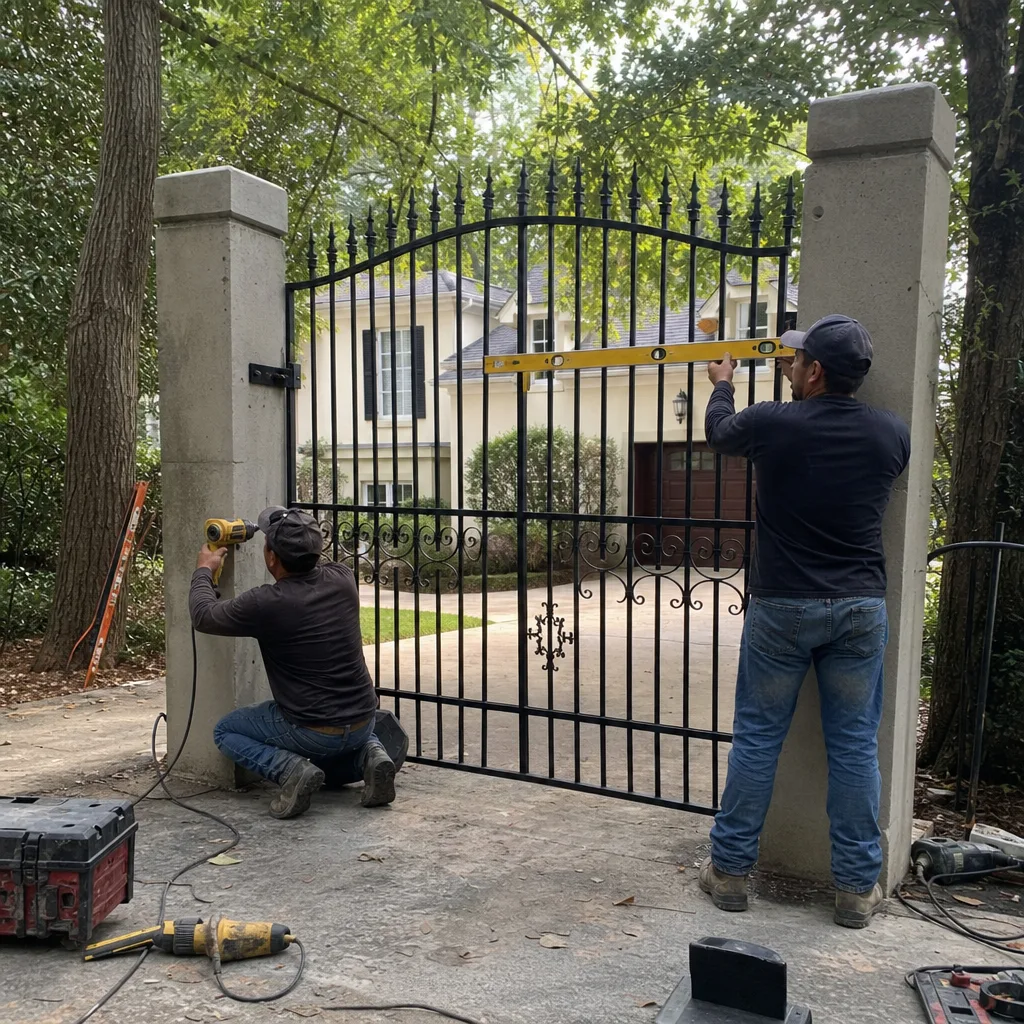
Price transparency is Clause 1 of the Haven Standard. Here are the ranges we see in the Sandy Springs market, based on jobs we’ve completed and estimates we’ve reviewed-find more guides & resources on our blog:
| Repair Category | Typical Range | What Affects Price |
|---|---|---|
| Photo-eye alignment or replacement | $180 – $280 | Bracket condition, wiring length to splice, single or dual beam |
| Hinge pin / bushing replacement (swing gate) | $220 – $380 | Post material (wood, steel, masonry), gate weight, number of hinges |
| Chain and sprocket service (slide gate) | $280 – $450 | Chain length, sprocket bore size, whether idler needs replacement |
| Control board replacement | $340 – $620 | Brand availability, enclosure condition, whether reprogramming is complex |
| Operator motor replacement | $480 – $850 | Brand, horsepower, single or dual swing, slide vs. swing configuration |
| Post resetting / structural correction | $650 – $1,400 | Footing depth, access for equipment, gate removal and rehang |
These are quoted prices, agreed before work starts, not estimates that balloon. Factors that push toward the higher end: operators older than 10 years where parts are scarce, gates over 16 feet or 800 pounds, and access limitations that require hand-digging rather than machine work.
Installation of new operators or complete gate systems is priced separately, measured and scheduled, not same-day. For Gate Installation in Sandy Springs, we provide a free measure and written quote with no deposit required to proceed.
Working With Your Existing Operator Brand
Gate operators are not interchangeable at the component level. A control board for a Linear actuator won’t fit a BFT subterranean motor. The mounting pattern for a Viking slide-gate operator differs from DoorKing’s. When a technician arrives without brand-specific knowledge, their default is replacement with whatever they carry.
We maintain parts and training for nine brands: LiftMaster, FAAC, BFT, Linear, Viking, Ghost Controls, DoorKing, Elite, and Mighty Mule. This means:
- We can often repair rather than replace, even on older units
- We carry common failure parts for each brand, reducing wait time
- We know the brand-specific diagnostic sequences, what error codes mean, and which symptoms are known issues
For Gate Motor & Opener in Sandy Springs service, brand familiarity matters. A Ghost Controls system with solar charging requires different battery testing than a hardwired Linear. A Viking with mechanical limits adjusts differently than a FAAC with electronic positioning. Technicians who treat all operators as generic miss these distinctions and replace parts that aren’t failed.
One Sandy Springs example: a homeowner near Heards Ferry had been quoted $1,200 for a new operator on a gate that “wouldn’t respond to remotes.” The existing unit was a DoorKing with a known issue in the 9100 series receiver board, a $180 part. We had it in stock. The gate worked that afternoon. Documentation included the part number, serial number, and receiver frequency setting for future reference.
Common Mistakes to Avoid
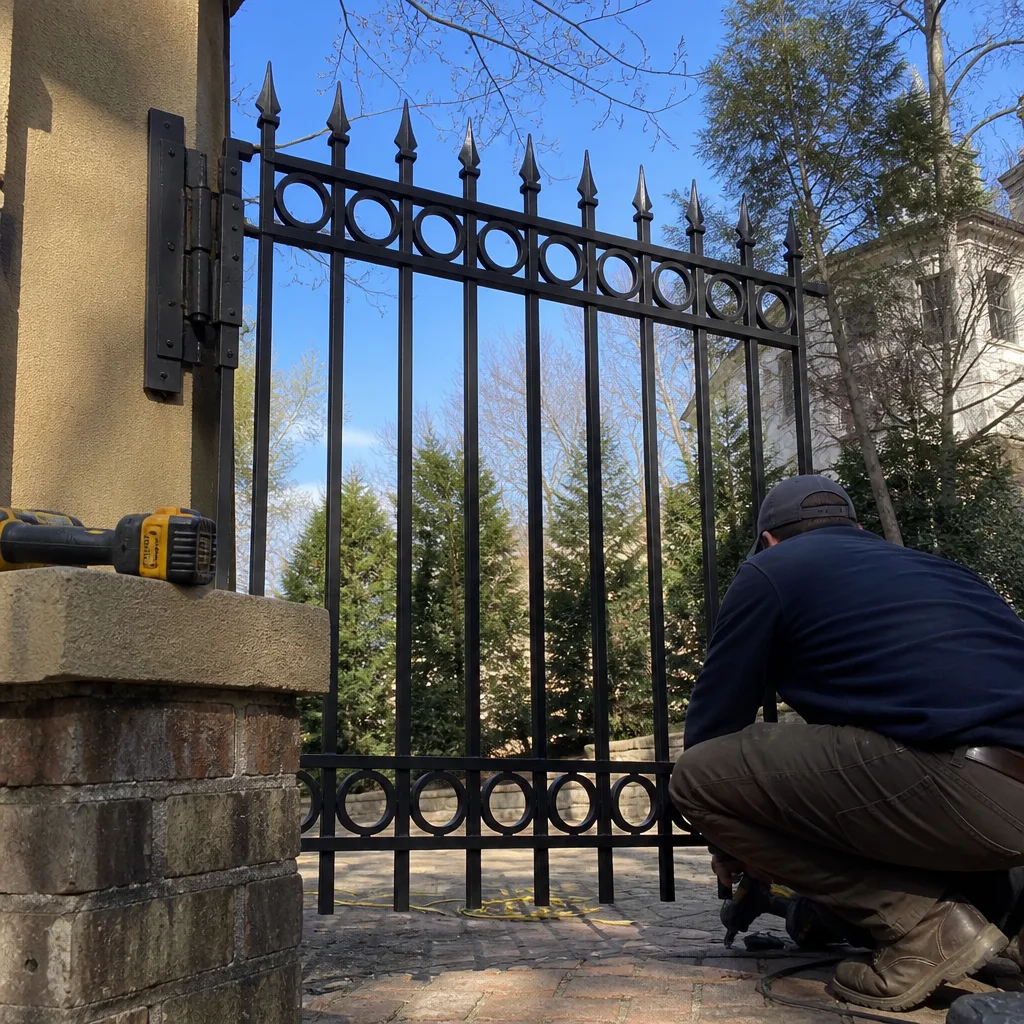
- Ignoring the first slow cycle. A gate that takes 4 seconds longer to open than last month has a mechanical or electrical problem developing. Waiting for complete failure usually means replacing more components.
- Adjusting force settings to overcome mechanical drag. This is dangerous. The force setting exists to protect people and vehicles. Increasing it to compensate for a dragging hinge or bent track turns a maintenance issue into a safety hazard.
- Assuming “no power” means “bad operator.” In Sandy Springs, GFCI trips on exterior outlets are common after storms. Check the outlet with a lamp before calling for operator replacement.
- Accepting verbal estimates for structural work. Post resetting, footing repair, and frame welding require written scope. Without it, you have no recourse when the final bill exceeds the handshake.
- Neglecting seasonal maintenance. Hinge lubrication, chain tension checks, and photo-eye cleaning take 20 minutes and prevent mid-season failures when every company is booked two weeks out.
- Hiring based on lowest price without documentation requirements. The cheapest quote that leaves no record becomes the most expensive when the next technician starts from zero.
When to Call a Professional
Call when the symptom chain is unclear, when safety devices are involved, or when the repair requires working on the operator’s high-voltage side or the gate’s structural mounting. Gate operators contain capacitors that retain charge after disconnection. Springs and counterweights store mechanical energy. These are not DIY projects.
Specific scenarios that warrant immediate professional attention: the gate reverses unpredictably with vehicles or people nearby; the operator hums but the gate doesn’t move, indicating potential gearbox or capacitor failure; the post has visible movement or the footing is cracked; or you’ve had two or more repairs on the same symptom in twelve months, suggesting misdiagnosis.
Vance Gate Repair Sandy Springs offers free estimates in Sandy Springs. A live person answers at (470) 885-1464, 24 hours a day. You’ll speak with someone who can dispatch a background-checked, uniformed technician, name and photo provided before arrival, who will deliver a written price before any work starts and leave a documented photo record when the job is done.
Frequently Asked Questions
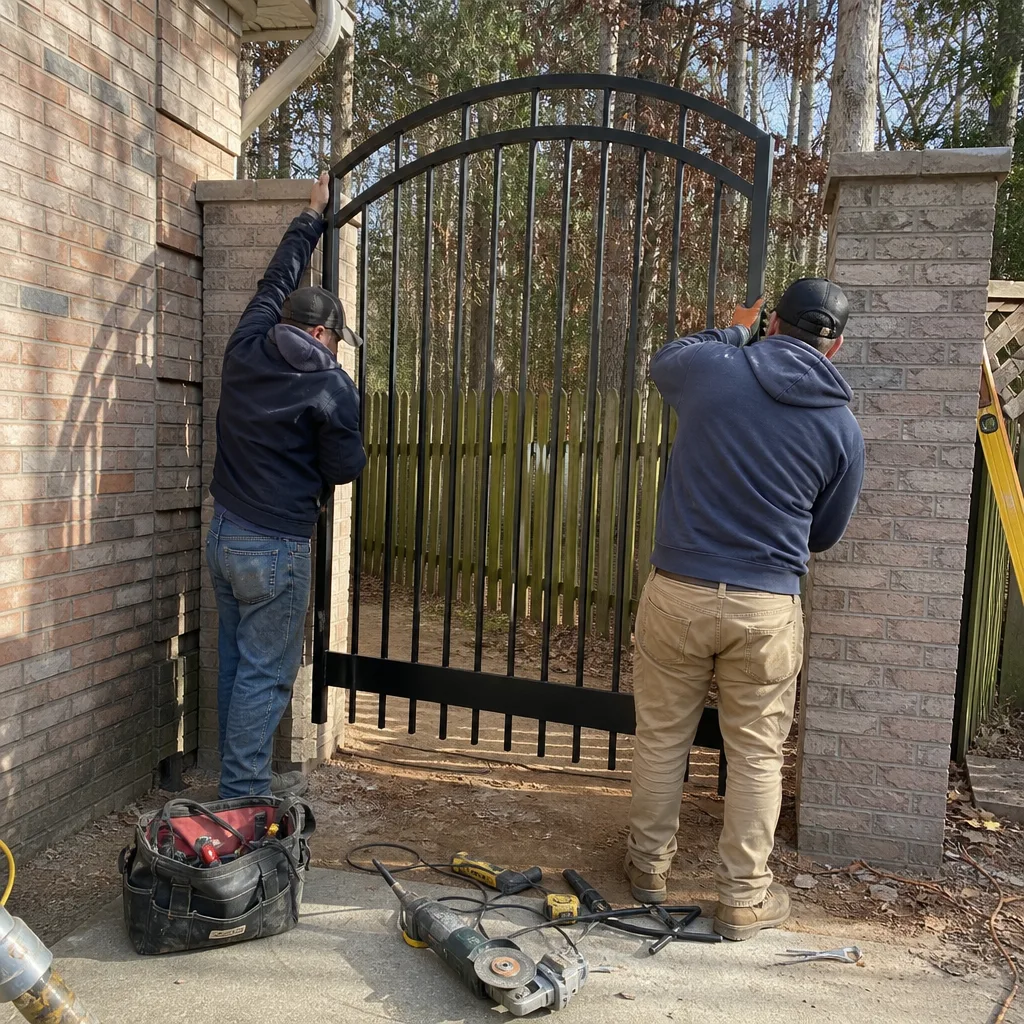
Most single-component repairs range from $180 to $620, with operator motor replacements running $480 to $850 and structural corrections starting around $650. The exact price depends on gate type, brand, and whether the problem is isolated or symptomatic of a larger issue. Call (470) 885-1464 for a written quote, estimates are free.
We repair operators from nine major brands whenever parts are available and the unit’s structural condition supports it. Many “dead” operators have failed capacitors, control boards, or limit switches that cost a fraction of replacement. We only recommend replacement when repair is uneconomical or unsafe, and we put that in writing before you decide.
Temperature-correlated failure usually indicates a control-board solder joint expanding with heat, a capacitor losing capacitance at operating temperature, or a safety circuit with a marginal connection that resistance pushes over the threshold when warm. It’s rarely the motor itself. Document the failure time and temperature, this pattern helps us diagnose faster.
Check whether the symptom correlates with weather or soil moisture. Electrical faults tend to be consistent, structural faults vary with clay expansion and contraction. Look for post movement, footing cracks, or latch misalignment that changes seasonally. If you’re unsure, we check all three systems, mechanical, electrical, and structural, before quoting.
A proper record includes: wiring diagram of as-found configuration, limit-switch or position readings, photos of mechanical connections and any wear found, part and serial numbers of components installed, and notes on structural or soil conditions. Under our Haven Standard, you receive this documentation before we leave, at no additional charge.
Yes. A live person answers our phone 24 hours a day, seven days a week. For safety-critical situations, gates stuck open or reversing unpredictably, we prioritize same-day dispatch. For non-urgent repairs, we schedule within 24-48 hours. The written price and documentation standards apply to every call, emergency or scheduled.
The Bottom Line
Gate repair in Sandy Springs rewards precise description and penalizes guesswork. The four root causes, mechanical wear, electrical fault, operator failure, and structural shift, each leave evidence that a trained eye can read. Clay-heavy soil makes structural shift the most commonly misdiagnosed category, costing homeowners unnecessary electrical and operator replacements. Demanding written documentation before work starts and receiving photographic evidence when it ends breaks the cycle of repeat visits on the same problem. The Haven Standard exists because every gate we’ve touched since 2014 has taught us something, and that knowledge belongs in the homeowner’s file, not just the technician’s memory.
Written by Adrian Vance, Owner at Vance Gate Repair Sandy Springs, serving Sandy Springs since 2014.