
Last updated September 22, 2026
Free on-site gate assessment - hinges, posts, and your LiftMaster or Nice gate operator checked before anything is quoted
The assessment is free and the quote is the invoice.

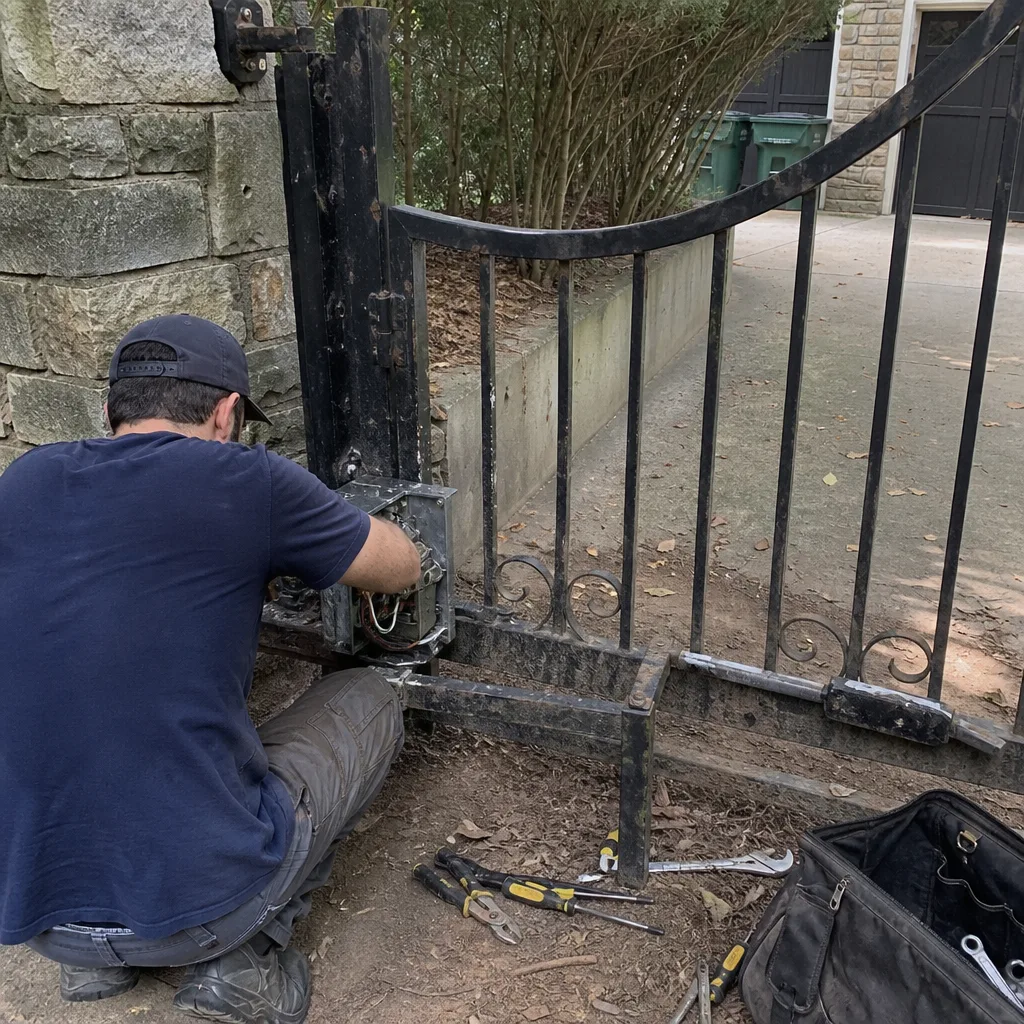 Before
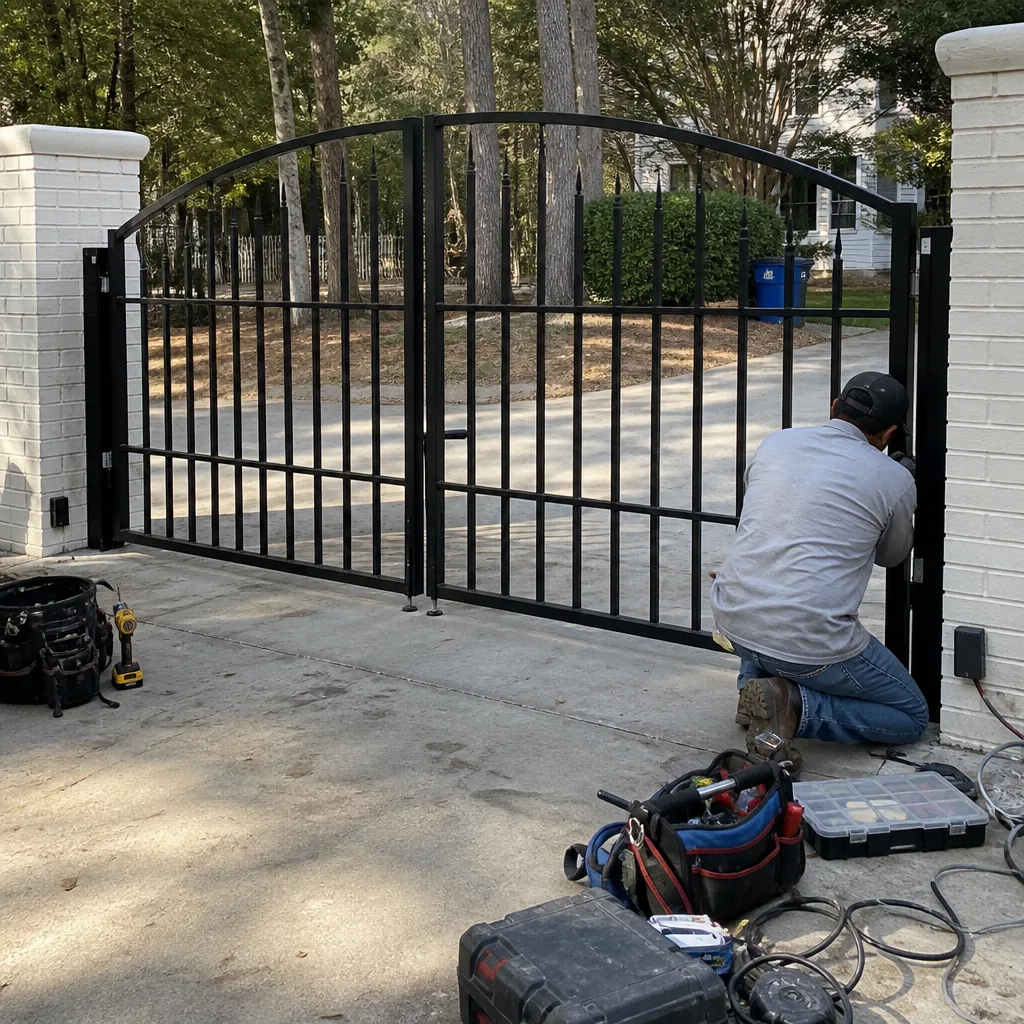 After
After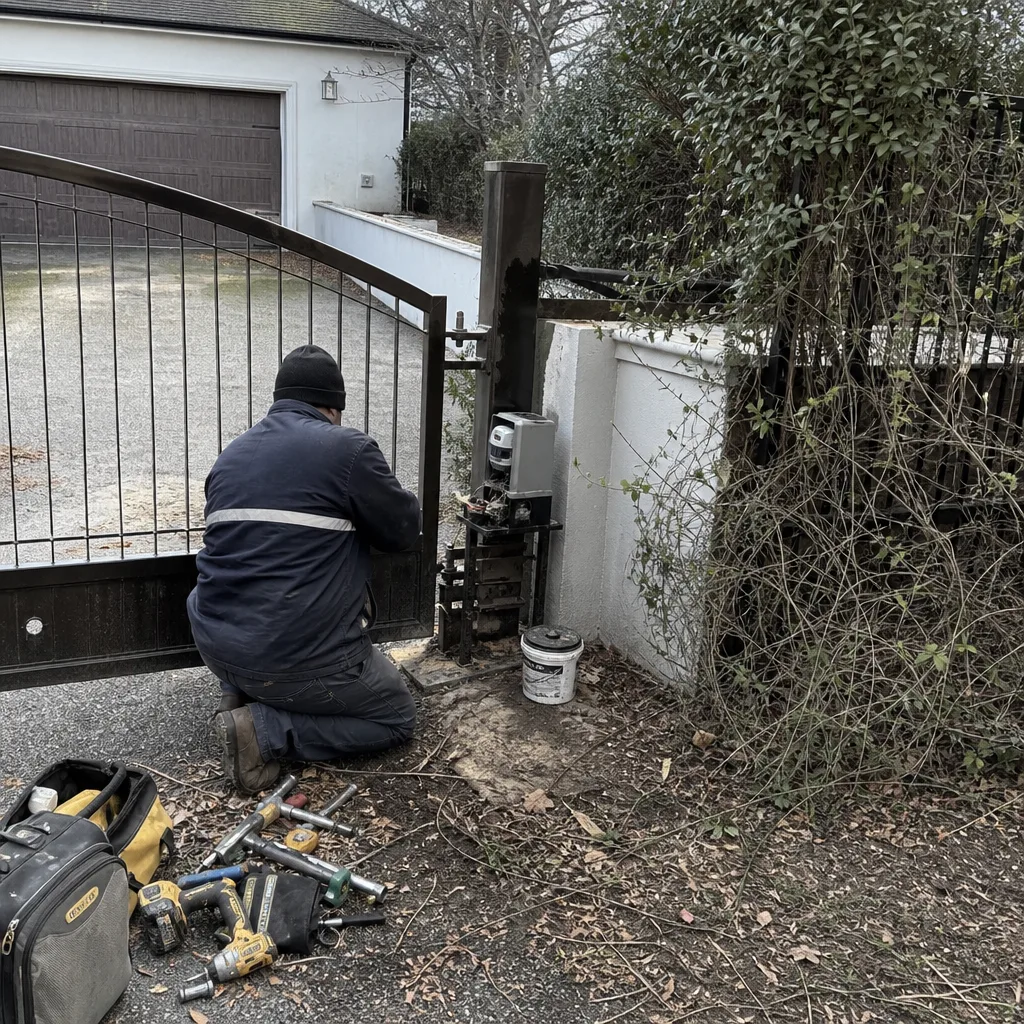 Before
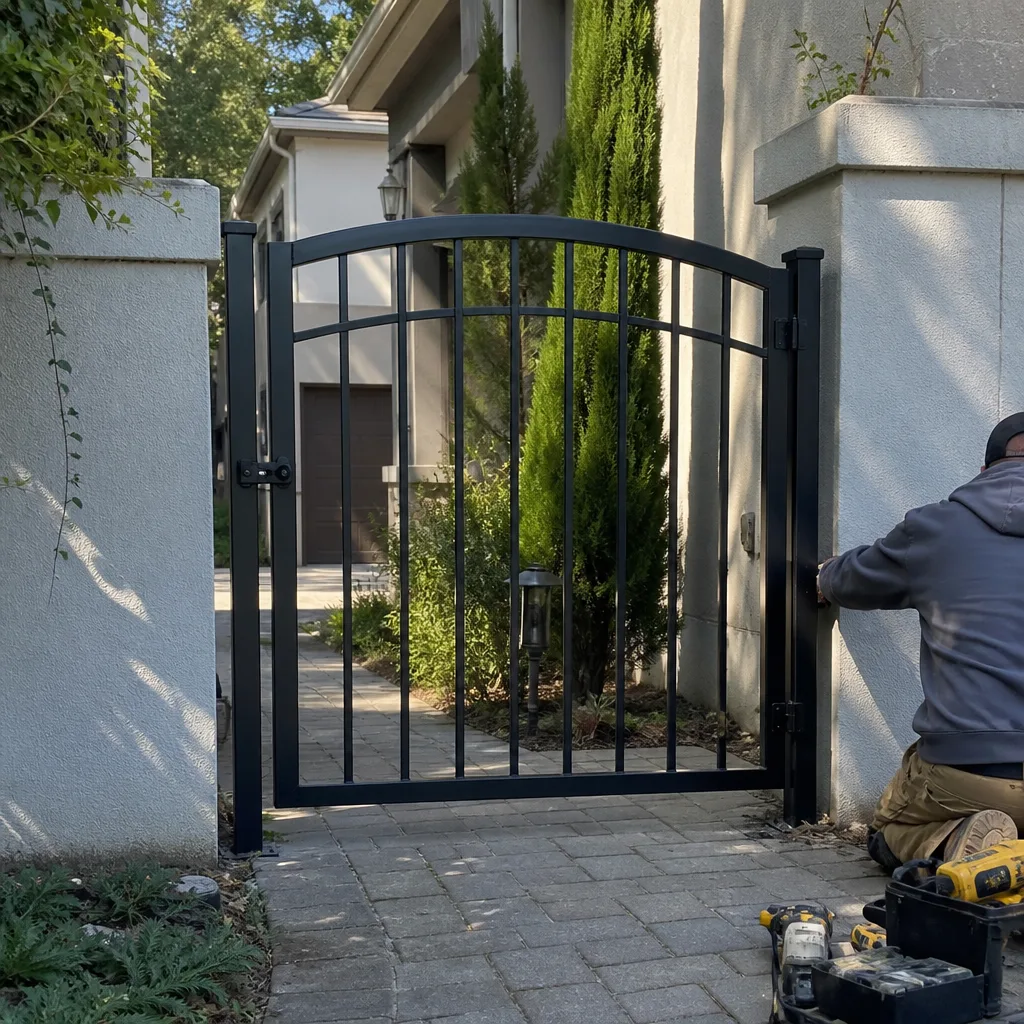 After
After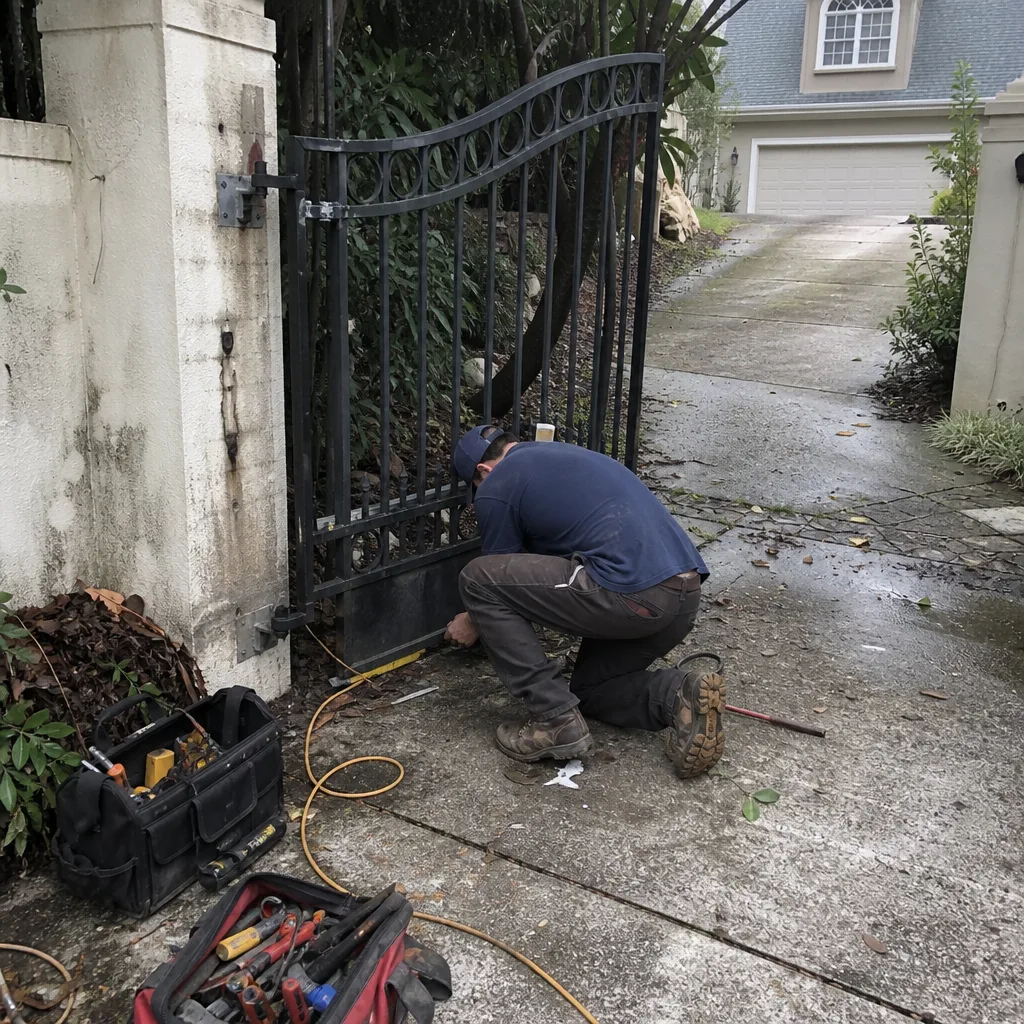 Before
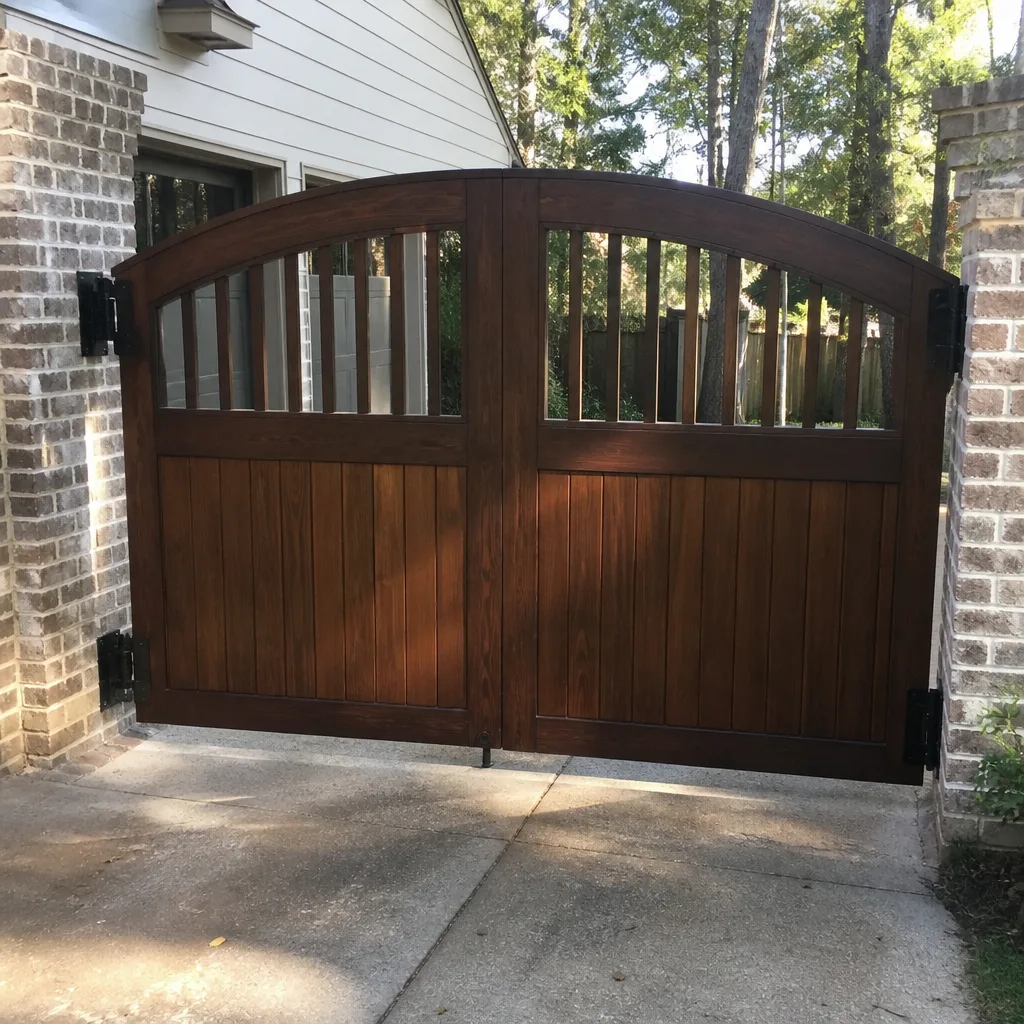 After
AfterGate Repair Maintenance Checklist for Sandy Springs Homeowners
Most gate maintenance checklists tell you to “check the hinges” and “inspect the motor.” We’ve been called to 22,000 gates since 2014, and here’s what that advice misses: “check” means nothing without a pass-fail threshold. A Sandy Springs homeowner can lubricate every hinge on schedule and still miss that one arm bracket has 4 millimeters of play - enough to snap the operator arm within 200 cycles. The red clay dust in Sandy Springs’ soil, the intense UV on south-facing driveways, and the spring pollen that coats photo-eye lenses all accelerate wear past what generic checklists account for. This guide pairs every inspection task with a concrete measurement, a documentation format to track trends, and a clear boundary between what you can safely handle and what requires Gate Repair by a licensed technician.
Quick Answer
A complete gate maintenance checklist for Sandy Springs homeowners should be performed every six months and include measurable inspections of hinges (play under 2mm), rollers (no flat spots or clay buildup), operator arm force (under 40 lbs. pressure), battery voltage (minimum 12.4V DC), photo-eye alignment (signal light steady, not blinking), and limit-switch cycle accuracy (within 2 inches of programmed stop). Document each reading with the date; a second consecutive out-of-spec reading means it’s time for professional service, not a third check. For Gate Repair Warning Signs: A Sandy Springs Homeowner’s Reference Guide, see our dedicated resource.
Table of Contents
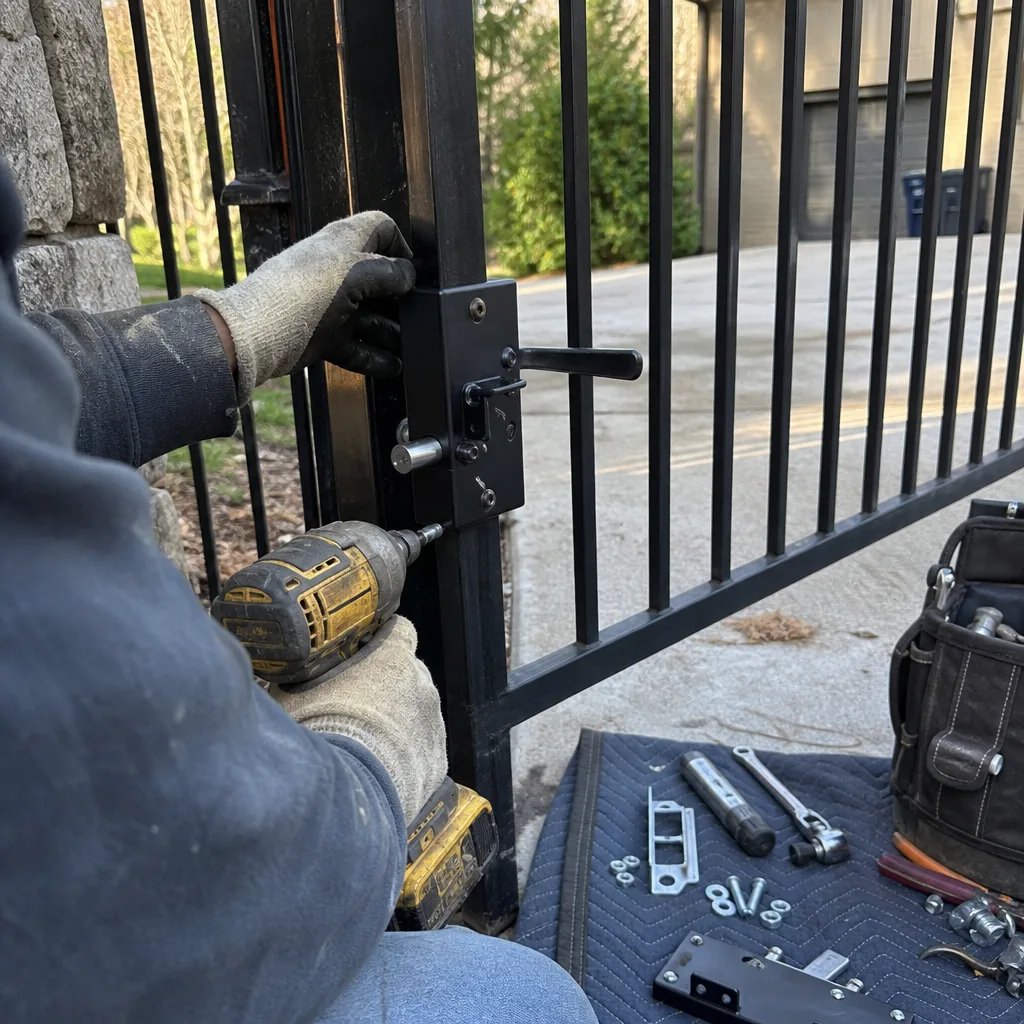
- Why Generic Checklists Fail in Sandy Springs
- Hinges and Roller Inspection: Play, Wear, and Clay Tolerance
- Operator Motor and Arm: Force, Noise, and Cycle Count
- Electrical Systems: Battery, Wiring, and UV Damage
- Safety Devices: Photo-Eyes, Edges, and Obstruction Response
- The Documentation System: How to Log Inspections So Patterns Emerge
- Owner-Serviceable Tasks vs. Licensed-Technician Work
- Establishing Your Baseline: What a Healthy Gate Sounds and Feels Like
 Before
 After
AfterWhy Generic Checklists Fail in Sandy Springs
Generic gate maintenance advice assumes moderate climate, neutral soil, and average sun exposure. Sandy Springs presents three specific accelerators that push wear past normal parameters.
Red clay dust infiltration. The iron-rich clay soil in Sandy Springs neighborhoods like Riverside, Dunwoody Panhandle, and the land near the Chattahoochee River becomes airborne dust during dry spells. It packs into roller bearings and hinge pins, acting as abrasive grit. We’ve opened hinge caps in Sandy Springs and found clay packed to the grease fitting - the homeowner had lubricated on schedule, but the lubricant carried dust deeper instead of flushing it out. A generic “lubricate hinges” instruction doesn’t specify cleaning first, which is the actual requirement here.
UV degradation on south-facing installations. Gates on the south side of Sandy Springs properties, particularly in the hilly terrain near Mount Vernon Highway and Powers Ferry Road, receive direct Georgia sun for six to eight hours daily. We’ve replaced control-board wiring on ten-year-old BFT and Linear operators where the insulation had hardened and cracked from UV exposure, though the conductors were intact. A visual “check wiring” instruction doesn’t tell you to flex-test the insulation or what cracked sheathing looks like versus surface oxidation.
Pollen coating on optical devices. Sandy Springs’ heavy oak and pine pollen in March and April creates a yellow film on photo-eye lenses. A “clean the photo-eye” instruction doesn’t specify that pollen residue is hydrophobic - wiping with a dry cloth smears it. The correct method is a damp microfiber cloth followed by dry, but more importantly, the pass-fail test is whether the receiver’s signal LED holds steady green through a full cycle, not just whether the lens looks clean.
These three factors mean a Sandy Springs gate can go from “checked” to “failed” in a single season if the inspection doesn’t measure the right thing at the right threshold.
Hinges and Roller Inspection: Play, Wear, and Clay Tolerance
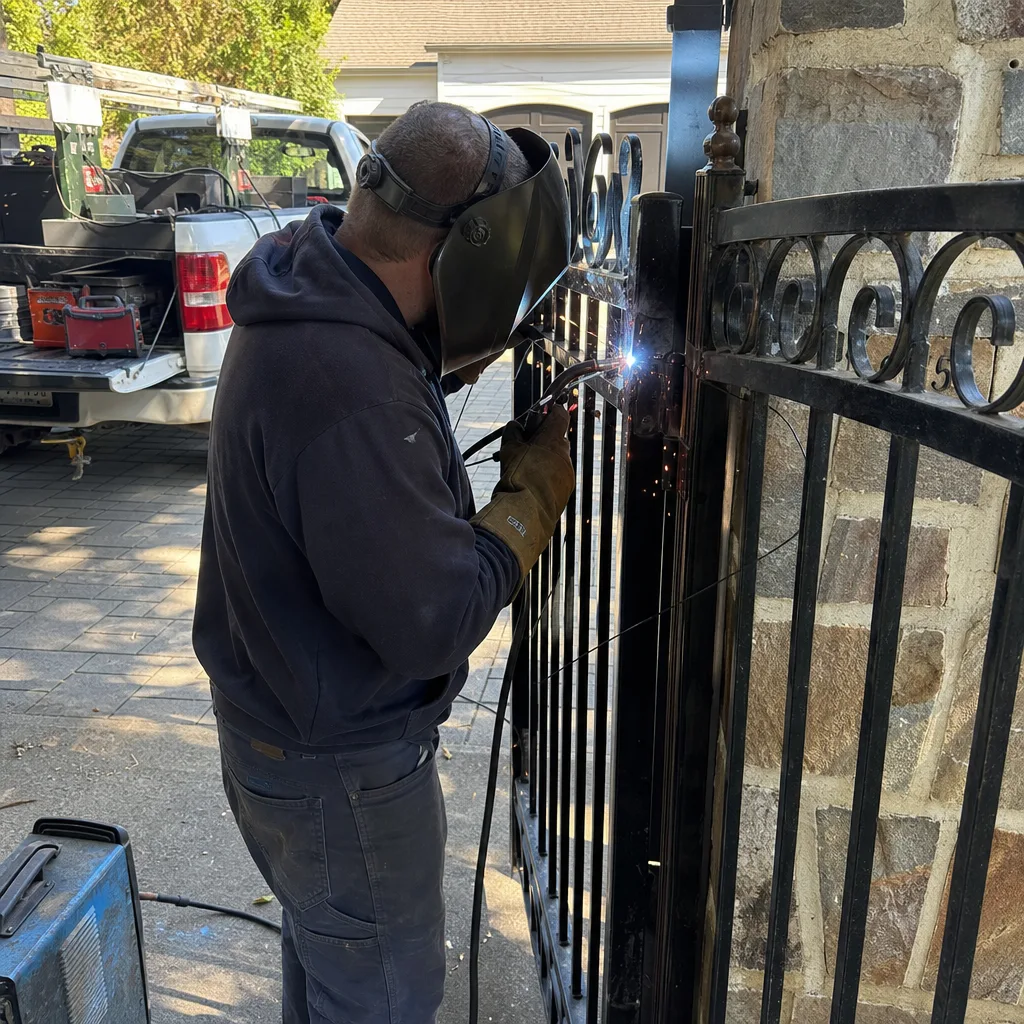
Hinges and rollers transfer the operator’s force to the gate leaf. When they’re out of spec, the operator works harder, draws more current, and fails prematurely - often blamed on the motor when the real problem is mechanical binding.
Hinge Inspection Procedure
- Clean before measuring. Remove the grease fitting or cap. Use a small brush or compressed air to evacuate old grease and clay dust. In Sandy Springs, we expect to see reddish residue; if the old grease is black and gritty, the hinge has been running dry and grinding.
- Measure radial play. Grasp the gate leaf at the free end and push perpendicular to the hinge axis. Use a feeler gauge or simply observe: play under 2mm (roughly the thickness of a credit card) is acceptable. Play over 3mm means the pin is worn or the barrel is elongated. At 4mm, the operator arm experiences shock loading at each direction change; we’ve replaced Ghost Controls and Viking arms in Sandy Springs where the root cause was hinge wear, not arm defect.
- Check axial lift. Lift the gate leaf vertically. Movement under 1mm is normal. Over 2mm means the thrust washer or pin shoulder is worn. This is critical on uphill installations common in Sandy Springs’ rolling terrain - gravity already loads the hinge axially, and wear here causes the gate to settle and bind at the latch.
- Regrease with NLGI #2 lithium grease. Pump until clean grease exits the joint. Wipe excess. Note the date and grease type in your log.
Roller Inspection (Sliding Gates)
- Flat spots or oval wear: Roll the gate manually through its travel. A flat spot creates a rhythmic bump every revolution. Replace rollers when flat spots exceed 3mm depth - the gate will start to oscillate, and the operator’s rack-and-pinion or chain drive will experience cyclic loading.
- Clay buildup in V-grooves: Sandy Springs clay packs into roller grooves and hardens. We’ve seen sliding gates in the Glenridge area running on rollers that were effectively 3mm smaller in diameter due to packed clay. Clean with a wire brush; measure groove depth with a small ruler. Replace when groove wear exceeds 2mm from original profile.
- Carrier bracket alignment: The roller carrier should be plumb within 2 degrees. Use a level on the bracket face. Misalignment causes edge loading and premature bearing failure.
Pass/fail summary: Hinge radial play under 2mm, axial lift under 1mm, rollers free of flat spots over 3mm, grooves clean and within 2mm of original depth.
Operator Motor and Arm: Force, Noise, and Cycle Count
The operator is the most expensive component and the most commonly misdiagnosed. A “noisy motor” complaint often traces to mechanical binding, not motor failure. These measurements separate real motor problems from symptoms.
Force Measurement
Gate operators are required by UL 325 to reverse when encountering obstruction. The force they exert before reversing must be under 40 lbs. for swing gates and under 50 lbs. for sliding gates. You can approximate this with a bathroom scale held against the gate leaf mid-travel:
- Start the gate closing.
- Hold the scale against the leading edge, perpendicular to travel.
- Note the reading when the gate reverses.
- Repeat in the opening direction.
Over 35 lbs. in either direction means the operator’s force setting is too high, or there’s mechanical resistance the operator is overcoming. We’ve found Sandy Springs gates with force settings cranked to maximum because hinges were binding - the correct fix is hinge service, not higher force. Excessive force is a safety hazard and accelerates wear on the entire system.
Noise Baseline
Record a short video of your gate operating when new or after professional service. Normal operator noise varies by brand: BFT operators have a distinct gear whine, Linear units run quieter with a slight solenoid click at limit, Viking operators produce a low mechanical hum. What matters is change from your baseline. A new grinding noise, a change in pitch, or intermittent rattling indicates mechanical wear or loose mounting. Document the date of any change; if the noise persists after lubrication, it’s not a lubrication problem.
Cycle Count Logging
Most operators have a cycle counter in the diagnostic menu or on a mechanical counter. Record the reading every six months. A residential Sandy Springs gate typically cycles 4 to 8 times daily. Sudden increases suggest phantom triggers (intermittent short in loop or keypad). Flatlining when the gate is used daily suggests counter failure, which also means diagnostic data may be unreliable.
Pass/fail summary: Force under 40 lbs. swing / 50 lbs. slide, noise stable versus baseline, cycle count advancing predictably with use pattern.
Electrical Systems: Battery, Wiring, and UV Damage
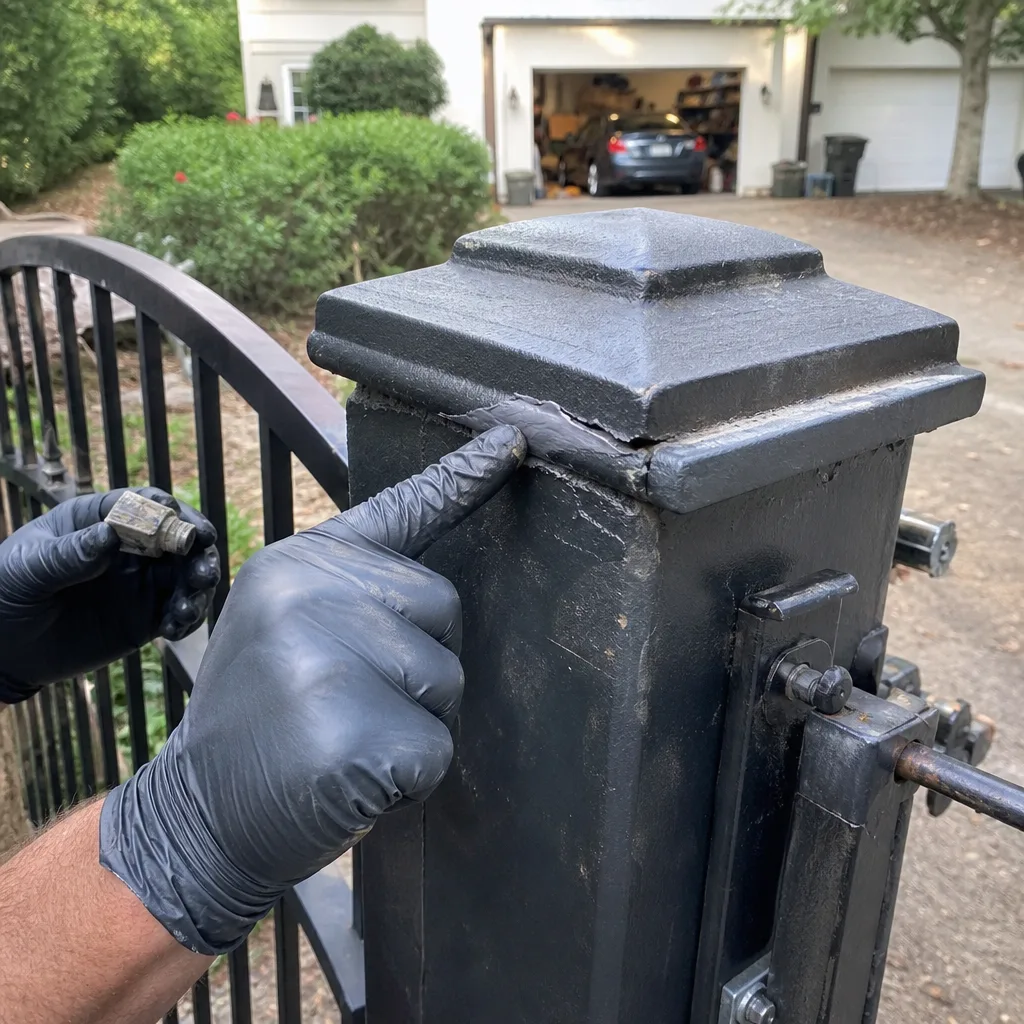
Gate electrical systems fail in two modes: gradual (battery degradation, UV hardening) and sudden (surge damage, rodent chewing). The inspection targets the gradual mode, where documentation prevents surprise failure.
Battery Testing
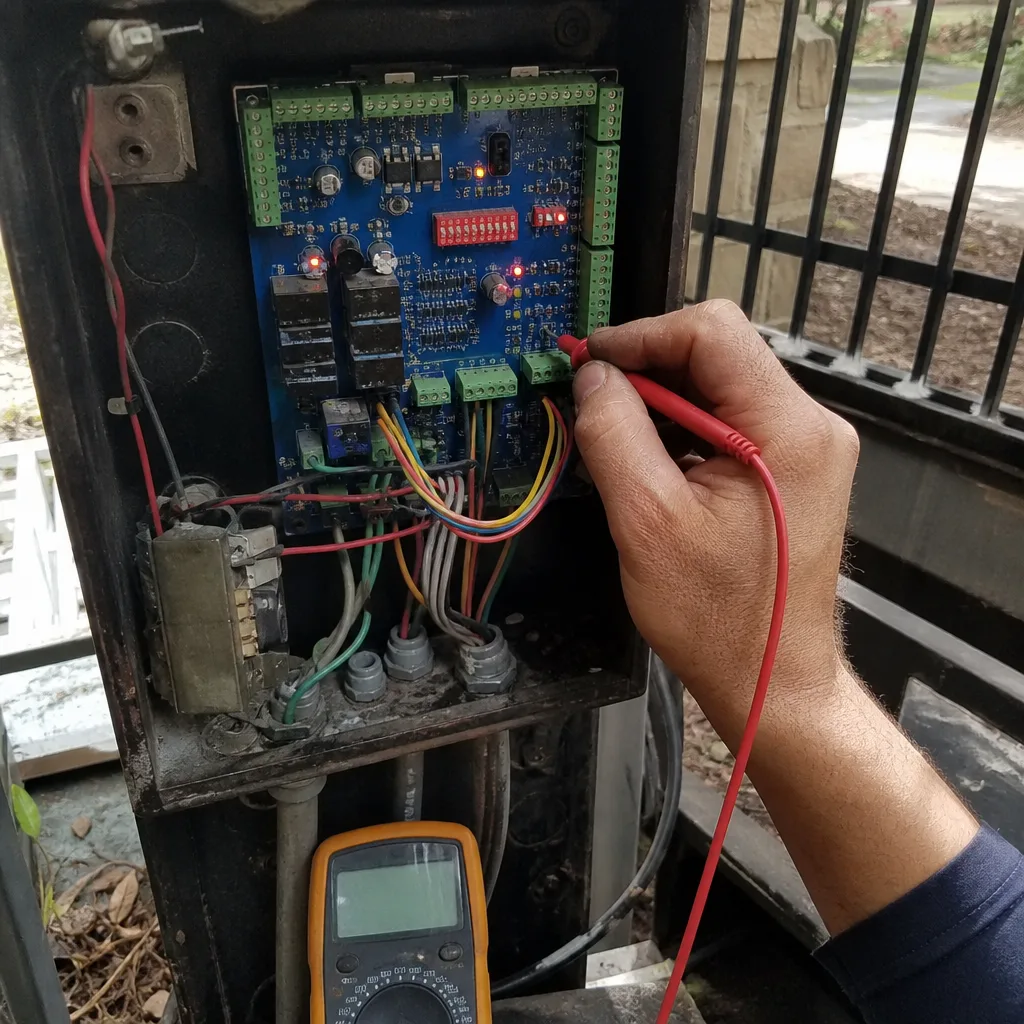
Gate operator batteries are 12V DC, typically 7Ah or 12Ah sealed lead-acid. They’re maintained by a trickle charger in the control board. Test under load, not open-circuit:
- Disconnect AC power to the operator.
- Trigger a full open-close cycle on battery only.
- Measure battery voltage at the terminals during operation with a multimeter.
- Minimum acceptable: 12.4V at rest, not dropping below 11.8V under load.
Below 11.8V under load, the battery won’t sustain operation through a power outage and may cause erratic control-board behavior. Replace. In Sandy Springs, battery life is typically 3 to 4 years; we’ve seen premature failure in unshaded enclosures where summer temperatures exceed 120°F internally. If your operator enclosure faces south, consider adding ventilation or relocating to shade.
Wiring Inspection for UV and Rodent Damage
Inspect all exposed low-voltage wiring:
- UV damage: Flex the wire gently near the operator enclosure and at any outdoor junction. UV-hardened insulation cracks when bent. In Sandy Springs, this is most common on wiring run along the top rail of south-facing gates installed before 2018, when UV-resistant jacketing became standard on most brands. Cracked insulation requires replacement of that wire run - tape is insufficient.
- Rodent damage: Check wire runs near ground level, especially where landscaping provides cover. We’ve found squirrel and chipmunk damage in Sandy Springs properties backing up to wooded areas near the Chattahoochee River National Recreation Area. Look for scored insulation, not just complete severing. Scored insulation will fail when moisture enters.
- Connection corrosion: Open wire nuts and terminal blocks. Green or white corrosion on copper indicates moisture intrusion. Clean with electrical contact cleaner, re-torque, and seal with dielectric grease. In Sandy Springs’ humid summers, this is a annual maintenance item, not biennial.
Pass/fail summary: Battery 12.4V+ at rest, 11.8V+ under load, wiring insulation flexible and intact, connections clean and tight.
Safety Devices: Photo-Eyes, Edges, and Obstruction Response
Safety devices are the most inspected and most misunderstood components. A clean lens means nothing if the beam geometry is wrong.
Photo-Eye (Infrared Beam) Inspection
- Clean both lenses. Use damp microfiber, then dry. Pollen season in Sandy Springs requires this monthly, not just at inspection intervals.
- Check alignment. The receiver’s signal LED should be steady green, not blinking. A blink rate over 1 Hz indicates marginal alignment - the gate may operate in dry weather and fail in fog or heavy pollen.
- Measure beam height. The beam should cross 6 inches above the driveway surface. Use a tape measure. We’ve found beams set at 4 inches (tripped by leaf accumulation) and 10 inches (small child or pet passes under). Reset to 6 inches.
- Test obstruction response. Interrupt the beam during closing. The gate must reverse within 2 seconds. Time it with a stopwatch. Delay over 2 seconds indicates control-board or wiring degradation, not photo-eye failure.
- Test in bright sun. Photo-eyes can be blinded by direct southern sun at low angles. Test at 8 a.m. and 5 p.m. if your gate faces east or west. If the gate fails to reverse when the beam is interrupted during direct sun exposure, the receiver needs a sun shield or relocation.
Safety Edge (Contact Strip) Inspection
Safety edges are required on all automated gates installed after 2016 under current UL 325 editions. Test by pressing the edge mid-span:
- The gate must reverse immediately on contact, not after full compression.
- Test the full length - edges often fail at the ends where flexing is greatest.
- Inspect the rubber profile for UV cracking. Sandy Springs sun hardens EPDM rubber in 5 to 7 years. Cracked edges lose sensitivity and may not trigger until dangerous force is applied.
Pass/fail summary: Photo-eye signal steady green, beam at 6 inches, reversal under 2 seconds, reliable in direct sun; safety edge triggers along full length, rubber profile uncracked.
The Documentation System: How to Log Inspections So Patterns Emerge
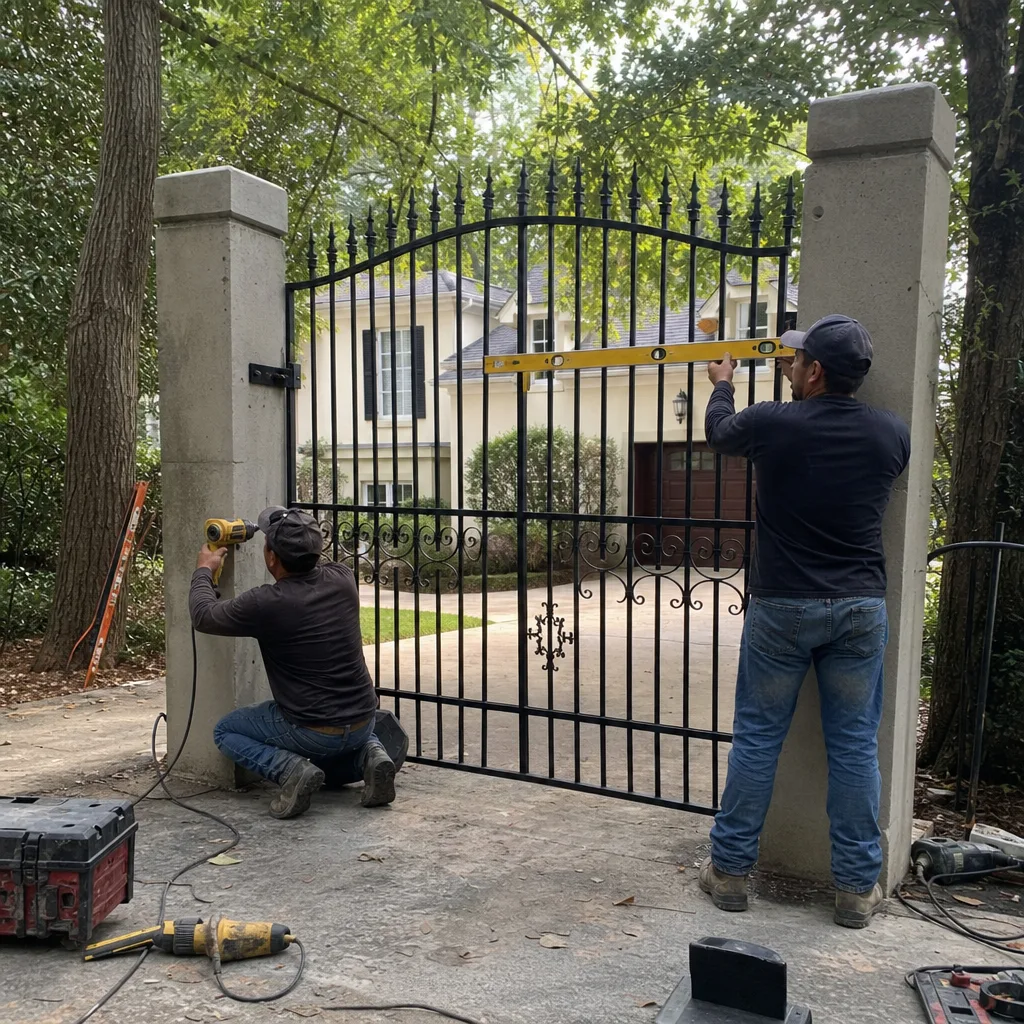
A single inspection tells you the state today. A log tells you the rate of change, which predicts failure before it happens. We’ve built our documentation habit at Vance Gate Repair Sandy Springs home on this principle - every visit leaves a photo record and written readings so the next technician (or the same homeowner, six months later) can compare.
Use this format, paper or digital:
| Date | Item | Reading | Pass/Fail | Notes |
|---|---|---|---|---|
| 2024-04-15 | Hinge play, drive side | 1.5mm | Pass | Cleaned, regreased |
| 2024-04-15 | Battery load voltage | 12.1V | Fail | Below 11.8V under load; replace next cycle |
| 2024-10-15 | Hinge play, drive side | 2.2mm | Fail | Increased from 1.5mm; schedule hinge replacement |
The critical pattern is rate of change, not absolute value. Hinge play increasing from 1.5mm to 2.2mm in six months means the pin is wearing faster than the lubrication interval can compensate. Replace before it reaches 4mm and loads the operator arm. Battery voltage dropping from 12.4V to 12.1V at rest means it’s declining predictably; schedule replacement rather than waiting for failure during a power outage.
For photo documentation, photograph the hinge from the same angle, the battery label showing date code, and the operator diagnostic screen showing cycle count. Store these with dated filenames. When you call for service, email the last three inspection logs - a technician who knows the trend arrives with the right parts, not a diagnostic fee.
Owner-Serviceable Tasks vs. Licensed-Technician Work
Some maintenance tasks are safe and effective for homeowners. Others involve hazards that require training, tools, and licensing. The boundary is not about complexity; it’s about consequences of error.
Owner-Serviceable Tasks
- Cleaning and lubrication: Hinges, rollers, chain (if equipped), photo-eye lenses. Use NLGI #2 lithium grease on mechanical components, isopropyl alcohol or damp microfiber on optical.
- Visual inspection: All items in this checklist except those noted below. Document with photos and measurements.
- Battery voltage check: With power disconnected and basic multimeter. Replace battery if out of spec - the connector is keyed and the polarity is marked.
- Photo-eye alignment adjustment: Loosen mounting bracket, adjust until receiver LED is steady, retighten. No electrical work required.
Licensed-Technician-Required Tasks
- Limit-switch adjustment: Setting travel limits requires understanding of the operator’s encoder or mechanical limit system. Incorrect setting can cause the gate to overrun and damage the operator, vehicle, or structure. On Gate Motor & Opener in Sandy Springs service calls, we find roughly 15% of “failed” operators have limit switches misadjusted by previous DIY attempts.
- Force-setting calibration: The UL 325 force test requires a calibrated meter and knowledge of the operator’s adjustment protocol. Setting force too high creates entrapment hazard; too low causes nuisance reversal.
- Electrical repairs beyond battery replacement: Control-board work, wiring runs inside conduit, and surge-protection device installation involve line-voltage exposure and code compliance. Sandy Springs follows Georgia state electrical code; unlicensed electrical work on automated gates can void insurance coverage if injury occurs.
- Welding and structural repair: Gate frame cracks, post weldment, and hinge-pin replacement require structural welding. A failed weld on a 400-lb. gate leaf is a fatality risk. We’ve repaired gates in Sandy Springs where a homeowner’s DIY weld held for months, then failed catastrophically when the gate was under snow load (yes, even in Georgia, ice accumulation occurs).
- Loop detector and access-control programming: Vehicle loop sensitivity, keypad code management, and telephone-entry system programming affect security and liability. Incorrect loop sensitivity causes the gate to close on vehicles; incorrect keypad programming can lock out emergency access.
Under The Haven Standard, we provide a written scope and written price before any work begins, and we document what we found with photos. For Gate Repair Permits, Codes & Inspections in GA: What You Need to Know, review our compliance guide. If you’re unsure whether a task is owner-serviceable, call for our free second opinion - bring any other company’s written estimate and we’ll review it at no cost.
Establishing Your Baseline: What a Healthy Gate Sounds and Feels Like
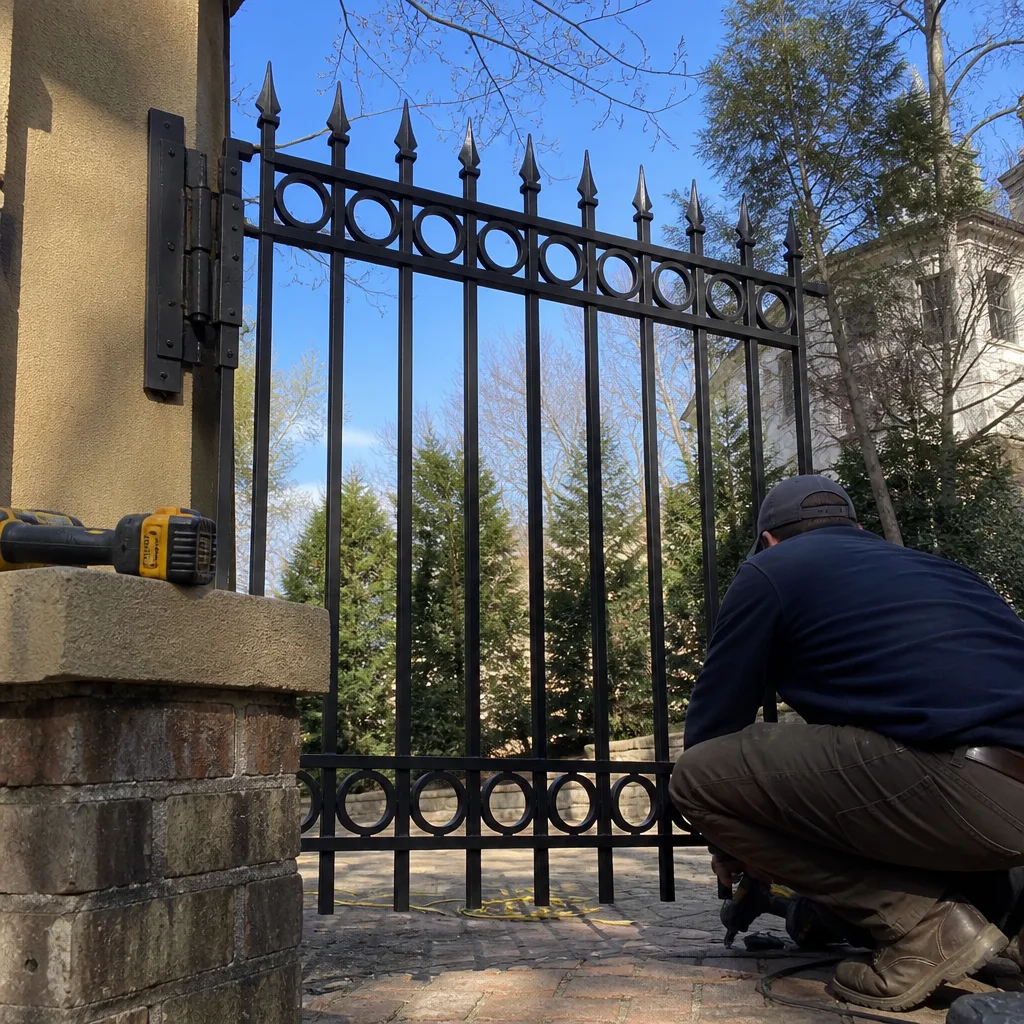
The most powerful diagnostic tool is memory of normal. Record these baselines after professional service or when your gate is new:
Sound: Stand at the operator enclosure and at the gate leaf midpoint. Record 10 seconds of audio on your phone. Normal sounds by type: chain drive produces consistent metallic clicking at the sprocket; rack-and-pinion produces a low hum with periodic cog engagement; direct-drive (Linear, some BFT models) is nearly silent except for relay clicks. Any new sound - grinding, squealing, intermittent rattling - is a symptom, not a character trait.
Speed: Time a full open or close cycle. Typical residential swing gate: 12 to 16 seconds for 90 degrees. Typical sliding gate: 6 to 10 inches per second. A 20% slowdown indicates mechanical resistance or motor degradation. Don’t adjust the speed potentiometer to compensate - find the resistance.
Feel: With power disconnected, move the gate manually through its travel. It should move freely, with consistent resistance. Binding at one point in travel indicates track misalignment, hinge wear, or debris. The effort should not vary significantly through the arc.
Temperature: After 5 consecutive cycles, touch the operator motor housing. Warm is normal; too hot to touch for more than 2 seconds indicates overload, inadequate ventilation, or internal fault. In Sandy Springs’ July and August, ambient enclosure temperature can mask motor overheating - compare to a morning baseline, not to “room temperature.”
Re-record these baselines annually, or after any professional service. The comparison tells you when “slightly slower” became “20% slower” - the threshold for action, not observation.
Common Mistakes to Avoid
- Lubricating without cleaning first. In Sandy Springs, this drives red clay dust deeper into hinge barrels and roller bearings. Clean, then lubricate, then wipe excess. The lubricant is a film, not a filler.
- Ignoring the battery until power fails. A weak battery causes erratic control-board behavior that mimics motor failure. Test under load every six months; replace proactively at 3 to 4 years in this climate.
- Adjusting force settings to overcome mechanical resistance. Higher force masks hinge wear and creates entrapment risk. Fix the mechanics; then verify force is under 40 lbs.
- Cleaning photo-eyes with dry cloth during pollen season. This smears hydrophobic pollen residue. Use damp microfiber, then dry. Test with the signal LED, not visual cleanliness.
- Skipping documentation because “it was fine last time.” Without dated readings, you cannot distinguish gradual wear from sudden failure. A hinge at 2.8mm play is “still under 3mm” until you see it was 1.2mm six months ago - that’s the critical signal.
- DIY welding on gate frames or posts. We’ve responded to two Sandy Springs properties where homeowner welds on aluminum gate frames failed under load. Structural welding on moving, load-bearing assemblies requires certified procedure and inspection.
When to Call a Professional
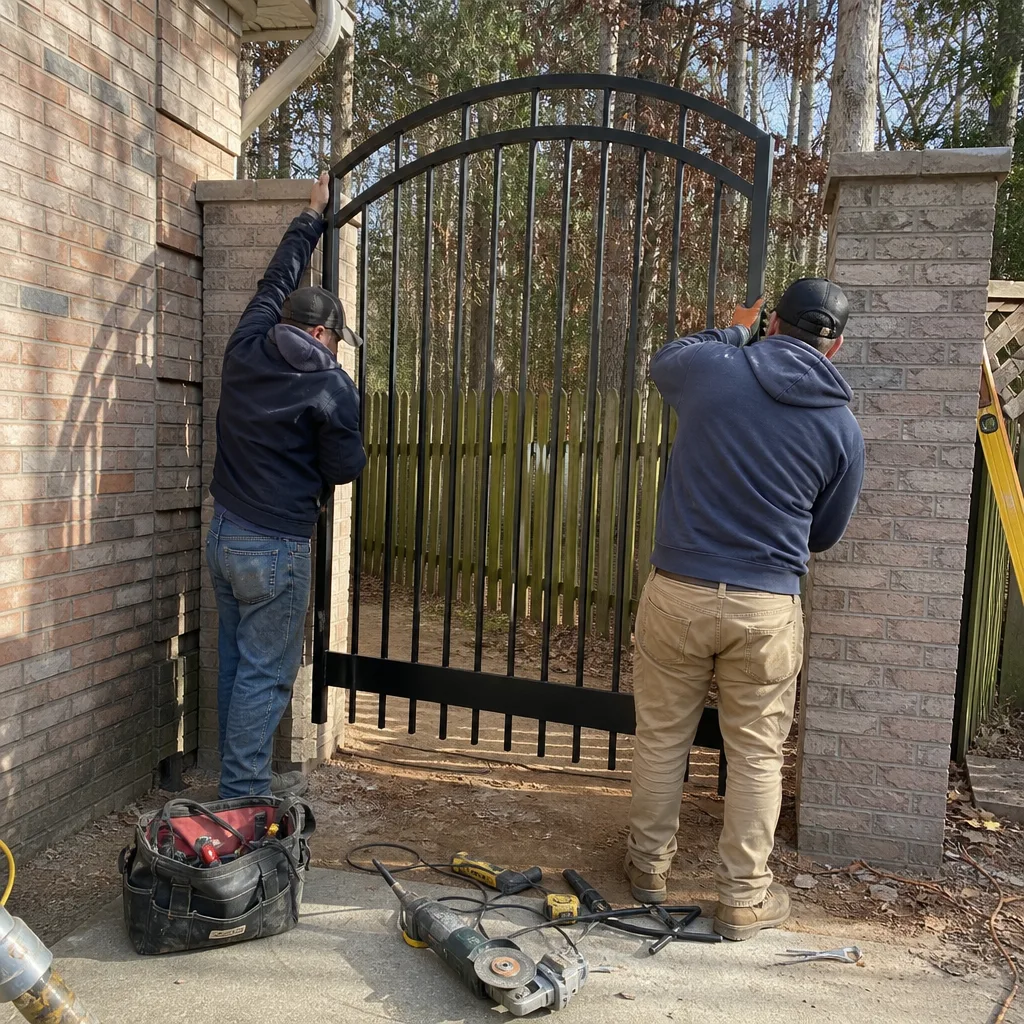
Call a licensed gate technician when: any safety device fails its test (force over limit, photo-eye non-reversing, safety edge unresponsive); electrical readings are outside spec and you’re not trained on lockout/tagout; structural cracks or weld failures appear; or two consecutive inspection logs show trending degradation. Vance Gate Repair Sandy Springs offers free estimates in Sandy Springs - call (470) 885-1464. We service nine automation brands including Viking and Ghost Controls, and every visit includes a written price before work starts, photographic documentation of findings, and the 365-Day Done Right Promise. If another company has provided a written estimate, we’ll review it at no charge under our free second-opinion policy.
Frequently Asked Questions
Every six months for the full inspection checklist, monthly for photo-eye cleaning during pollen season (March through May), and after any severe weather event. Sandy Springs’ combination of clay dust, intense UV, and heavy pollen makes the six-month interval a minimum, not a conservative estimate. Call (470) 885-1464 for a free estimate if you’re unsure where your gate stands.
A professional maintenance visit for a residential automated gate in Sandy Springs typically runs $150 to $280, depending on gate type (swing vs. slide), number of operators, and whether access-control devices are included in the scope. This includes cleaning, lubrication, full electrical and mechanical inspection with documented readings, and a written condition report. Repairs found during maintenance are quoted separately under Haven Standard Clause 1 - written price before any additional work starts. Call (470) 885-1464 for an exact quote; estimates are free.
Homeowners can safely perform cleaning, lubrication, visual inspection, battery testing, and photo-eye alignment as described in this checklist. Limit-switch adjustment, force calibration, control-board repair, structural welding, and access-control programming require a licensed technician due to safety-code requirements and liability exposure. The dividing line is: if error could cause entrapment, electrical shock, or structural collapse, it’s technician work. For Gate Repair in Sandy Springs, we’re available to handle any task beyond your comfort level.
Sandy Springs’ spring pollen coats photo-eye lenses with a hydrophobic film that standard dry wiping spreads rather than removes. Additionally, temperature swings from 40°F nights to 80°F days in March and April cause thermal expansion in metal frames and contraction in plastic components, accelerating wear at interfaces. If your fall maintenance didn’t include pollen-specific cleaning protocol and thermal-cycle inspection points, spring failure is predictable, not mysterious.
With proper maintenance, a residential gate operator lasts 10 to 15 years in Sandy Springs’ climate. The limiting factors are UV degradation on control-board components in unshaded enclosures, and heat-cycling stress on capacitors and relays. Operators in south-facing enclosures without ventilation typically fail at 8 to 10 years. We’ve serviced Linear and BFT operators in shaded, well-maintained Sandy Springs installations that exceeded 18 years. When replacement is needed, Gate Installation in Sandy Springs should include enclosure ventilation assessment as part of scope.
Keep dated inspection logs with measured readings (not just “checked”), photos of hinge condition, battery label showing date code, and operator diagnostic screens. Also retain all professional service invoices with scope descriptions. This documentation proves maintenance history for warranty claims, insurance disputes, and property sale disclosures. Under The Haven Standard, we provide a photo log and written record after every visit at no additional charge - ask your technician for the digital copy.
The Bottom Line
A gate maintenance checklist works only when it tells you what passing looks like. This guide gives you millimeter tolerances, voltage minimums, force limits, and documentation formats specific to Sandy Springs’ clay dust, UV exposure, and pollen load. Perform the owner-serviceable items every six months, log the readings, and call a licensed technician when measurements trend toward failure or when any safety device is out of spec. The cost of professional maintenance is predictable; the cost of emergency repair after failure is not. Explore more guides & resources to keep your gate running reliably. Under The Haven Standard, Vance Gate Repair Sandy Springs provides written pricing before any work begins, documented evidence on every visit, and a full year to make any repair right at no additional charge.
Written by Adrian Vance, Owner at Vance Gate Repair Sandy Springs, serving Sandy Springs since 2014.