
Last updated September 22, 2026
Free on-site gate assessment - hinges, posts, and your LiftMaster or Nice gate operator checked before anything is quoted
The assessment is free and the quote is the invoice.

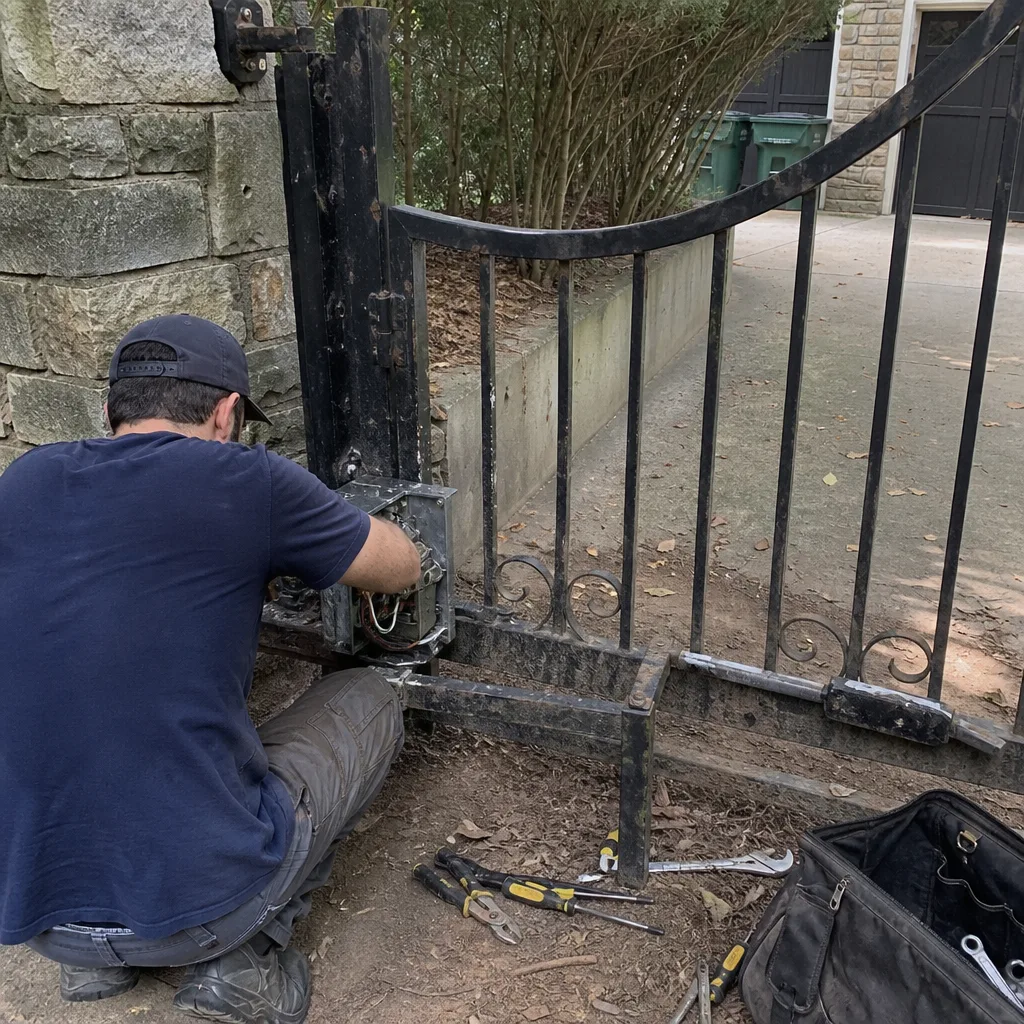 Before
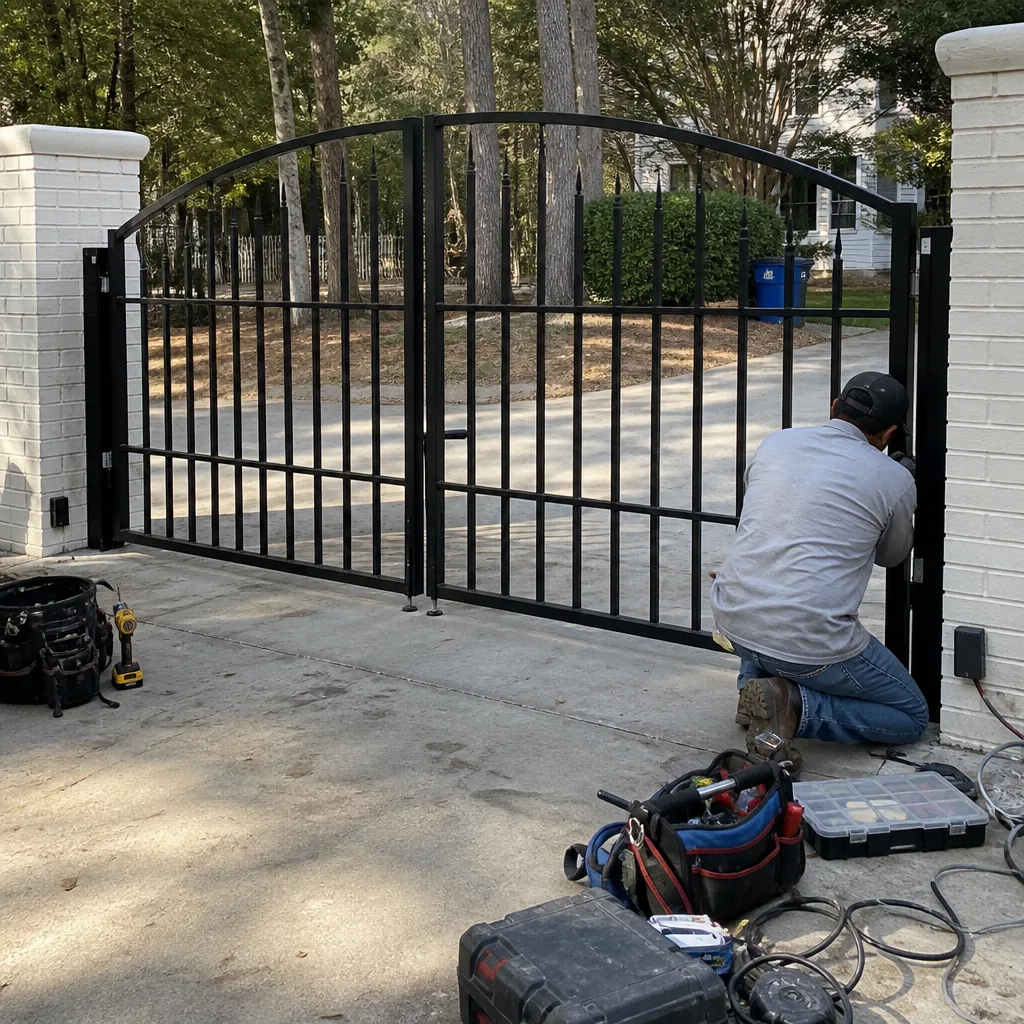 After
After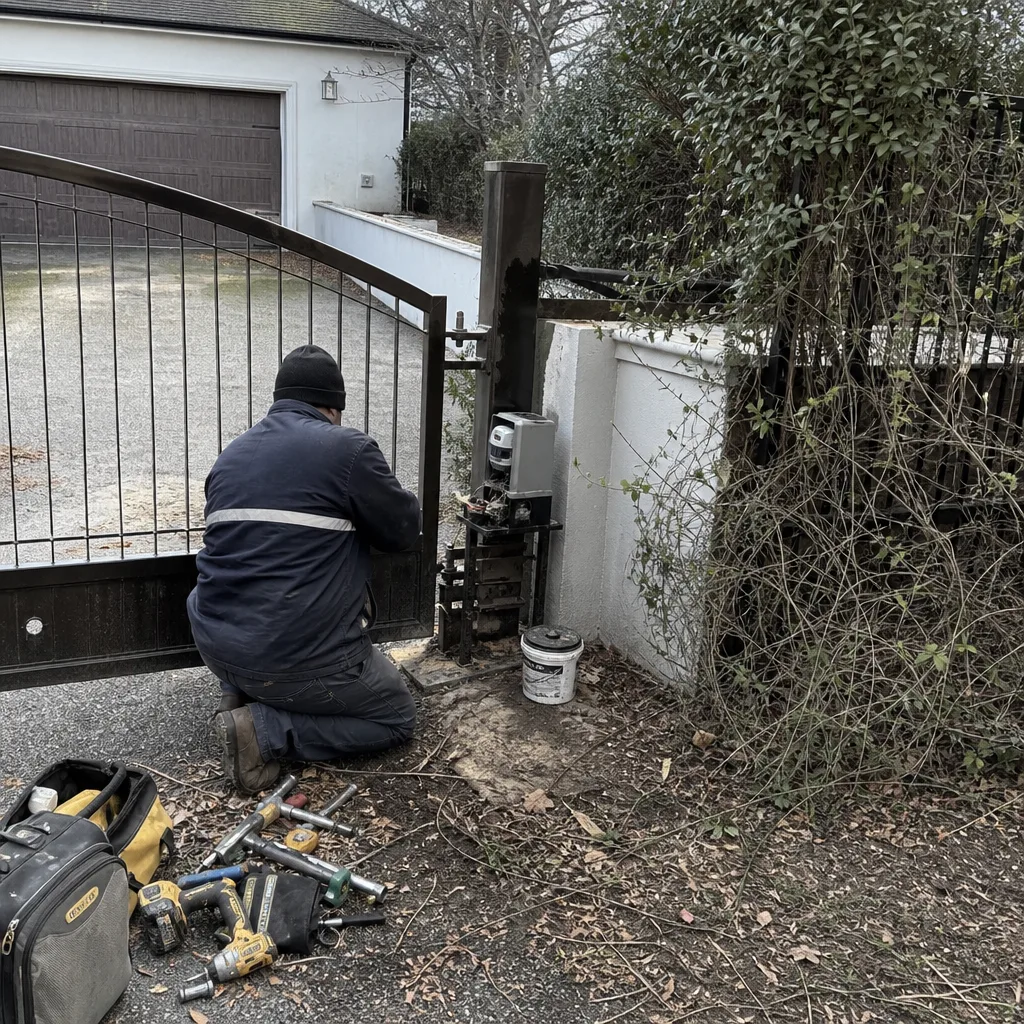 Before
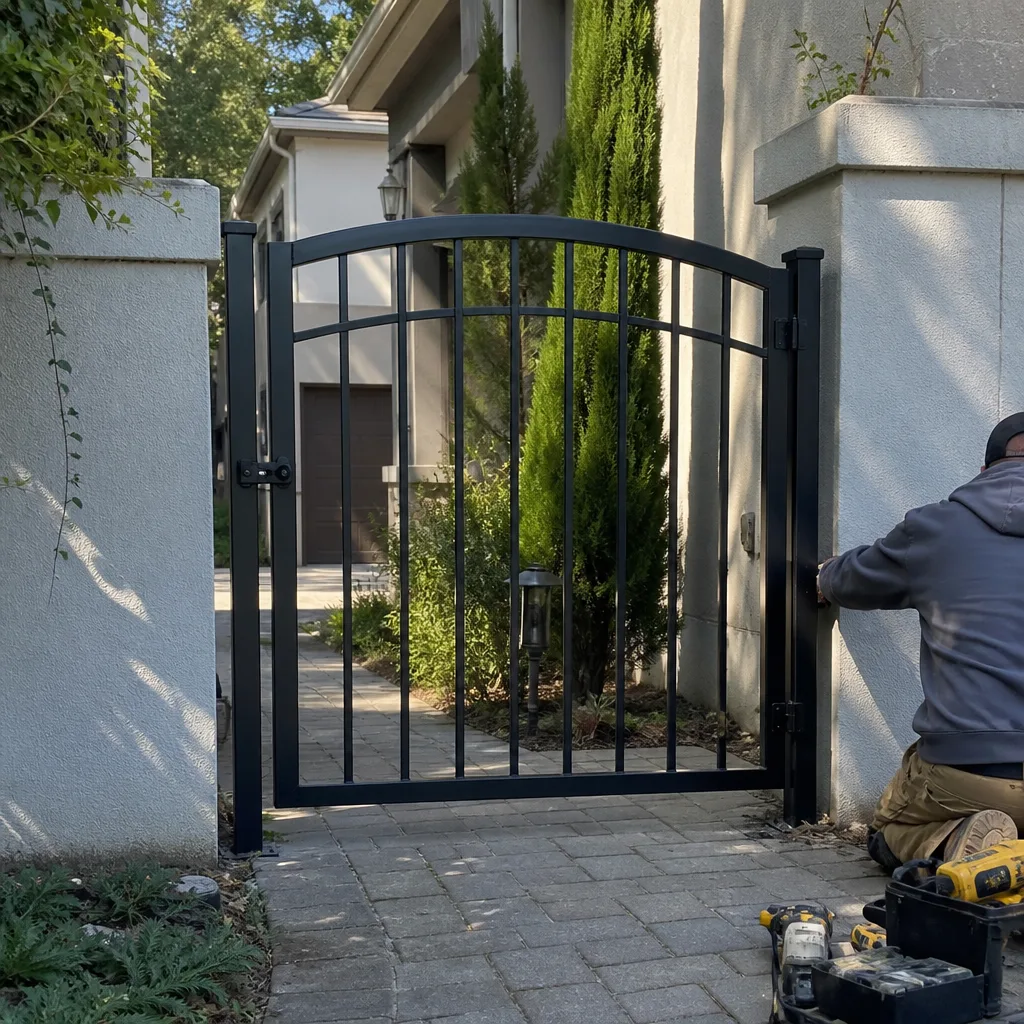 After
After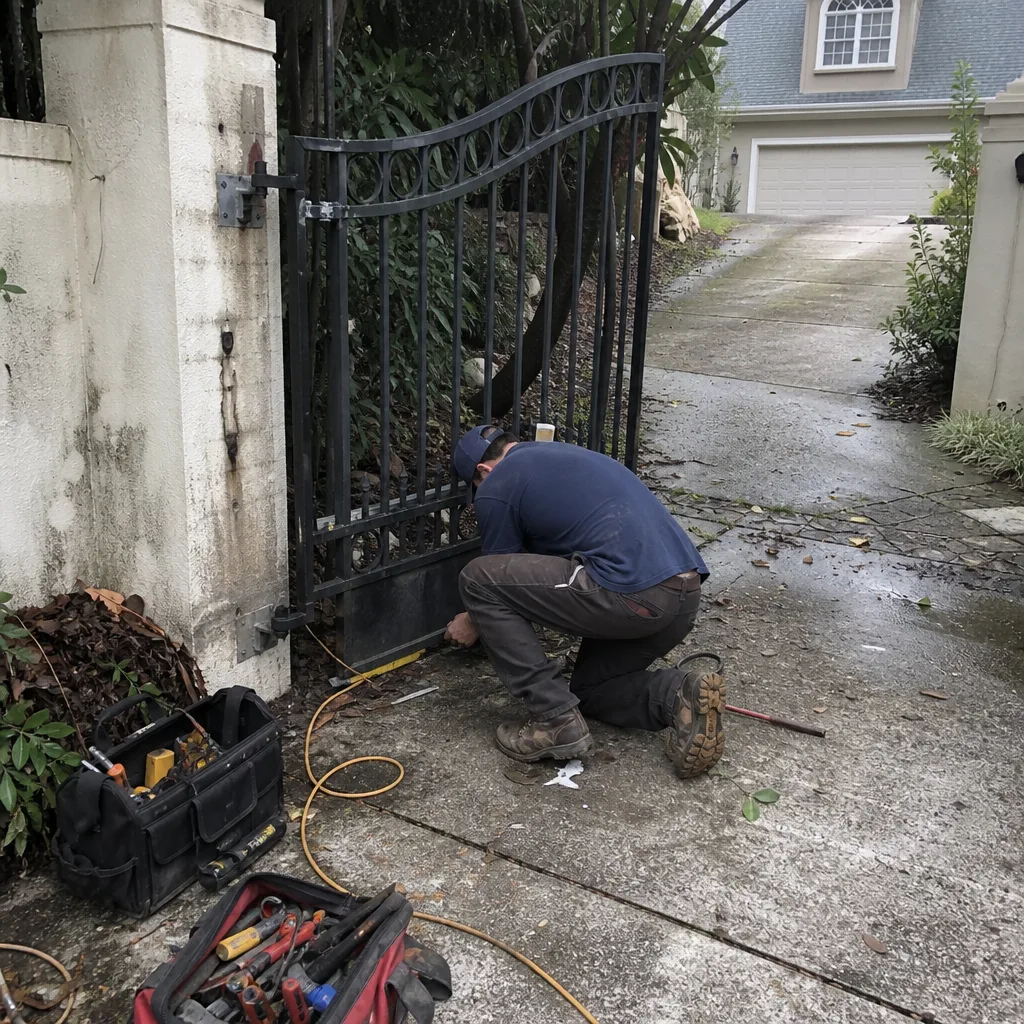 Before
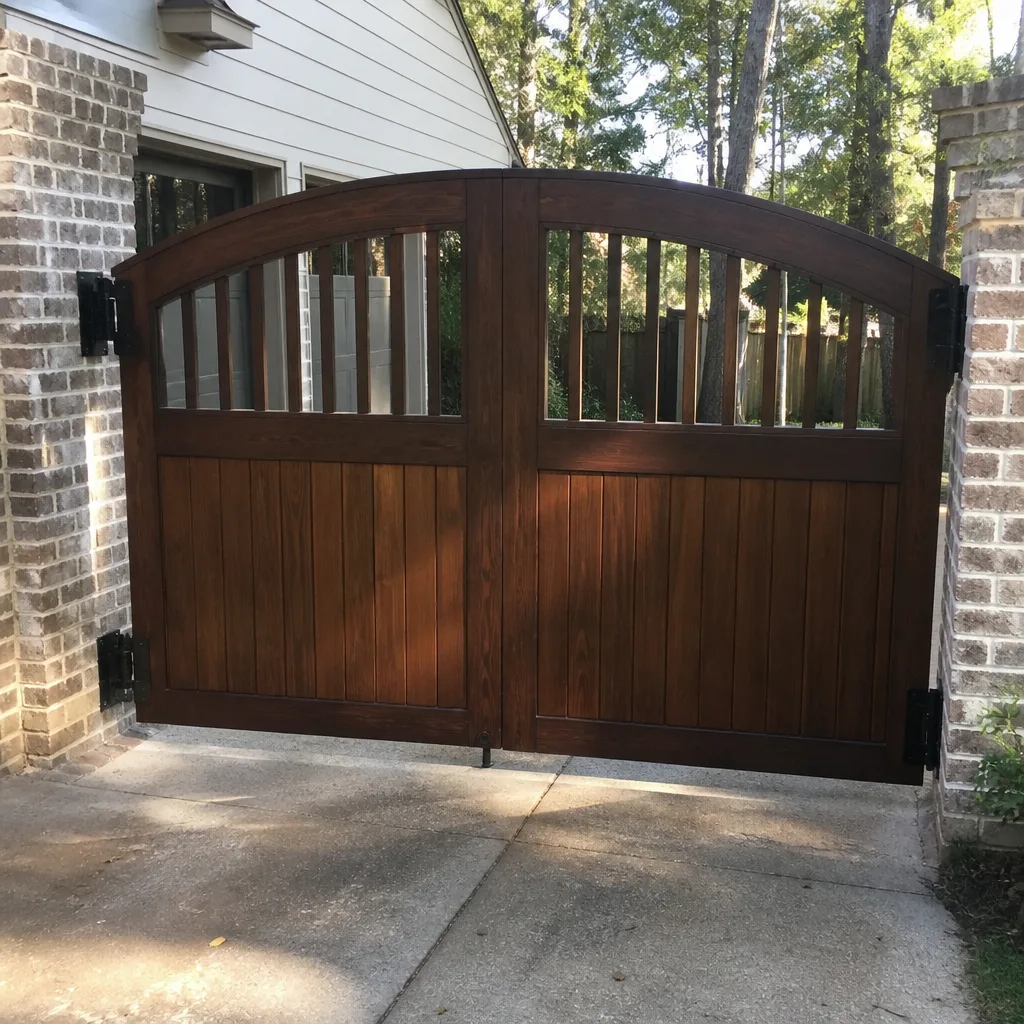 After
AfterGate Repair Permits, Codes & Inspections in GA: What You Need to Know
Georgia doesn’t require a permit for replacing a gate operator. It may require one for relocating a post or adding a new electrical circuit to power it - a distinction most contractors skip past because pulling a permit adds time to their schedule, not yours. In Sandy Springs, we’ve seen homeowners fined $500 and ordered to remove a perfectly good gate because the contractor ran a new 240V line without filing an electrical permit. This guide, alongside our Gate Repair Warning Signs: A Sandy Springs Homeowner’s Reference Guide, defines exactly when a permit is required so you know before work starts, not after an inspector shows up.
Quick Answer
Most residential gate repairs in Georgia - replacing operators, adjusting limit switches, welding hinges, or swapping photo-eyes - do not require a permit. A permit is triggered when the work alters the structure (new posts, new footings, wall attachment), extends or adds electrical circuits, or creates a new opening where none existed. In Sandy Springs, which operates under Fulton County’s building department for residential permits, the threshold sits at $5,000 for structural alterations, but electrical work has no minimum - any new or extended circuit requires a licensed electrician’s permit and inspection.
Table of Contents
- Repair vs. Alteration vs. New Installation: Where the Permit Line Sits
- Sandy Springs Permit Requirements: Fulton County’s Rules
- Electrical Permit Triggers: When Your Gate Operator Needs a Licensed Electrician
- Consequences of Unpermitted Work: Fines, Removal, and Resale Disclosure
- Contractor Accountability: Who Pulls the Permit and How to Confirm It
- The Inspection Process: What to Expect and How to Prepare
- Common Mistakes to Avoid
- When to Call a Professional
- Frequently Asked Questions
- The Bottom Line
 Before
 After
AfterRepair vs. Alteration vs. New Installation: Where the Permit Line Sits
Georgia’s residential building code, adopted from the International Residential Code (IRC) with state amendments, treats gate work in three categories. Understanding which bucket your project falls into determines whether you need to file paperwork before the first hole is dug.
Repair: Work that restores a gate or operator to its original condition using the same location, same power source, and same structural attachments. Examples include replacing a gate motor or opener in Sandy Springs with a comparable unit, welding a cracked hinge, adjusting a limit switch, replacing a photo-eye, or swapping a damaged control board. No permit required. We’ve completed thousands of these since 2014 - every one under the Haven Standard with a written price before work starts and a photo record after.
Alteration: Work that changes the gate’s location, size, structural support, or power requirements. This is where permits enter the picture. Moving a gate post three feet to widen the driveway, replacing a single swing gate with a dual-leaf system that needs new footings, or converting a manual gate to automated where no power exists - each triggers the permit threshold. In Sandy Springs, structural alterations valued above $5,000 require a building permit through Fulton County. Below that, some minor alterations may qualify for a repair classification, but the safest approach is to verify with the county before work begins.
New Installation: Any gate where none existed before. This always requires a permit. New installations involve new footings, new posts set in concrete below the frost line (30 inches in the Atlanta metro, including Sandy Springs), and often new electrical runs. The permit process includes plan review, site inspection, and final approval before the gate can be operated.
Here’s a practical framework we use on every job:
- Identify the existing condition. Was there a gate here before? Was it automated? Where did power originate?
- Define the scope of change. Are we replacing in-kind or changing location, size, or power source?
- Match to permit category. Repair = no permit. Alteration = verify threshold. New = permit required.
- Document in writing. Under Haven Standard Clause 1, we state the permit status on every written scope - “no permit required per Fulton County repair exemption” or “building permit to be pulled by [party], permit number TBD.”
The gray area catches most homeowners. Replacing a Ghost Controls operator with a comparable Ghost Controls unit? Clear repair. Replacing that same operator but moving it from post-mount to pad-mount because the post rotted? Now you’re in alteration territory if the post replacement exceeds the valuation threshold. We’ve seen contractors blur this line intentionally to avoid permit delays, leaving the homeowner exposed.
Sandy Springs Permit Requirements: Fulton County’s Rules
Sandy Springs incorporated in 2005 and retained Fulton County’s building department for residential permitting rather than creating a standalone municipal system. This matters because permit thresholds, fees, and inspection schedules follow Fulton County’s current fee schedule, not a separate Sandy Springs code.
For residential gate work specifically, here are the operative thresholds as of our most recent verification:
- Building permit: Required for structural alterations exceeding $5,000 in valuation, new construction of any value, or any work affecting a retaining wall or drainage structure. The $5,000 figure includes materials and labor.
- Electrical permit: Required for any new circuit, circuit extension, or panel modification. No minimum dollar threshold. A licensed Georgia electrician must pull this permit; it cannot be filed by a handyman or general gate contractor unless that contractor also holds an electrical license.
- Mechanical permit: Generally not applicable to gate work unless the project includes HVAC integration (rare in residential contexts).
- Plumbing permit: Not applicable to standard gate projects.
Where to verify current requirements: Fulton County’s Department of Building and Permits maintains an online permit portal at fultoncountyga.gov. The residential permitting desk can confirm whether your specific project requires filing. We recommend calling with your scope in hand - “I’m replacing a driveway gate operator and running a new 120V circuit from the house panel” - and requesting a written determination.
Sandy Springs’ soil conditions also affect structural permit requirements. The area’s clay-heavy soil, particularly in neighborhoods near the Chattahoochee River like Riverside and Heards Ferry, expands and contracts significantly with moisture changes. Fulton County’s amended IRC requires deeper footings and specific concrete mixes in these zones, which can push even modest post replacements into permit territory if engineered drawings are required. We’ve documented heave-related post failures in these areas where the original installer skipped the geotechnical specification - under Haven Standard Clause 4, we photograph the soil condition and note it in the job record.
One Sandy Springs-specific wrinkle: the city’s tree protection ordinance. If your gate installation or post relocation requires work within the critical root zone of a protected tree (generally 1 foot per inch DBH, diameter at breast height, 4.5 feet above ground), a separate tree removal or impact permit may be required through Sandy Springs’ Community Development department. This runs parallel to building permits, not through Fulton County, and carries its own fines - up to $500 per inch DBH for unpermitted removal.
Electrical Permit Triggers: When Your Gate Operator Needs a Licensed Electrician
This is the most commonly violated permit category in residential gate work, and the most dangerous. Georgia requires a state-licensed electrical contractor to pull permits for any work beyond the “last point of connection” - the terminal block or junction box where the gate operator’s internal wiring begins.
No permit required: Replacing an operator using the existing conduit, existing circuit, and existing disconnect. The gate contractor connects to the existing junction box. This is standard repair work.
Permit required: Any of the following scenarios:
- New circuit from panel. Running 120V or 240V from the main panel or subpanel to a new gate location.
- Circuit extension. Extending an existing circuit beyond its original termination point, even if the load is unchanged.
- Panel modification. Adding a breaker, replacing a breaker with a different amperage, or modifying bus bars to accommodate the gate load.
- Underground conduit installation. Burying conduit for power, even low-voltage control wiring if it shares a trench with line voltage.
- GFCI or disconnect installation. Adding a required disconnect within sight of the operator - now mandated by NEC 2020, which Georgia adopted with amendments.
The 2020 National Electrical Code adoption changed the landscape for gate operators in Georgia. Article 620 (Elevators, Dumbwaiters, Escalators, Moving Walks, Platform Lifts, and Stairway Chairlifts) and Article 430 (Motors, Motor Circuits, and Controllers) both apply to gate automation. Key requirements now include:
- A disconnecting means within sight of the motor, lockable in the open position
- Ground-fault protection for personnel on 120V circuits in residential settings
- Proper motor overload sizing based on the operator’s nameplate full-load current
We’ve serviced Viking, Ghost Controls, DoorKing, and Elite operators where the original installer skipped the disconnect requirement. The gate works fine until an inspector sees it, or until someone needs to service it safely. Under our Haven Standard documentation, we note the presence or absence of code-compliant disconnects on every electrical-adjacent job - it’s in your photo record before we leave.
Cost implications: A licensed electrician pulling a permit adds $200-$600 to most residential gate projects in the Sandy Springs area, depending on panel location and trench length. The permit itself runs $50-$150 through Fulton County. Unpermitted electrical work discovered later can trigger fines of $100-$500 per violation, plus the cost of corrective work exposed to inspection. We’ve been called to jobs where the homeowner’s insurance denied a claim because unpermitted electrical work contributed to a fire - the documentation gap became a coverage gap.
Consequences of Unpermitted Work: Fines, Removal, and Resale Disclosure
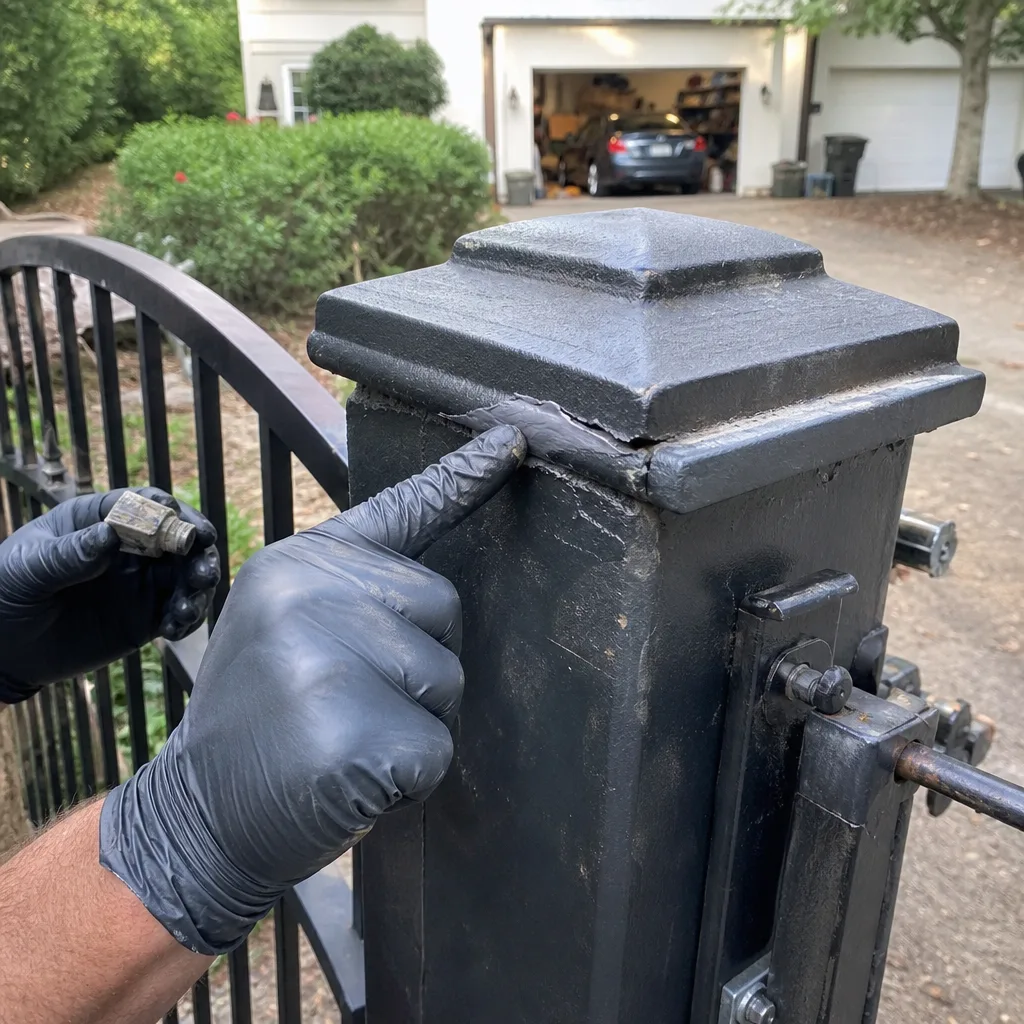
Georgia’s enforcement framework for unpermitted construction has teeth, and gate work is not exempt despite its peripheral status in most homeowners’ minds.
Inspection triggers. Unpermitted work surfaces most often through:
- Neighbor complaints (common in Sandy Springs’ tighter lot configurations in neighborhoods like Dunwoody Panhandle and Hammond Hills)
- Utility work that exposes unpermitted electrical
- Property sale inspections, including lender-required appraisals
- Insurance claims where the gate or its electrical supply is involved
- Routine code enforcement patrols in areas with active construction
Fines and penalties. Fulton County can assess penalties at 150% of the permit fee that should have been paid, plus a $100-$500 administrative fine per violation. For electrical work, the State Licensing Board can separately fine unlicensed electrical work at $1,000-$5,000 per occurrence. Repeat violations escalate to misdemeanor charges under O.C.G.A. § 43-14-8.
Forced removal. The county’s stop-work order authority extends to ordering removal of unpermitted structures. We’ve seen this applied to gates where new posts were set without proper footings in flood-prone Sandy Springs areas - the gate itself was sound, but the foundation work violated the amended IRC. The homeowner paid for installation, then paid for removal, then paid again for permitted reinstallation.
Resale disclosure. Georgia’s Seller’s Property Disclosure Statement (GAR Form F201) specifically asks about “any work performed without required permits.” Answering falsely exposes the seller to fraud liability. Answering truthfully - “yes, the gate was installed without a permit” - triggers buyer negotiation, lender requirements for retroactive permitting, or deal termination. The cost of retroactive permitting typically exceeds original permitting by 50-100% because inspectors must verify concealed work, often requiring destructive exposure.
In Sandy Springs’ active resale market, this disclosure question has killed deals we’ve been called to salvage. Our documentation habit, developed from commercial access-control work starting in 2014, means we can produce permit records, inspection approvals, and photo evidence for any our Gate Repair services installation - a file that transfers cleanly to new owners and satisfies any disclosure review.
Contractor Accountability: Who Pulls the Permit and How to Confirm It
Georgia law places permit responsibility on the party performing the work, but enforcement falls unevenly. Here’s how to protect yourself.
Step 1: Ask before you sign. Any written scope should state explicitly who files what permit. Our Haven Standard scopes, detailed further in How to Hire a Gate Repair Contractor in Sandy Springs: A Step-by-Step Guide, include this line: “Permits: [None required / Building permit by Vance Gate Repair, license #____ / Electrical permit by [licensed electrician name], license #____].” If a contractor says “don’t worry about it” or “we’ll handle it after,” that’s a red flag.
Step 2: Verify the license. Georgia’s Secretary of State maintains an online license verification at sos.ga.gov. For electrical work, confirm the contractor holds an Electrical Contractor license (not just a Low Voltage license, which does not authorize residential line-voltage work). For structural work, confirm a Residential-Light Commercial license or General Contractor license as appropriate.
Step 3: Confirm permit filing. Fulton County’s online permit search allows lookup by address. Within 48 hours of filing, the permit should appear with a tracking number. Request this number from your contractor and verify it independently. We’ve seen contractors claim permits were “filed” when they were merely “planned to file” - the distinction matters when the inspector arrives.
Step 4: Require inspection completion. A pulled permit means nothing without passed inspections. Residential gate projects typically require:
- Foundation/footing inspection (for new posts or structural alterations)
- Framing/rough inspection (for gate structure before finish materials)
- Electrical rough inspection (before cover plates and operator installation)
- Electrical final inspection (after operator connection and testing)
- Building final inspection (complete gate operation, safety devices, clearances)
Each inspection generates a pass or fail record. Request copies for your file - under Haven Standard Clause 4, we include these in the job documentation package.
Step 5: Understand the liability split. If a gate contractor performs unpermitted electrical work, both the contractor and the homeowner may be cited. The homeowner’s defense - “I didn’t know” - carries limited weight in Georgia courts after City of Atlanta v. Jenkins (2019), which established that property owners have a duty to verify permit status for visible construction work. Document your verification steps.
The Inspection Process: What to Expect and How to Prepare
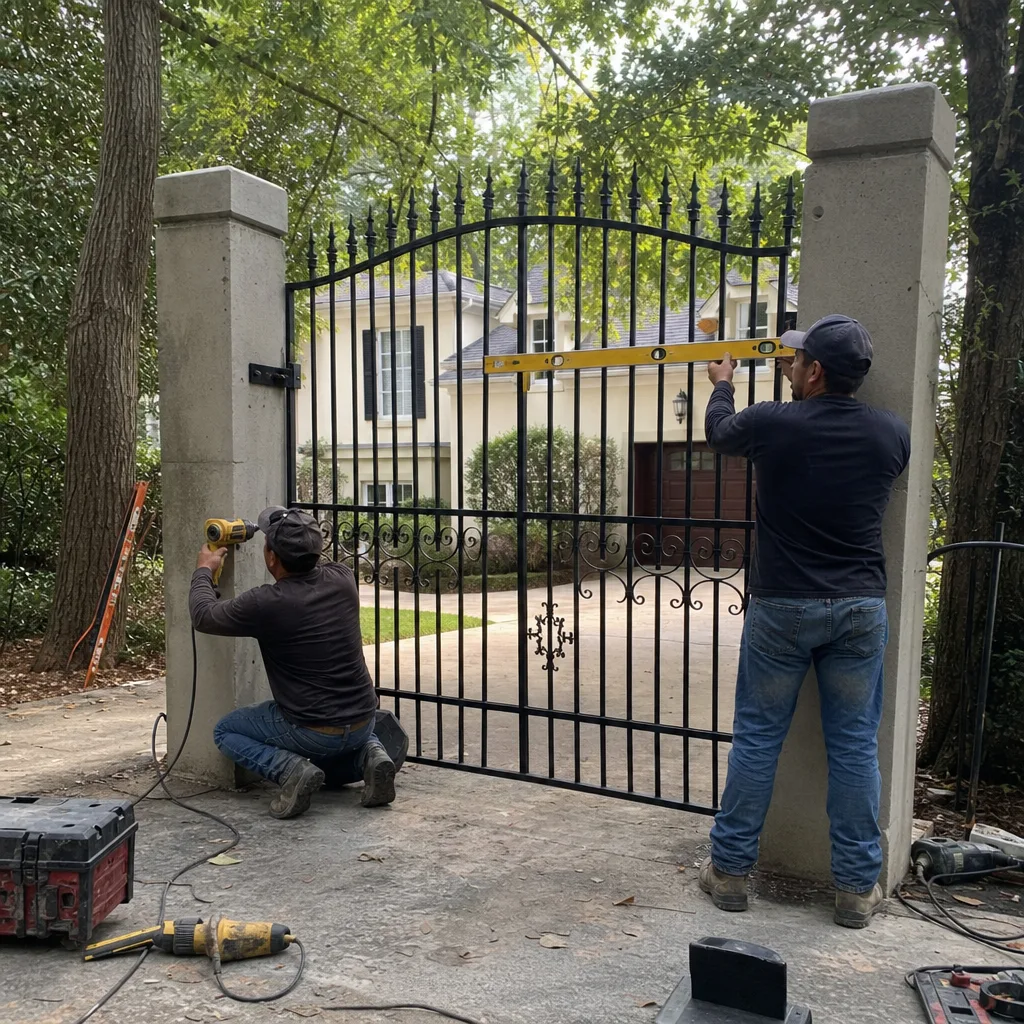
Once permits are filed, understanding the inspection sequence prevents delays and re-inspection fees.
Scheduling. Fulton County offers online scheduling with 48-hour advance notice. Inspections occur Tuesday through Friday in most Sandy Springs zones. The contractor or homeowner can schedule; we schedule on behalf of our clients and confirm the inspector’s name and estimated window.
What inspectors check for gate projects:
- Post depth and concrete specification (minimum 30″ below grade, 3,000 PSI concrete in standard soils; deeper and higher PSI in expansive clay zones)
- Gate swing clearance (minimum arc clearance, no obstruction in swing path)
- Entrapment protection (photo-eyes or edge sensors on automated gates, tested under load)
- Electrical disconnect location and labeling
- GFCI protection on 120V circuits
- Bonding and grounding continuity
- Control device height (between 36″ and 48″ above grade for pedestrian access devices)
Common failures we correct. In Sandy Springs specifically, we see three recurring issues:
- Photo-eye height. Installers mount beams at 18″-24″ for vehicles, but Fulton County inspectors now check for pedestrian protection - a second beam or edge sensor at 6″ or lower. Single-beam systems on older operators often fail this check.
- Disconnect visibility. The NEC 2020 “within sight” requirement means visible and not more than 50 feet from the operator. Operators tucked behind landscaping or fencing often fail.
- Expansion joint spacing. In Sandy Springs’ clay soils, inspectors check that concrete footings include proper isolation from adjacent slabs to prevent heave transfer. We’ve documented cases where a gate post pulled a driveway slab because this joint was omitted.
Re-inspection fees run $50-$100 per visit in Fulton County. Proper preparation - having the operator powered, sensors aligned, and documentation ready - avoids this cost. Our technicians arrive 30 minutes before scheduled inspections to verify all functions and present the job file to the inspector.
Common Mistakes to Avoid
- Assuming repair equals no permit in all cases. Replacing a post in Sandy Springs’ expansive clay soils can require engineered footings that push the valuation over Fulton County’s $5,000 threshold. Verify before assuming.
- Letting the contractor “handle permits later.” Permits must be filed before work begins. Retroactive permitting costs more, exposes concealed work to destructive inspection, and may be denied entirely if the installation doesn’t meet current code.
- Accepting verbal permit assurances. “I pulled it” means nothing without a permit number you can verify online. Every Sandy Springs homeowner we’ve worked with gets the number in writing under Haven Standard Clause 1.
- Ignoring the electrical distinction. A gate contractor can replace your Elite operator on existing power. That same contractor cannot legally run a new circuit from your panel without an electrical license. Ask which license applies to which scope.
- Skipping the final inspection. Some contractors treat rough inspection as “good enough” and never call for final. Your Certificate of Occupancy or completion documentation is incomplete without it, and resale disclosure becomes problematic.
- Neglecting tree impact review. Sandy Springs’ tree ordinance runs independently of building permits. A gate installation that disturbs protected roots can trigger fines even when all building and electrical permits were properly filed.
- Failing to document for the next owner. Permits and inspections stay with the property, not the contractor. Request copies of all approvals and keep them with your deed records. Our photo documentation package transfers cleanly - we’ve had new owners call us years later because the file was still in the house.
When to Call a Professional
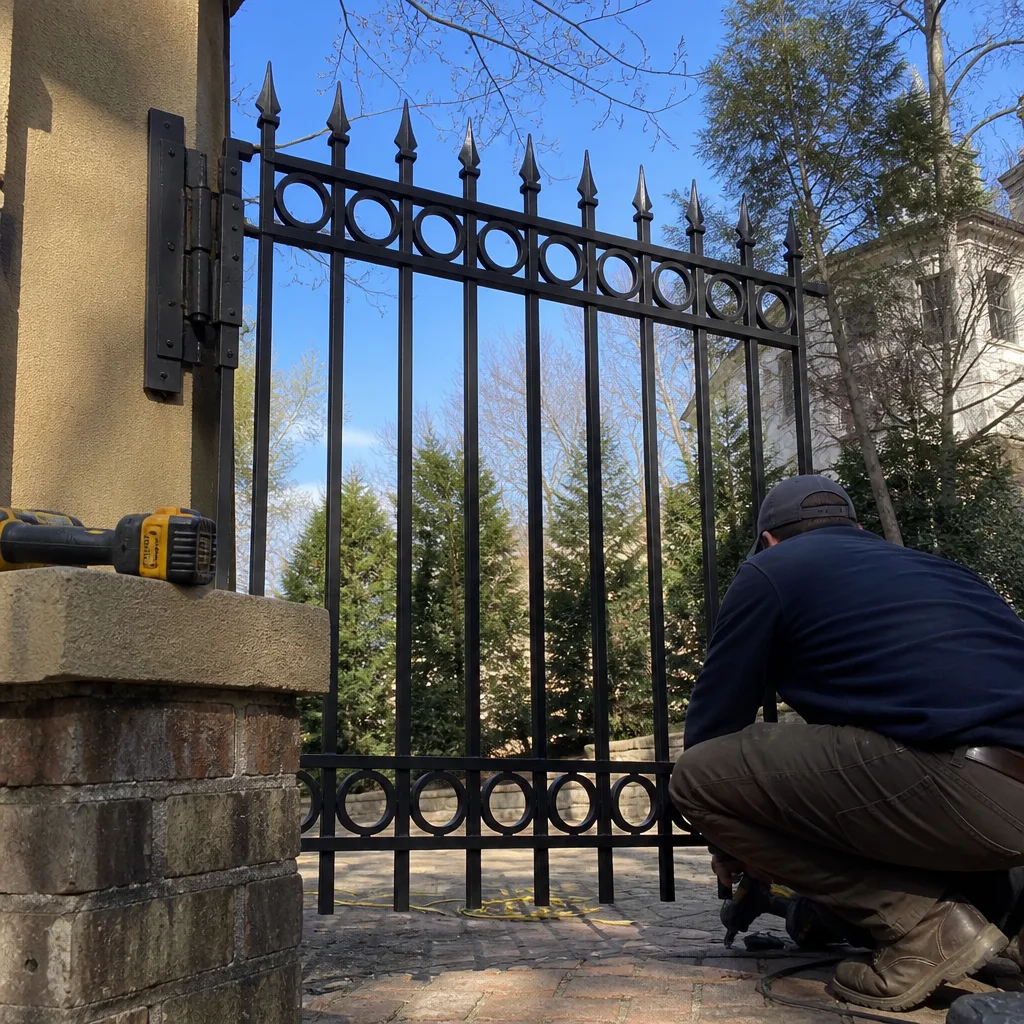
Call a licensed professional when your project involves new electrical circuits, structural post work, any new installation where none existed, or when you’re uncertain which permit category applies - see more guides & resources for additional help. The cost of verification is negligible compared to the cost of correction.
Vance Gate Repair Sandy Springs offers free estimates in Sandy Springs - call (470) 885-1464. We assess your existing setup, define the permit status in writing before any work is proposed, and coordinate licensed electrical partners when permits are required. Every scope includes the Haven Standard documentation: written price before work starts, photographed record of what was found and what was done, and the 365-Day Done Right Promise covering all completed work.
Frequently Asked Questions
No, if you’re replacing the operator in-kind using the existing power source and mounting location. A permit is required if the replacement involves new electrical circuits, new mounting posts, or relocating the operator to a different position. Call (470) 885-1464 for a free estimate - we’ll assess your setup and state the permit status in writing before any work is proposed.
Building permits for structural alterations run approximately $50-$150 in base fees through Fulton County, plus plan review fees for projects over $5,000. Electrical permits add $50-$150 depending on circuit complexity. Re-inspection fees are $50-$100 per failed visit. We include permit costs transparently in our written scope when they apply - no surprise additions after work starts.
Only if the contractor holds a Georgia Electrical Contractor license, which is separate from a gate installer or low-voltage license. Most gate specialists, including Vance Gate Repair, coordinate with licensed electrical partners for permit-required electrical work rather than performing it illegally. Ask to see the specific license that authorizes line-voltage residential work.
You must disclose unpermitted work on Georgia’s standard Seller’s Property Disclosure Statement. Failure to disclose exposes you to fraud liability. Disclosure typically triggers buyer negotiation for retroactive permitting, which costs 50-100% more than original permitting and may require destructive exposure of concealed work. Proper documentation from installation prevents this scenario.
Simple electrical permits through Fulton County often issue same-day or next-day online. Building permits for structural work require plan review, typically 5-10 business days for residential projects. Inspections schedule 48 hours out. Total timeline from filing to final approval: 2-4 weeks for straightforward projects, longer if revisions are required. We build permit timelines into our project schedules when they apply.
We pull permits for structural gate work within our license scope and coordinate licensed electrical partners for electrical permits. The permit responsibility is stated explicitly in our written scope under Haven Standard Clause 1 - you’ll see “Permit: Vance Gate Repair, license #[verified]” or “Permit: Coordinated through [licensed electrician], license #[verified]” before any work begins. You verify the filing independently through Fulton County’s online system.
The Bottom Line
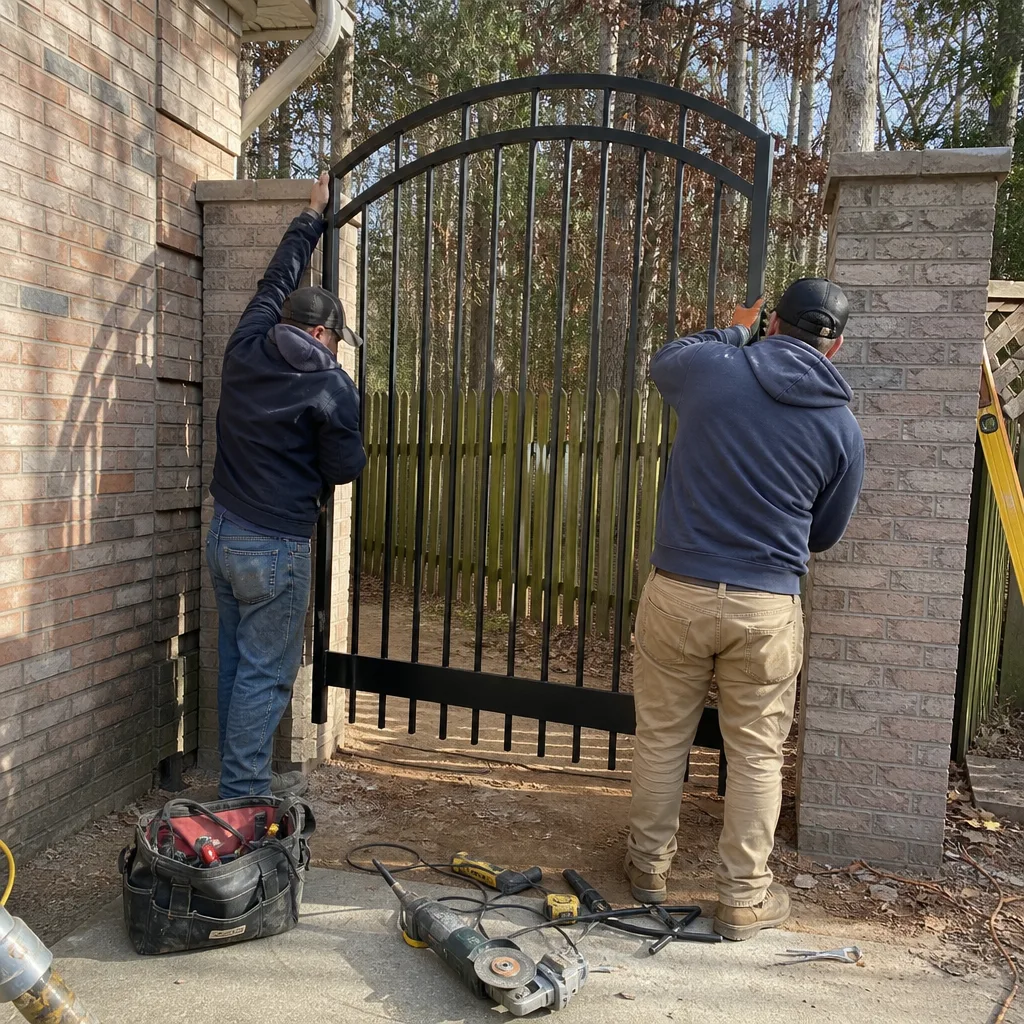
Most gate repairs in Georgia need no permit. The exceptions - new electrical circuits, structural alterations over $5,000, and any new installation - carry real consequences when ignored: fines, forced removal, and resale complications that outlast the gate itself. In Sandy Springs, working within Fulton County’s framework adds a layer of verification that protects homeowners when contractors might prefer to skip it. The Haven Standard exists because we’ve seen what happens when documentation is treated as optional. Written price before work starts. Permit status stated clearly. Photo record of every adjustment. That’s the file you keep, and the file that protects you.
Written by Adrian Vance, Owner at Vance Gate Repair Sandy Springs, serving Sandy Springs since 2014.