
Last updated September 22, 2026
Free on-site gate assessment - hinges, posts, and your LiftMaster or Nice gate operator checked before anything is quoted
The assessment is free and the quote is the invoice.

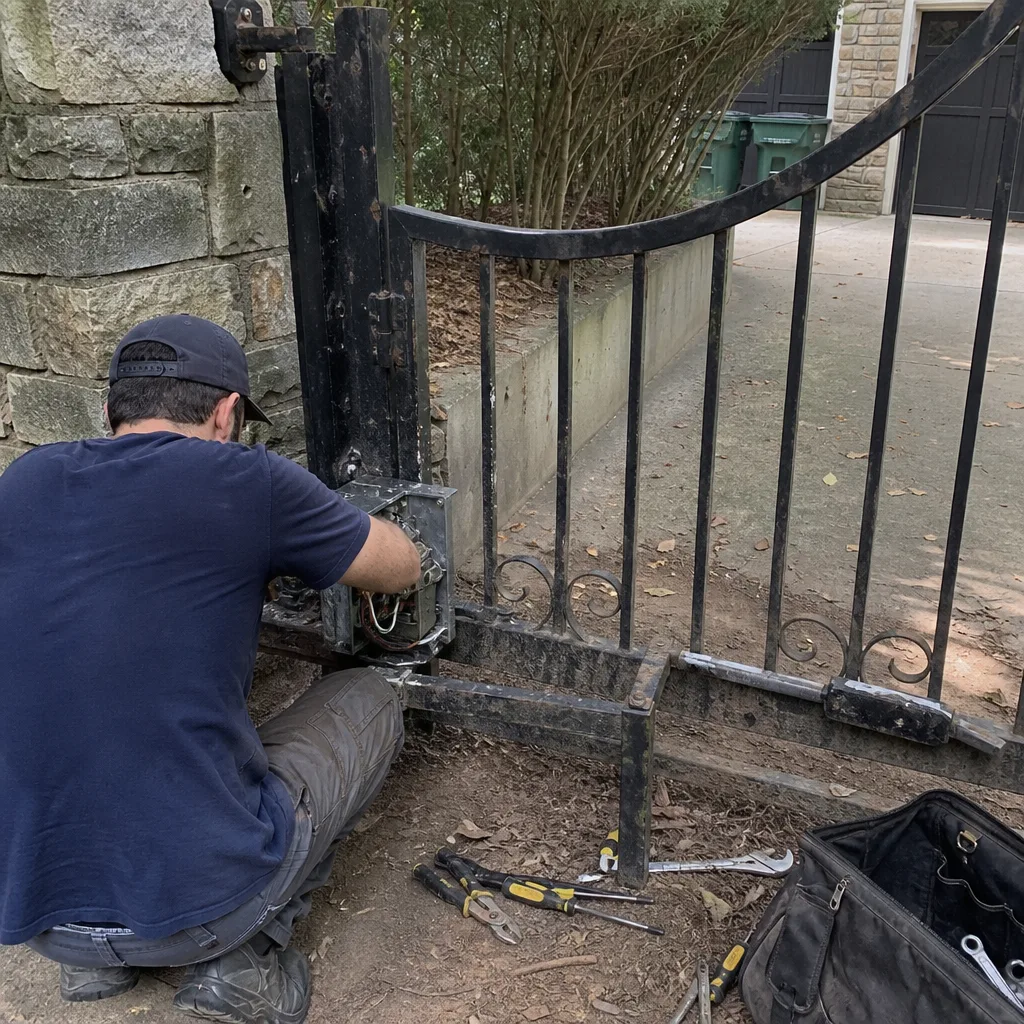 Before
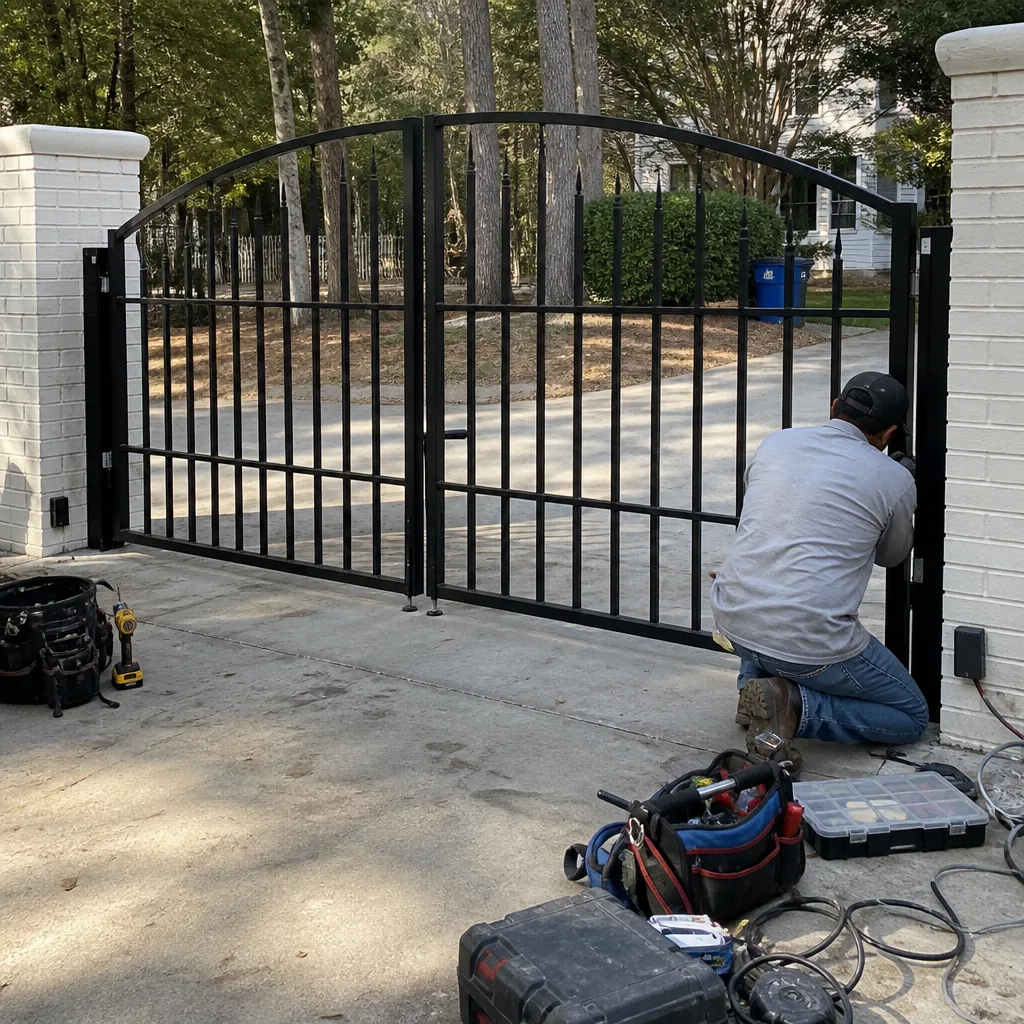 After
After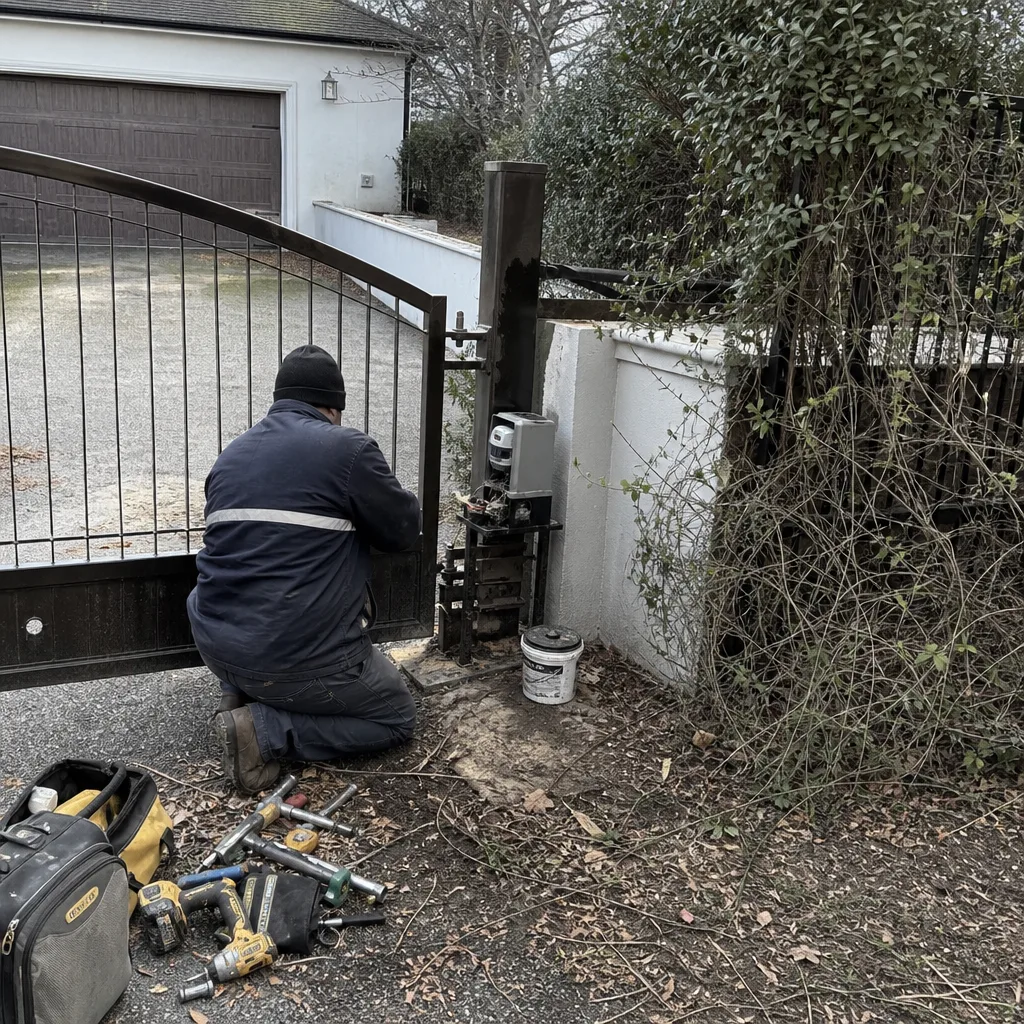 Before
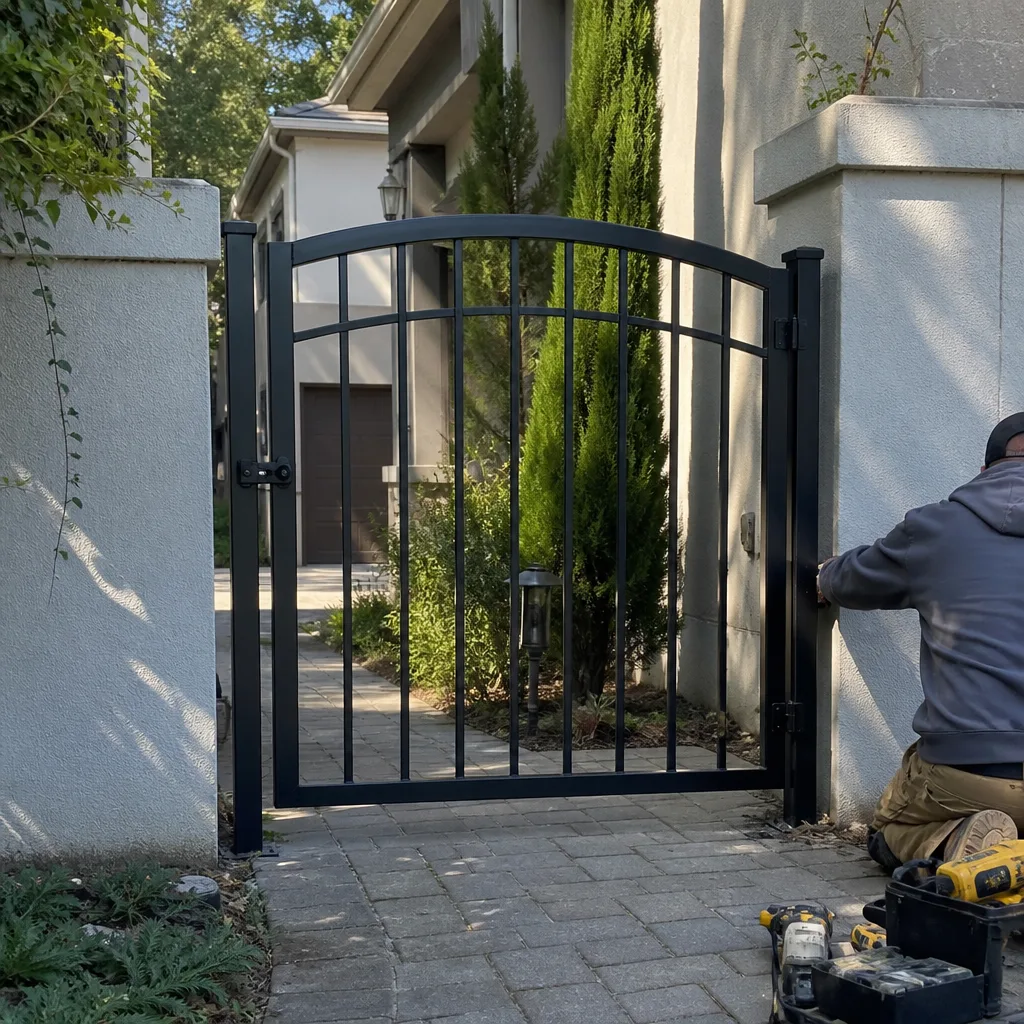 After
After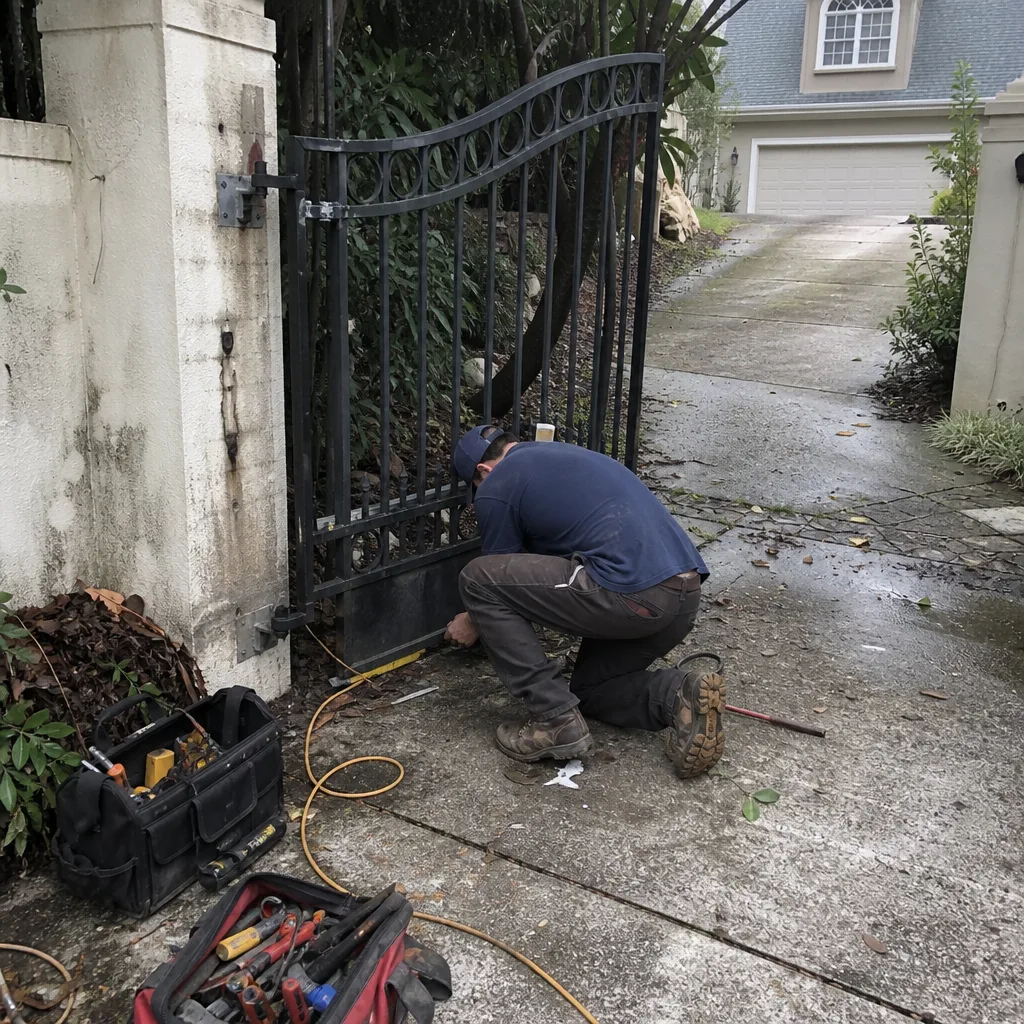 Before
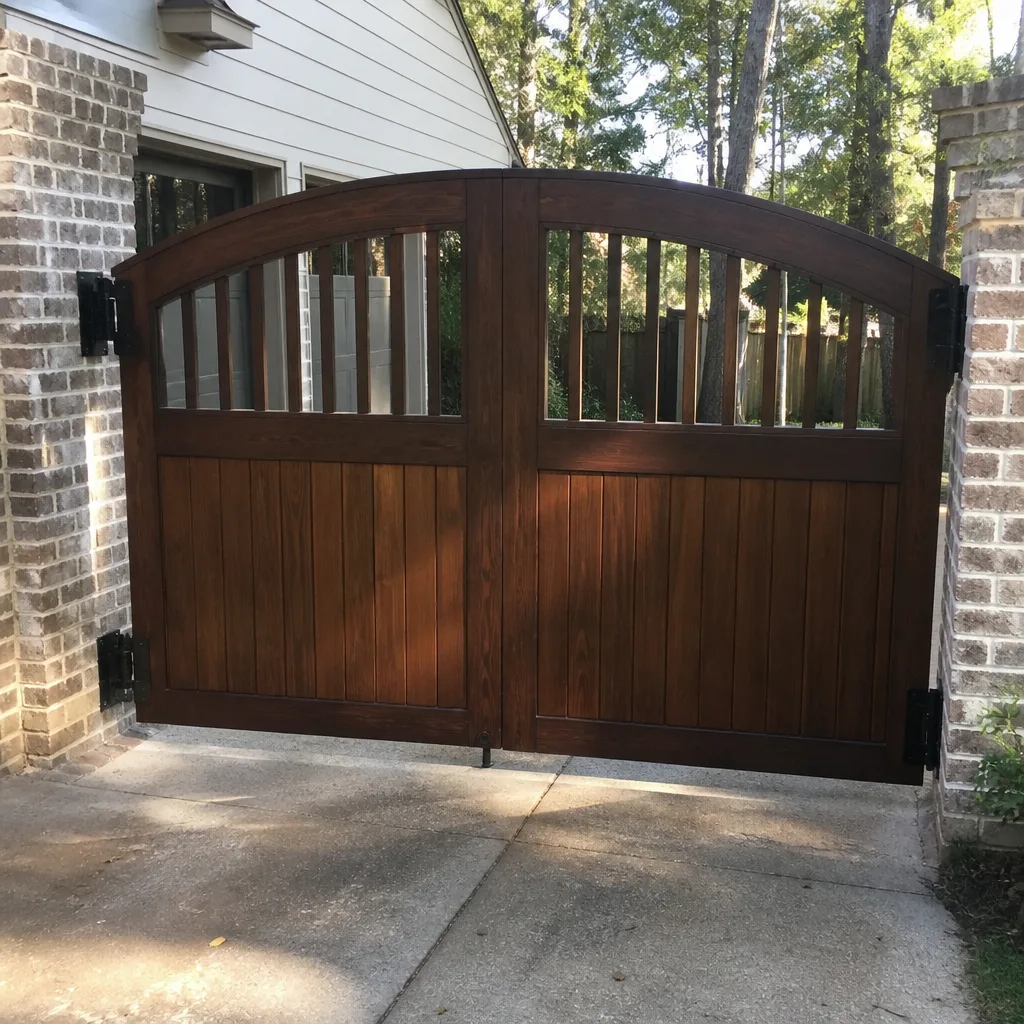 After
AfterDIY vs Professional Gate Repair: The Sandy Springs Homeowner’s Decision Guide
Replacing a gate wheel roller is a reasonable Saturday project, unlike tasks covered by our Gate Repair services. Splicing into the low-voltage wiring on the same gate without documenting your work means the next technician charges diagnostic time to reverse-engineer what you did, and that cost lands on you, not them. In Sandy Springs, where many homes sit on sloped lots off Roswell Road or back up to the Chattahoochee River with gates exposed to humidity and seasonal debris, the DIY-vs-professional question isn’t about whether you’re handy. It’s about which specific tasks carry liability, code, or warranty consequences that make amateur work more expensive than professional work even when the amateur succeeds. This guide draws the line by task, not by personality type.
Quick Answer
Most Sandy Springs homeowners can safely handle lubrication, debris clearing, and simple hardware replacement on their gates. Any work involving electrical connections, welding, structural post resetting, or automation system programming should be done by a licensed professional, because undocumented DIY work voids warranties, complicates insurance claims, and typically costs more to untangle than the original repair would have. The dividing line is documentation and liability, not skill level.
Table of Contents
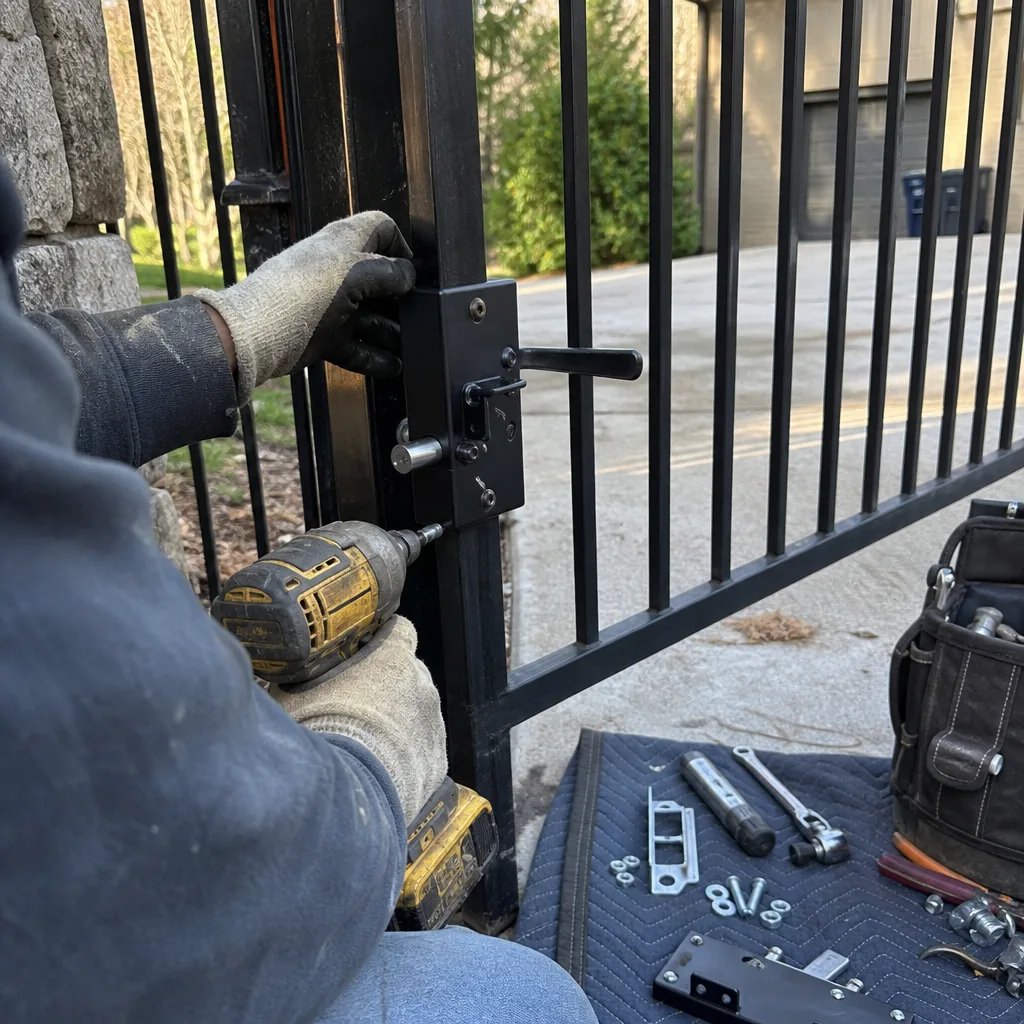
- What Homeowners Can Reasonably Do Themselves
- Tasks That Require a Professional (And Why)
- The Hidden Cost of Undocumented DIY Work
- The Tools That Make DIY Economics Unfavorable
- Permits, Insurance, and Liability in Sandy Springs
- The Three-Question Decision Framework
- Common Mistakes to Avoid
- When to Call a Professional
 Before
 After
AfterWhat Homeowners Can Reasonably Do Themselves
Some gate maintenance tasks are genuinely low-risk and cost-effective for homeowners. The key is that none of these alter the electrical, structural, or warranty status of the gate system.
Tasks We Consider DIY-Appropriate
- Track and roller cleaning. Remove leaves, pine straw, and gravel from the gate track with a stiff brush. Sandy Springs properties near Morgan Falls or along the river corridor collect significant debris during spring and fall; monthly clearing prevents jamming and reduces motor strain.
- Hinge lubrication. Apply white lithium grease or a silicone-based lubricant to exposed hinges and roller bearings. Avoid WD-40 for this, it attracts dust and gums up in Georgia humidity.
- Photo-eye alignment check. Verify that the infrared safety beams (photo-eyes) are clean and facing each other directly. A misaligned photo-eye is the cause of roughly 30% of “gate won’t close” calls we receive in Sandy Springs. If cleaning and realigning doesn’t solve it, the wiring or the eye itself needs professional attention.
- Manual release operation. Every automatic gate has a manual release mechanism for power outages. Homeowners should locate it, test it quarterly, and know how to operate it. If the release is seized or the cable is frayed, that’s a service call.
- Visual inspection of hardware. Look for cracked welds, loose bolts, or rust-through on the gate frame. Note what you find. Documentation, even photos on your phone, helps the technician who eventually repairs it.
These tasks share three characteristics: they require no specialized tools, they don’t void warranties, and they leave no undocumented state that complicates future service.
What DIY Success Looks Like
A homeowner in the Riverside neighborhood called us last year after lubricating his swing gate hinges and clearing the track. The gate still wouldn’t open fully. Because he hadn’t touched the motor, wiring, or limit switches, we diagnosed a failed actuator arm on his Linear operator in under 20 minutes. The repair was straightforward because the system was in its factory-documented state, as we explain in our Gate Repair Maintenance Checklist for Sandy Springs Homeowners. His maintenance saved him nothing on the repair itself, but it saved him a diagnostic fee for what would have been a simple debris issue.
Tasks That Require a Professional (And Why)
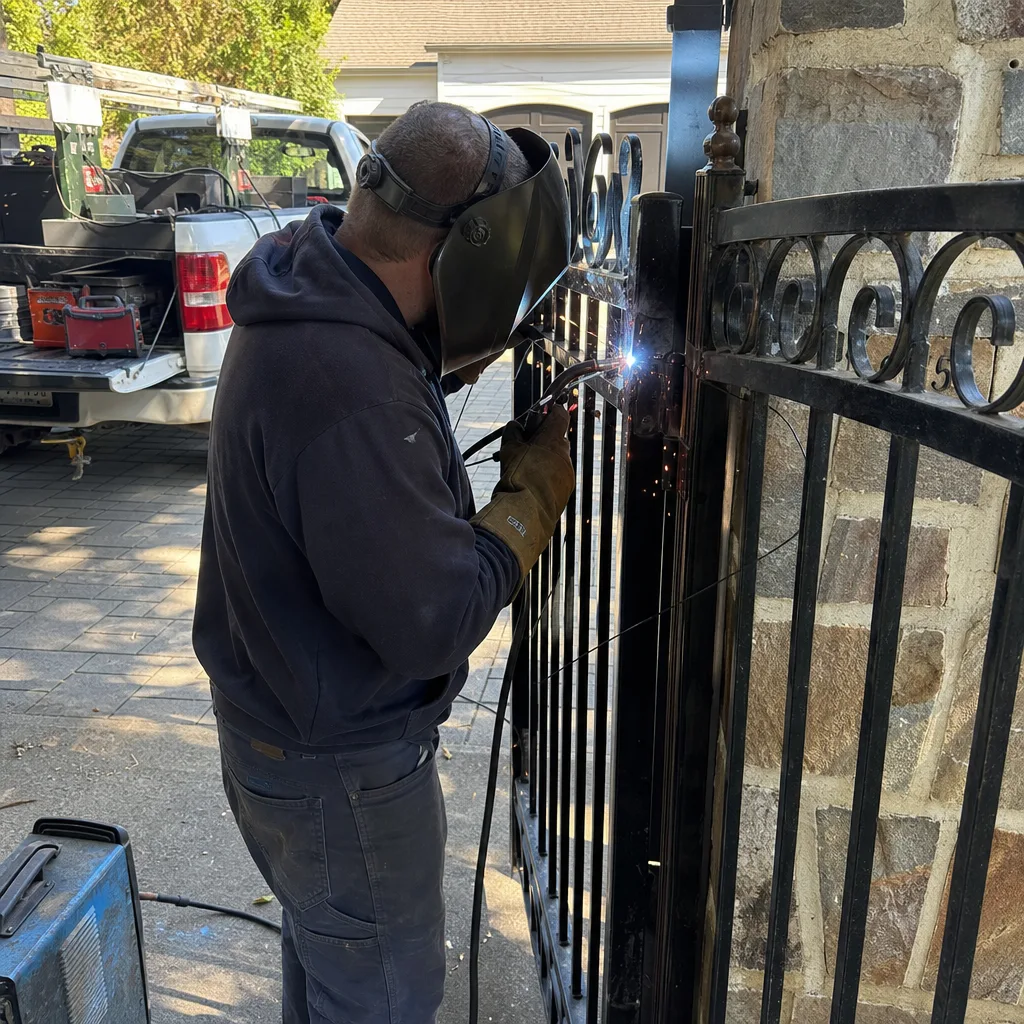
The professional-required category isn’t about difficulty. It’s about consequences. Here’s how we classify tasks and the specific reason for each classification.
Electrical Work (Any Voltage)
Gate automation systems run on two electrical layers: 110V AC supply to the operator box, and low-voltage control circuits (typically 24V) for safety edges, photo-eyes, keypads, and loop detectors. Both layers require professional handling.
The 110V supply must meet NEC (National Electrical Code) requirements and any local amendments. In Sandy Springs, which follows Fulton County electrical inspection standards, unpermitted electrical work on exterior structures can complicate property insurance claims if that work is later found contributory to a failure. More immediately, most manufacturer warranties on operators from brands like Viking, DoorKing, or Ghost Controls explicitly void coverage if non-certified personnel alter the control wiring.
The low-voltage side seems safer, and physically it is. But splicing into a 24V photo-eye circuit without documenting wire colors, termination points, and polarity means the next technician spends 30-90 minutes tracing your work with a multimeter before addressing the actual problem. We bill that time. You pay it.
Welding and Structural Repair
Gate frames in Sandy Springs take stress from two sources: the weight of the gate itself, and the ground movement common to our clay-heavy soils. When a weld cracks or a post leans, the repair affects load distribution across the entire system.
Improper welding on a steel gate can create brittle heat-affected zones that fail catastrophically. A post reset without proper depth, drainage, and concrete footing will lean again within two seasons. These aren’t aesthetic issues. A falling gate causes serious injury and exposes the homeowner to negligence liability.
Automation Programming and Limit Setting
Modern operators from brands like Linear, Viking, and DoorKing require electronic limit-switch programming to set open and close positions. This isn’t mechanical adjustment. It involves entering a programming mode, setting travel limits to precise degree measurements, and configuring obstacle-sensitivity thresholds.
Incorrect limit settings cause the gate to over-travel, damaging the motor, the gate structure, or whatever the gate hits. Sensitivity set too low means the gate doesn’t stop for obstacles; too high means it stops for wind gusts or rain accumulation. Factory-trained technicians carry the manufacturer’s programming guide and set these values to specification. DIY programming is guesswork with expensive failure modes.
Tasks and Their Classification
| Task | Classification | Reason |
|---|---|---|
| Track cleaning | DIY | No warranty, code, or liability exposure |
| Hinge lubrication | DIY | Consumable maintenance, no system alteration |
| Photo-eye cleaning/realignment | DIY (surface level) | No wiring alteration; if wiring is touched, professional required |
| Wheel/roller replacement (manual gate) | DIY | Mechanical only, no electrical or structural load change |
| Control board replacement | Professional | Warranty void if non-certified; requires programming |
| Limit switch adjustment/programming | Professional | Requires manufacturer-specific programmer; incorrect settings damage system |
| Safety edge installation | Professional | UL 325 compliance required; insurance liability if improperly installed |
| Welding any gate component | Professional | Structural integrity and liability exposure |
| Post resetting or replacement | Professional | Load engineering and permit requirements |
| Low-voltage wiring splice | Professional | Undocumented state creates future diagnostic cost; warranty void |
The Hidden Cost of Undocumented DIY Work
This is the point most more guides & resources miss entirely. The cost of DIY isn’t just your time and materials. It’s the cost of the professional who has to clean up the documentation gap.
What “Undocumented State” Means
When a factory-trained technician approaches a gate system, they expect to find the wiring, programming, and hardware in a known configuration. Manufacturer service manuals assume this. Diagnostic flowcharts start from factory defaults or the last documented service state.
When a homeowner splices a new photo-eye into a control circuit without noting which wire went where, or resets a limit switch by trial and error, or installs a non-spec replacement part, the system enters an undocumented state. The technician can’t use standard diagnostic procedures because the baseline is unknown.
How This Translates to Your Invoice
In our Sandy Springs service records, undocumented DIY work adds 30-90 minutes of diagnostic time to roughly 40% of calls where the homeowner attempted electrical or programming repair before calling us. At standard rates, that’s $75-$225 added to a repair that would have cost less if left untouched.
Here’s a specific case from last year. A homeowner in the Glenridge Heights area replaced a failed Ghost Controls arm with a third-party actuator he found online. The mounting bracket didn’t align, so he drilled new holes. The wiring harness had different pinouts, so he cut and spliced. When we arrived, the gate was operable but unsafe, the operator wouldn’t enter programming mode, and the original mounting points were compromised. We spent 90 minutes mapping his splices, documented the non-compliance with Ghost Controls specifications, and ultimately replaced the entire operator assembly because the control board had been damaged by incorrect voltage routing. His $200 DIY attempt became a $1,400 replacement.
Under Vance Gate Repair Sandy Springs home service protocol, we would have provided a written price for the original actuator replacement before starting, documented the installation with photos of every connection, and left a record that any future technician could reference. That’s the Haven Standard Clause 4: Evidence on every job.
The Documentation Gap in Resale and Insurance
Undocumented gate work also surfaces during home sales and insurance claims. A Sandy Springs homeowner selling a property in the ITP (Inside the Perimeter) market will likely face a buyer’s inspection that notes gate automation. If the system has been modified without permits or professional documentation, the seller may need to pay for certification or replacement to close the sale. The savings from DIY evaporate entirely.
The Tools That Make DIY Economics Unfavorable
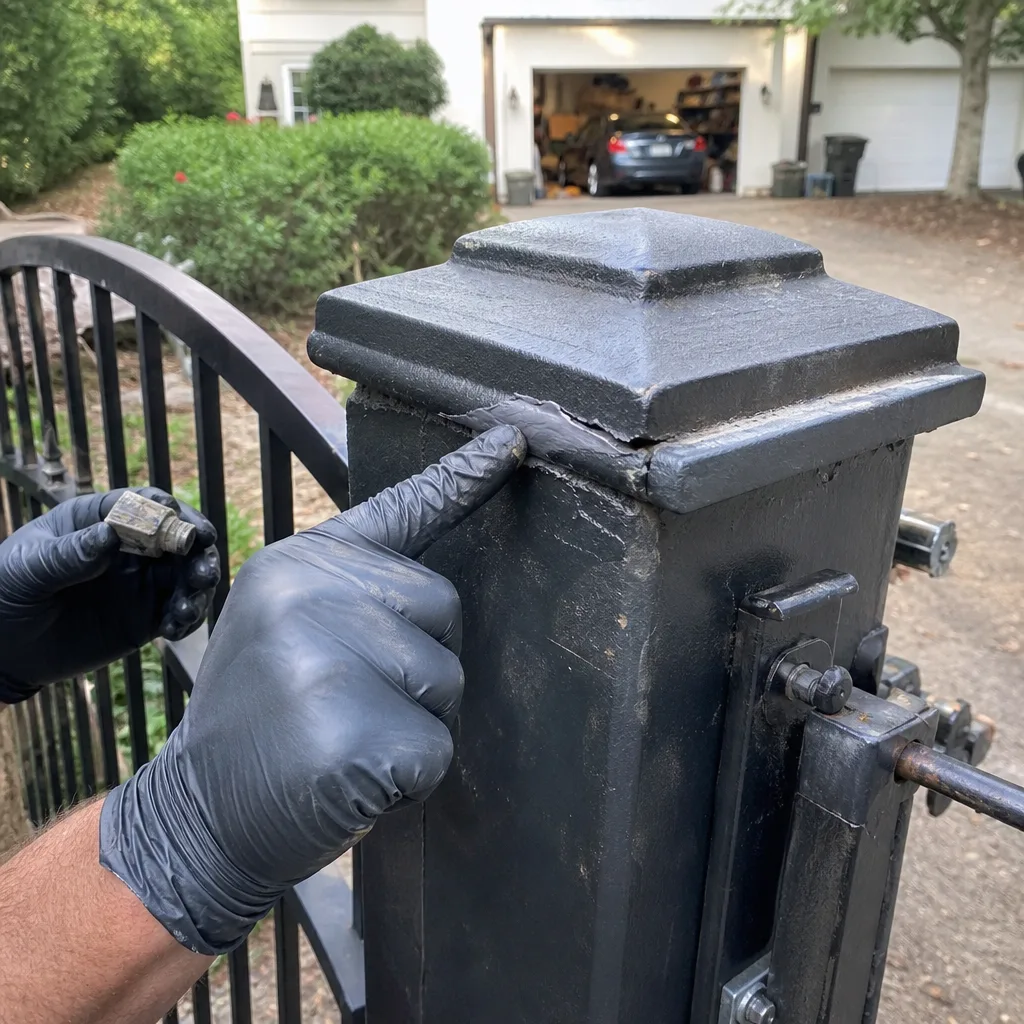
Some repairs are technically within a skilled homeowner’s capability but economically irrational because the required tools cost more than the repair itself.
Specialized Tools We Carry on Every Truck
- Limit-switch programmer. Brands like Linear and Viking require proprietary or manufacturer-specific programmers to set travel limits and force profiles. These devices cost $400-$800 and are useless for any other purpose.
- Clamp meter with inrush current measurement. Gate motors draw 3-5x their running current at startup. A standard multimeter won’t capture this. We use clamp meters that log inrush and running current to identify failing motors before they seize.
- Photo-eye alignment jig. Professional-grade photo-eyes require alignment within 2 degrees across distances up to 50 feet. Laser alignment jigs achieve this in minutes; manual alignment by eye often takes multiple attempts and still drifts.
- Welding equipment for field repair. Mobile welding rigs for gate repair run $3,000-$6,000 and require gas certification and electrical supply considerations that don’t apply to home shop welders.
- Concrete core drill and post-setting equipment. Resetting a gate post requires clean extraction of the old footing and precise placement of the new. Rental equipment exists, but the learning curve for proper depth, drainage, and cure time is steep.
For a one-time repair, renting or buying these tools rarely makes sense. For a professional who performs gate repair in Sandy Springs daily, they’re amortized across thousands of calls.
The False Economy of Borrowed Tools
We’ve seen homeowners in the Dunwoody Panhandle section of Sandy Springs borrow a friend’s welder or rent a concrete mixer for gate post work. The results are usually functional but not correct: welds that hold but create stress risers, posts that stand upright but settle within a season because the footing depth or drainage was wrong. The gate works until it doesn’t, and the eventual professional repair is more extensive because the initial work wasn’t to specification.
Permits, Insurance, and Liability in Sandy Springs
This section covers the consequences that don’t appear on your credit card statement.
When Permits Are Required
In Sandy Springs, gate installation and significant electrical modification typically require permits through the city’s Community Development Department. The threshold varies by project scope:
- New gate installation with automation: Building permit required; electrical permit if new 110V service is run.
- Operator replacement on existing gate: Typically no permit if no new electrical service is added.
- Structural modification: Building permit if posts are moved or gate weight changes significantly.
- Access control system installation: May require low-voltage permit depending on system complexity.
Unpermitted work doesn’t automatically invalidate your insurance, but it complicates claims. If a gate failure causes property damage or injury, and the insurer discovers unpermitted electrical or structural work, they may deny coverage or pursue subrogation against the homeowner for negligence.
The Insurance Dimension
Homeowner’s insurance policies in Georgia typically cover sudden and accidental damage. They don’t cover damage resulting from faulty workmanship, especially unlicensed workmanship. If your DIY gate repair fails and damages a visitor’s vehicle, you may face out-of-pocket liability.
Professional gate repair carries general liability insurance and workers’ compensation that protects the homeowner. If a Vance Gate Repair technician damages property or is injured on site, our coverage responds. If you’re injured doing DIY work, your health insurance is your only recourse, and disability from a gate-related injury isn’t hypothetical. Torsion-assisted gates store significant energy; a slip during manual operation can cause crush injuries or lacerations.
Sandy-Specific Considerations
Sandy Springs properties in flood-adjacent areas or with significant elevation changes face additional code requirements for drainage and foundation depth. Gates on slopes require specific hinge geometry and post footing engineering that standard DIY references don’t address. The clay soils common in North Fulton expand and contract seasonally; post footings must extend below the frost line and include drainage aggregate to prevent heave. These aren’t suggestions. They’re code requirements that affect insurability.
The Three-Question Decision Framework
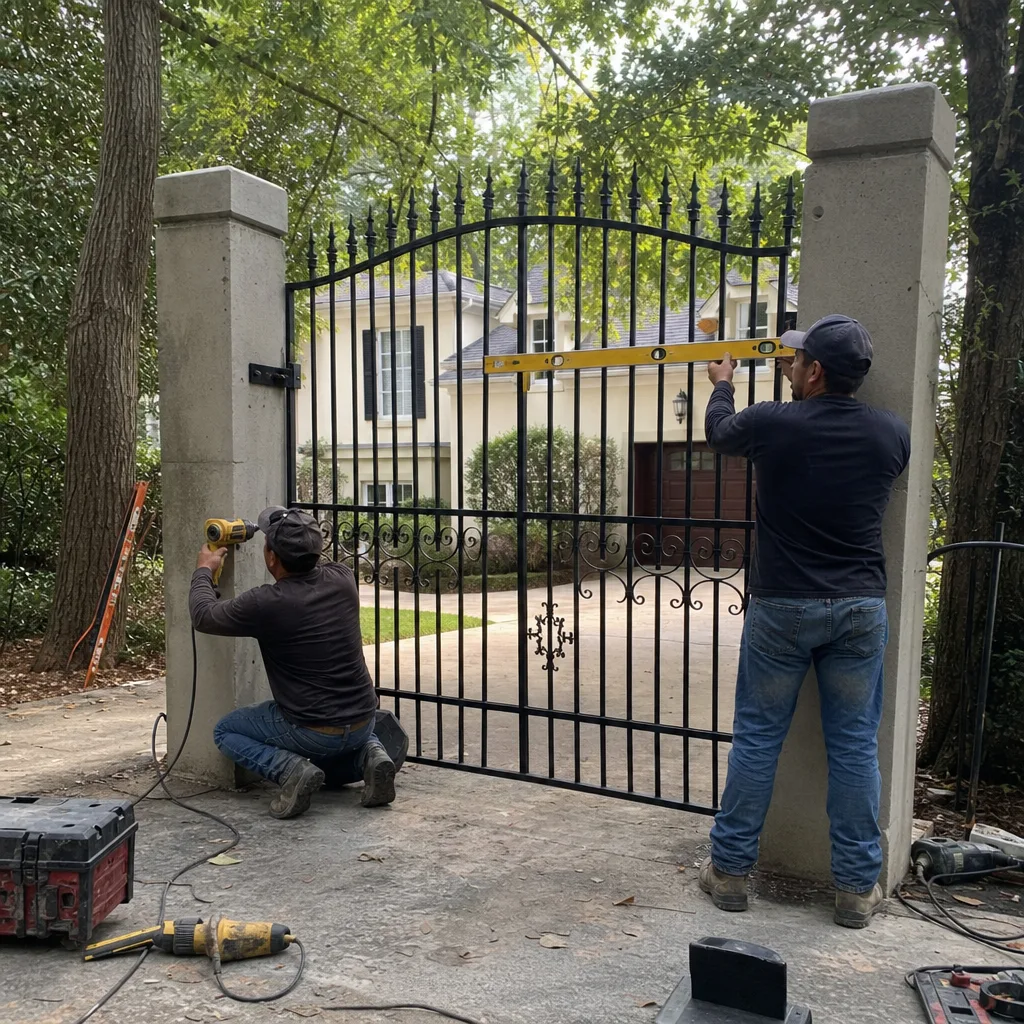
Instead of vague advice like “know your limits,” use these three questions to produce a clear go/no-go answer for any specific repair task.
Question 1: Does This Task Alter Electrical, Structural, or Warranty Status?
If yes, professional required. This is the gatekeeping question. Any work that touches wiring, welding, load-bearing structure, or manufacturer-sealed components changes the system’s certified state. The consequences aren’t immediate, but they’re guaranteed: warranty void, future diagnostic cost, or liability exposure.
Examples: Replacing a control board (warranty void). Splicing low-voltage wiring (future diagnostic cost). Resetting a post (liability if it falls). Programming limits (warranty void if incorrect).
Question 2: Would an Undocumented Failure Cause Injury or Property Damage?
If yes, professional required. This is the safety question. Gate systems are heavy, often powered, and sometimes accessed by children or visitors who don’t know the system’s history. If your repair could fail in a way that hurts someone or damages something, the risk transfer to a professional’s insurance and bonding is worth the service cost.
Examples: Safety edge installation (failure means gate doesn’t stop for obstacles). Post welding (failure means gate falls). Motor replacement with incorrect torque settings (failure means uncontrolled gate movement).
Question 3: Is the Tool Cost Greater Than 50% of the Professional Repair Cost?
If yes, professional is economically rational. This is the math question. Don’t compare DIY materials to professional total cost. Compare the full DIY cost, including tools you’ll use once, to the professional repair with warranty and documentation.
Example: A photo-eye replacement DIY might cost $80 in parts plus $120 for a multimeter and alignment time, total $200 plus your afternoon. Our typical photo-eye replacement in Sandy Springs, with documented alignment, tested operation, and the 365-Day Done Right Promise, often falls in a range where the DIY savings are minimal or negative when time is valued.
How to Apply the Framework
Run your specific task through all three questions. Any “yes” means professional service is the correct choice. Three “no” answers mean DIY is reasonable, with the caveat that you should photograph everything before you start and keep receipts for parts.
Common Mistakes to Avoid
- Using standard WD-40 on gate hinges and tracks. It attracts dust and turns to gum in Georgia humidity. Use white lithium grease or silicone-based lubricant instead. We see this mistake most often in Sandy Springs homes where the gate is exposed to afternoon sun and overnight moisture.
- Ignoring the manual release mechanism until the power goes out. Test it quarterly. If it’s seized when you need it, you’re trapped or locked out. After Hurricane Zeta in 2020, we handled dozens of calls from Sandy Springs homeowners who couldn’t operate their gates manually.
- Buying “universal” replacement parts online. There’s no universal actuator arm or control board. A part that physically fits may have incompatible wiring, wrong torque curves, or missing safety features. We service nine major brands including Linear, Viking, and Ghost Controls, and even we don’t stock “universal” parts because they don’t exist.
- Adjusting limit switches by trial and error. Each click of a mechanical limit or each increment in electronic programming affects force profiles and safety margins. Random adjustment risks motor damage or unsafe operation. Document the original setting before any change, or better, call for gate motor and opener service in Sandy Springs.
- Neglecting to check for permit requirements before structural work. Sandy Springs building inspectors can require removal of unpermitted work, and insurers can deny claims related to it. The permit cost is trivial compared to these consequences.
- Assuming low voltage means low risk. Twenty-four volts won’t shock you, but incorrect wiring can destroy a $600 control board or create a fire hazard in the 110V supply side. The voltage is low; the replacement cost is high.
When to Call a Professional
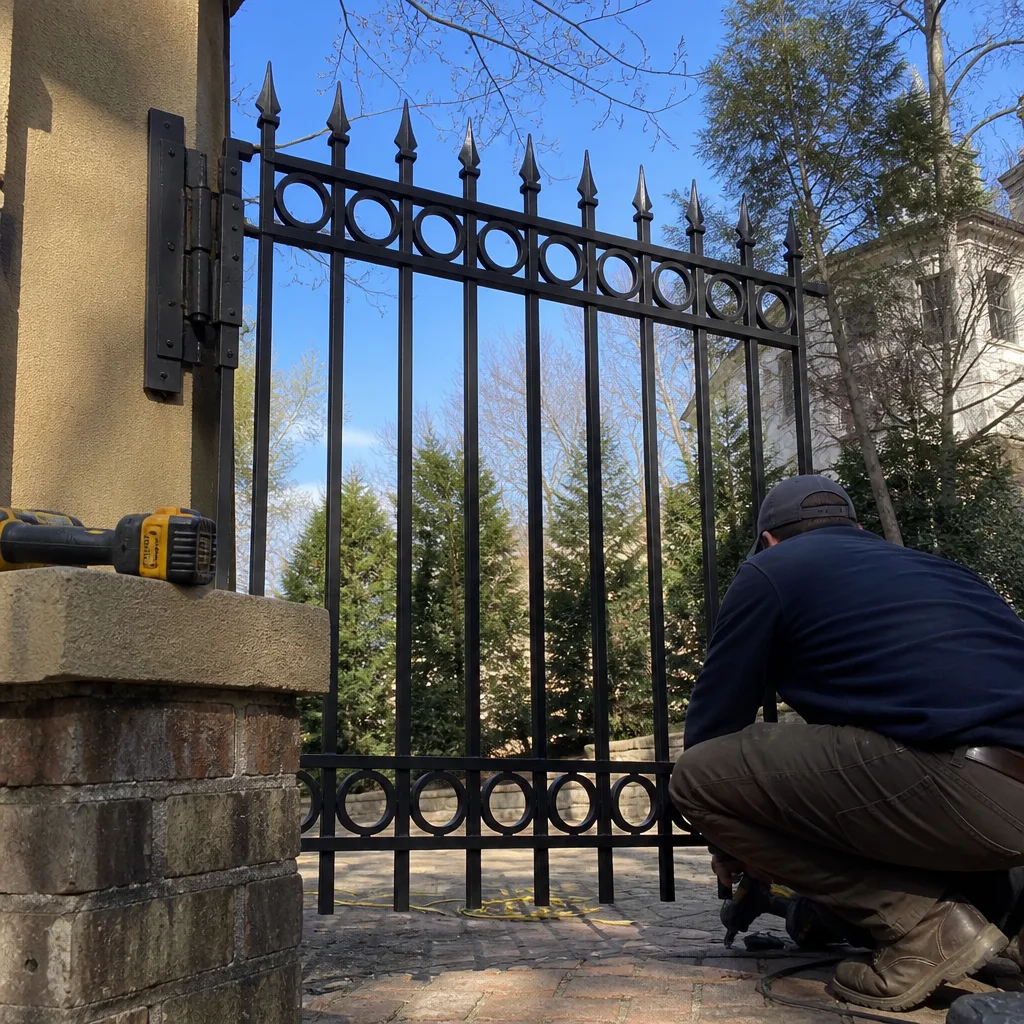
Call a professional when any of the three framework questions yields a “yes.” Call immediately if the gate is stuck open and compromises security, if there’s visible structural damage, if the automation is making unusual noises or movements, or if anyone has been injured by the gate’s operation.
Vance Gate Repair Sandy Springs offers free estimates in Sandy Springs. We’ll provide a written price before any work starts under Haven Standard Clause 1, document every adjustment and replacement with photographs under Clause 4, and stand behind the repair with our 365-Day Done Right Promise. A live person answers our phone 24 hours a day, seven days a week. Call (470) 885-1464.
Frequently Asked Questions
Most single-component repairs on residential gates in Sandy Springs range from $180 to $450, depending on the part and the automation brand; see our Gate Repair Cost Breakdown: The Sandy Springs Homeowner’s Reference for 2026 for full details. A full operator replacement typically runs $1,200 to $2,400 including the motor, installation, programming, and documentation. We provide a written, itemized price before any work begins, and we offer free second opinions on any written estimate from another company. Call (470) 885-1464 for an exact quote on your specific gate.
You can physically install a replacement opener, but programming the limit switches, force settings, and safety features requires manufacturer-specific tools and training. Incorrect programming voids the warranty and can create unsafe operation. Most homeowners who attempt this call us within a week to correct programming errors, and the total cost exceeds professional installation from the start.
Yes, for most automation brands. LiftMaster, FAAC, BFT, Linear, Viking, Ghost Controls, DoorKing, Elite, and Mighty Mule all specify that warranty coverage requires installation and repair by authorized or certified technicians. Keep your receipts and documentation if you do DIY work, but understand that manufacturer support may be denied.
Electrical permits are required for new 110V service to a gate operator. Building permits are required for new gate installation or structural modifications like post relocation. Simple repairs and component replacement on existing systems typically don’t require permits. If you’re unsure, Sandy Springs Community Development can confirm, or we can assess permit requirements during our free estimate.
Start with the manual release. If the gate moves freely by hand, the problem is likely electrical or in the automation system. If the gate still binds or won’t move manually, the problem is mechanical (track, hinges, rollers, or structure). This test takes 30 seconds and tells us most of what we need to know when you call.
You should receive a written scope of work with itemized pricing, a written invoice matching the quoted price, and photographic documentation of what was found, what was adjusted or replaced, and the final configuration. Under Haven Standard Clause 4, we provide this on every visit at no additional charge. If your current company doesn’t document their work, the next technician starts from zero, and you pay for that redundancy.
The Bottom Line
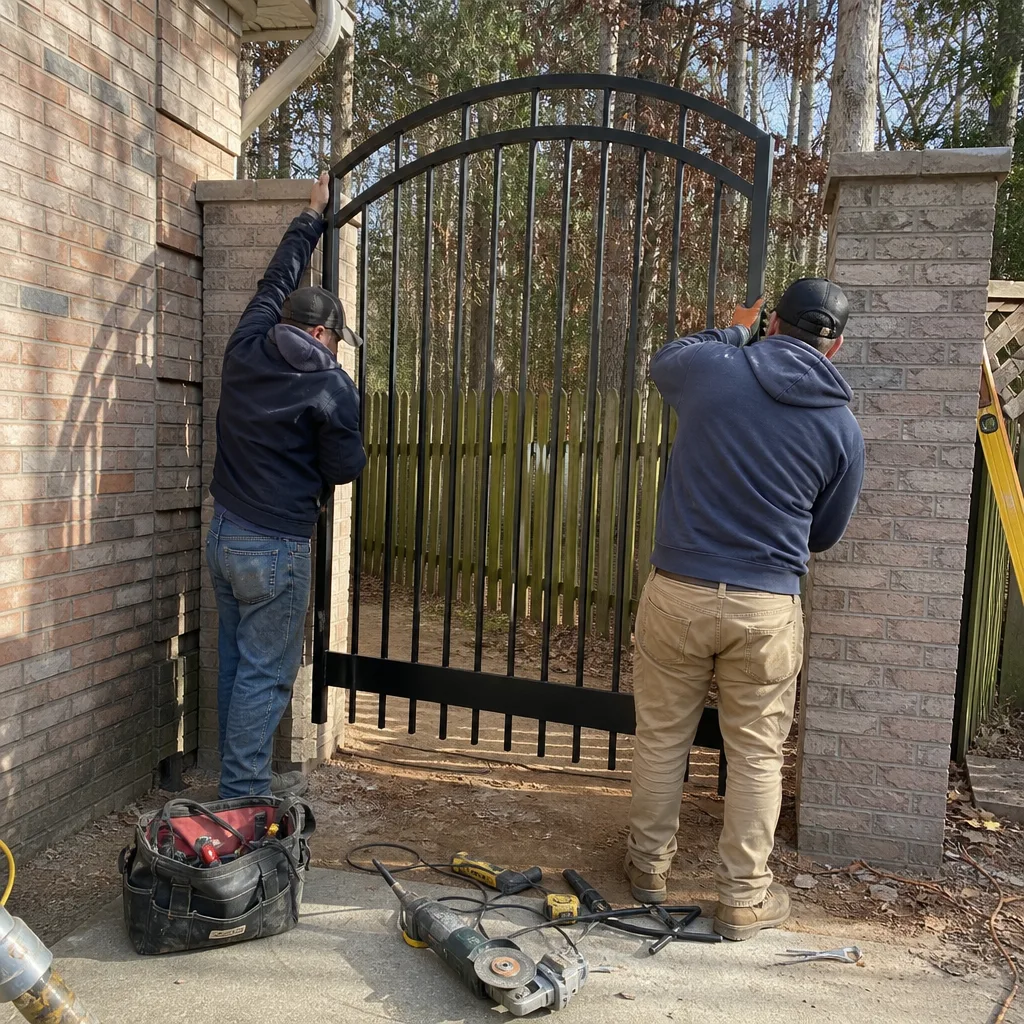
The DIY-vs-professional decision for gate repair isn’t a personality test. It’s a task-specific analysis of liability, documentation, and economics. Clean the track, lubricate the hinges, test the manual release yourself. Leave anything electrical, structural, or programmable to a professional who can document the work, honor the warranty, and carry the liability. In Sandy Springs, where gate systems face clay soil, river humidity, and mature-tree debris, professional maintenance pays for itself in extended equipment life and avoided failure. When you’re ready for a written price and documented repair, we’re here.
Written by Adrian Vance, Owner at Vance Gate Repair Sandy Springs, serving Sandy Springs since 2014.